
Sultan Bayezid II completes the effort begun …
Years: 1492 - 1503
Sultan Bayezid II completes the effort begun by Mehmed II to replace the vassals with direct Ottoman administration throughout the empire.
For the first time, the central government regularly operates under a balanced budget.
Culturally, Bayezid has stimulated a strong reaction against the Christianizing trends of the previous half-century.
The Turkish language and Muslim traditions are emphasized.
Since Bayezid himself is a mystic, he brings mystic rituals and teachings into the institutions and practices of orthodox Islam in order to counteract the increasing menace of heterodox Shi'ism among the tribes of eastern Anatolia.
The value of the Ottoman coinage is restored under Bayezid and the plans laid by Mehmed II for economic expansion can at last be brought to fruition.
Spain’s Catholic Majesties, their combined kingdoms of Castile and Aragón having just defeated the last Muslim stronghold in Iberia, expel its Jewish and Muslim populations in July 1492 as part of the Spanish Inquisition.
Bayezid ends out the Ottoman Navy under the command of Admiral Kemal Reis to Spain in 1492 in order to evacuate them safely to Ottoman lands.
He sends out proclamations throughout the empire that the refugees are to be welcomed.
He grants the refugees permission to settle in the Ottoman Empire and become Ottoman citizens.
Bayezid addresses a firman to all the governors of his European provinces, ordering them not only to refrain from repelling the Spanish refugees, but to give them a friendly and welcome reception.
He threatens with death all those who treat the Jews harshly or refuse them admission into the empire.
The thousands of Sephardic Jews expelled from Spain settle particularly in Constantinople, Adrianople and Thesasloniki.
Moses Capsali, Hakham Bashi (chief rabb)i of the empire, who probably helped to arouse the sultan's friendship for the Jews, is most energetic in his assistance to the exiles.
He makes a tour of the communities, and is instrumental in imposing a tax upon the rich, to ransom the Jewish victims of the persecutions at this time prevalent.
The Muslims and Jews of al-Andalus contribute much to the rising power of the Ottoman Empire by introducing new ideas, methods and craftsmanship.
Although there is no Ottoman Turkish press in Constantinople, the first printing press in the Ottoman capital is established by the Iberian Jews—the Sephardim— in 1493.
The early reign of Bayezid II had included a small civil war against his brother Cem, who had escaped to the west.
There European leaders have entertained ideas of installing a pro-Western sultan while sending a crusade to the Balkans.
Consequently, Bayezid does not incite any serious wars with his Christian opponents until his brother's death in 1495.
In the meantime Bayezid had signed a ten-year peace with Hungary in 1484, although this does not prevent a defeat of an Ottoman army at Villach in 1493.
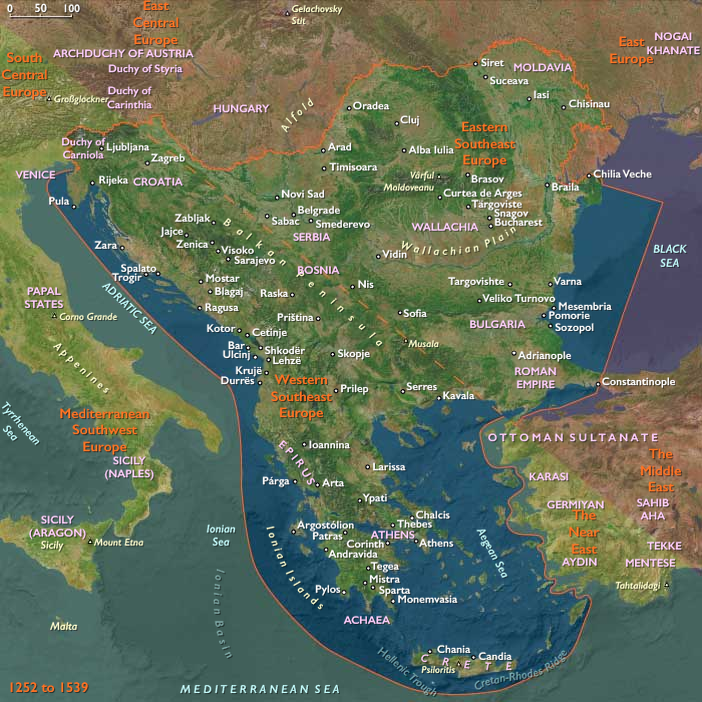
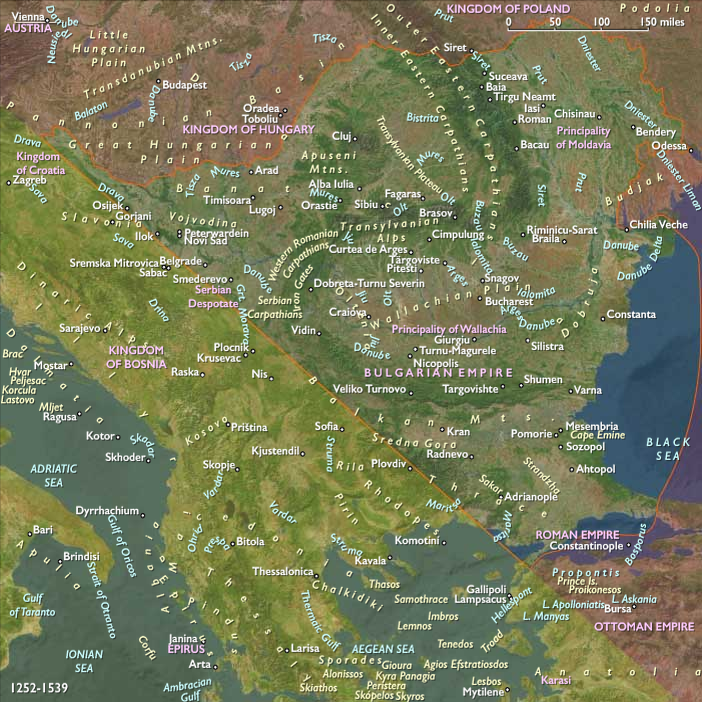
Throughout his reign, Bayezid has engaged in numerous campaigns to conquer the Venetian possessions in Morea, accurately defining this region as the key to future Ottoman naval power in the Eastern Mediterranean.
The last of these wars ends in 1501 with Bayezid in control of the whole Peloponnese.
Rebellions in the east, such as that of the Qizilbash, plague much of Bayezid’s reign and are often backed by the newly declared Shah of Persia, Ismail, who is eager to promote Shi'ism to undermine the authority of the Ottoman state.
Ottoman authority in Anatolia is indeed seriously threatened during this period, and at one point Bayezid's grand vizier, Ali Pasha, is killed in battle against rebels.
Locations
People
Groups
- Jews
- Islam
- Muslims, Sunni
- Muslims, Shi'a
- Sufism
- Christians, Roman Catholic
- Venice, (Most Serene) Republic of
- Aragon, Crown of
- Castile, Crown of
- Hungary, Kingdom of
- Greece, Ottoman
- Ottoman Empire
- Qizilbash or Kizilbash, (Ottoman Turkish for "Crimson/Red Heads")
- Persia, Safavid Kingdom of
Topics
Commodoties
Subjects
Regions
Subregions
Related Events
Showing 10 events out of 40412 total
Years: 1492 - 1503
Locations
People
Groups
- Jews
- Islam
- Muslims, Sunni
- Muslims, Shi'a
- Sufism
- Christians, Roman Catholic
- Venice, (Most Serene) Republic of
- Aragon, Crown of
- Castile, Crown of
- Hungary, Kingdom of
- Greece, Ottoman
- Ottoman Empire
- Qizilbash or Kizilbash, (Ottoman Turkish for "Crimson/Red Heads")
- Persia, Safavid Kingdom of
Topics
Commodoties
Subjects
Regions
Subregions