
The Rise of Sultan Alauddin Ri'ayat Syah …
Years: 1539 - 1539
The Rise of Sultan Alauddin Ri'ayat Syah al-Kahar
Following the death of Sultan Ali Mughayat Syah in 1530, his eldest son, Salahuddin, assumes the throne. However, his rule proves ineffectual, leading to instability within the sultanate.
The queen mother, Sitt Hur, wields considerable influence over state affairs, appointing Raja Bungsu as regent. His authority is symbolized by a green payung (parasol), and his residence is strategically located opposite the royal palace.
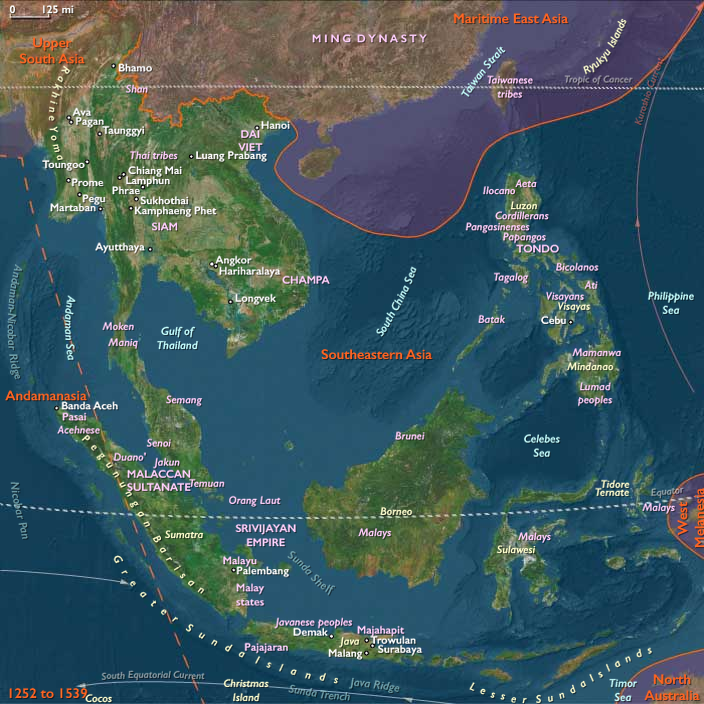
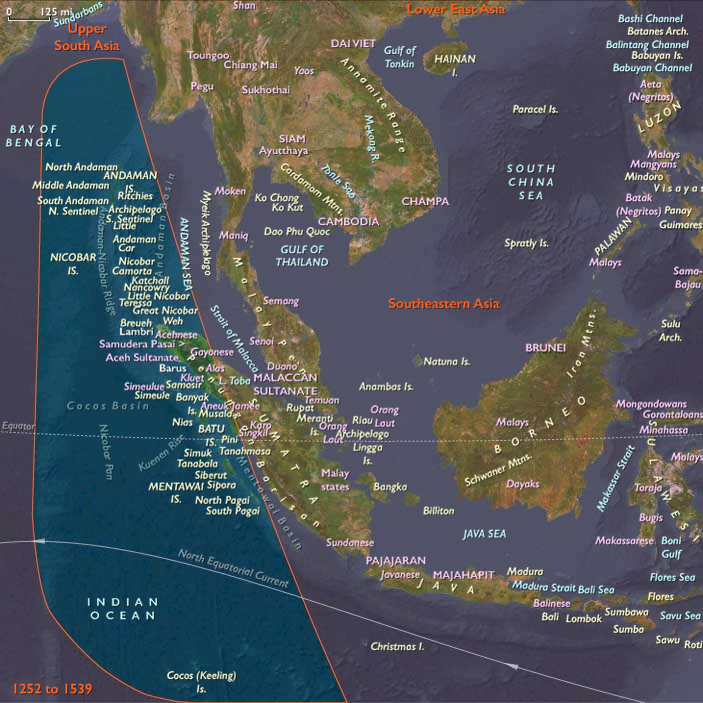
Meanwhile, Sultan Ali’s younger son, Alauddin, governs Samudra Pasai, which Aceh had conquered in 1524. Dissatisfied with conditions in the capital, he orchestrates a royal coup in 1537 or 1539, overthrowing the regent and killing Raja Bungsu. He then imprisons Salahuddin and the queen mother, both of whom die years later—Salahuddin in 1548 and Sitt Hur in 1554.
Now in full control, Alauddin ascends the throne under the regnal title Sultan Alauddin Ri'ayat Syah al-Kahar. In Acehnese tradition, he is remembered as a brilliant organizer of the Acehnese state. He is often credited with structuring society into administrative lineage groups (kaum or sukeë), though historical sources differ on whether this attribution is accurate.
Alauddin’s Military Campaigns
Sultan Alauddin’s expansionist ambitions begin in 1539, when he wages war against the Batak people to the south of Aceh.
Portuguese traveler Fernão Mendes Pinto recounts that the sultan demanded the Batak king convert to Islam and, upon his refusal, launched a military campaign against him. Pinto’s account is detailed and vivid, but its reliability is questionable, as no comprehensive Batak kingdom is attested in other historical sources.
The Acehnese army at the time reportedly included Turkish contingents, as well as warriors from Cambay and Malabar, reflecting Aceh’s growing connections with the broader Islamic and Indian Ocean worlds.
Locations
People
Groups
- Islam
- Aceh, or Atjeh, Sultanate
- Portugal, Avizan (Joannine) Kingdom of
- Portuguese Empire
- Portuguese Malacca
- Johor, Sultanate of
Topics
Commodoties
Subjects
Regions
Subregions
Years: 1539 - 1539
Locations
People
Groups
- Islam
- Aceh, or Atjeh, Sultanate
- Portugal, Avizan (Joannine) Kingdom of
- Portuguese Empire
- Portuguese Malacca
- Johor, Sultanate of
Topics
Commodoties
Subjects
Regions
Subregions