
Stephen still hopes to make peace with …
Years: 1473 - 1473
Stephen still hopes to make peace with Radu and asks the Polish king to work as mediator.
The peace attempts fail and the conflict intensifies with three leaders challenging each other for the Wallachian throne: Radu, who is supported by Mehmed; the seemingly loyal Basarab Laiotă, who at first is supported by Stephen; and Basarab Ţepeluş cel Tânăr—who will gain the support of Stephen after Laiotă's betrayal.
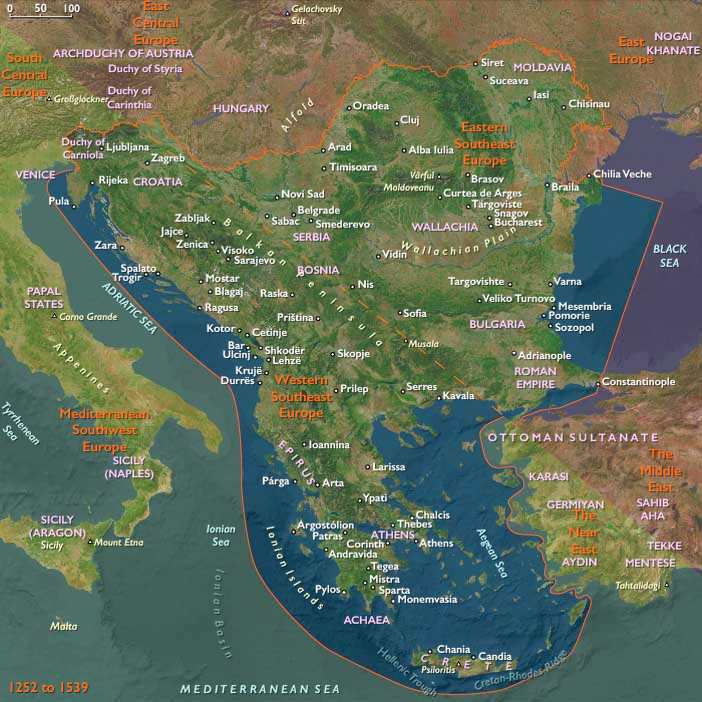
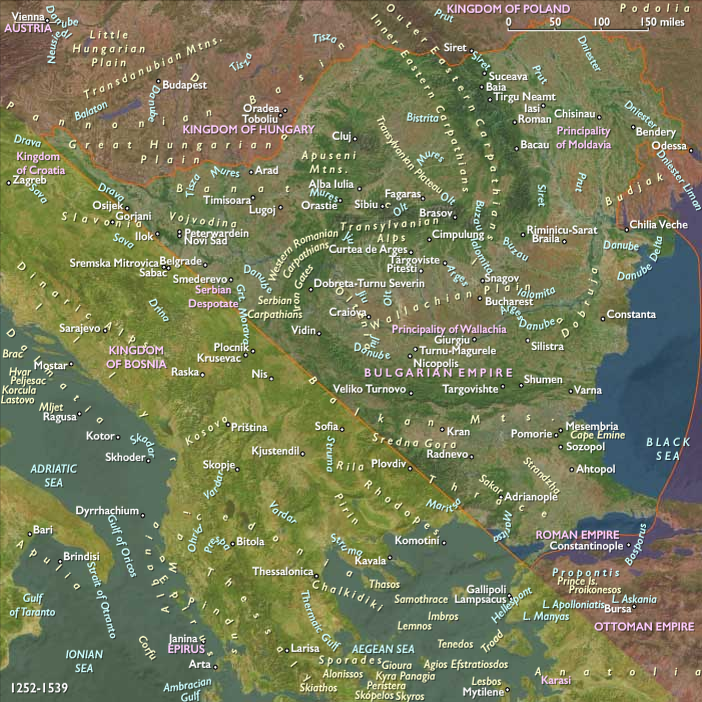
A series of clashes follow, starting with another confrontation between Stephen and Radu on November 18–20, at Râmnicu Sărat, where the latter suffers his second defeat at the hands of the Moldavian warrior prince.
A few days later, on November 28, the Ottomans intervene with an army consisting of twelve thousand Ottomans and six thousand Wallachians, but are defeated and retreat across the Danube.
Locations
People
- Basarab IV cel Tânăr
- Basarab Laiotă cel Bătrân
- Casimir IV Jagiellon
- Hadım Suleiman Pasha
- Matthias Corvinus
- Mehmed II
- Radu cel Frumos
- Stephen III of Moldavia
- Vlad the Impaler
Groups
- Romanians
- Genoa, (Most Serene) Republic of
- Hungary, Kingdom of
- Moldavia, Principality of
- Poland of the Jagiellonians, Kingdom of
- Wallachia, Principality of
- Ottoman Empire
Topics
Commodoties
Subjects
Regions
Subregions
Related Events
Showing 10 events out of 40869 total
Years: 1473 - 1473
Locations
People
- Basarab IV cel Tânăr
- Basarab Laiotă cel Bătrân
- Casimir IV Jagiellon
- Hadım Suleiman Pasha
- Matthias Corvinus
- Mehmed II
- Radu cel Frumos
- Stephen III of Moldavia
- Vlad the Impaler
Groups
- Romanians
- Genoa, (Most Serene) Republic of
- Hungary, Kingdom of
- Moldavia, Principality of
- Poland of the Jagiellonians, Kingdom of
- Wallachia, Principality of
- Ottoman Empire
Topics
Commodoties
Subjects
Regions
Subregions