
Southeast Indian Ocean (28,577–7,822 BCE): Ice Retreat …
Years: 28577BCE - 7821BCE
Southeast Indian Ocean (28,577–7,822 BCE): Ice Retreat and Expanding Shores
Geographic & Environmental Context
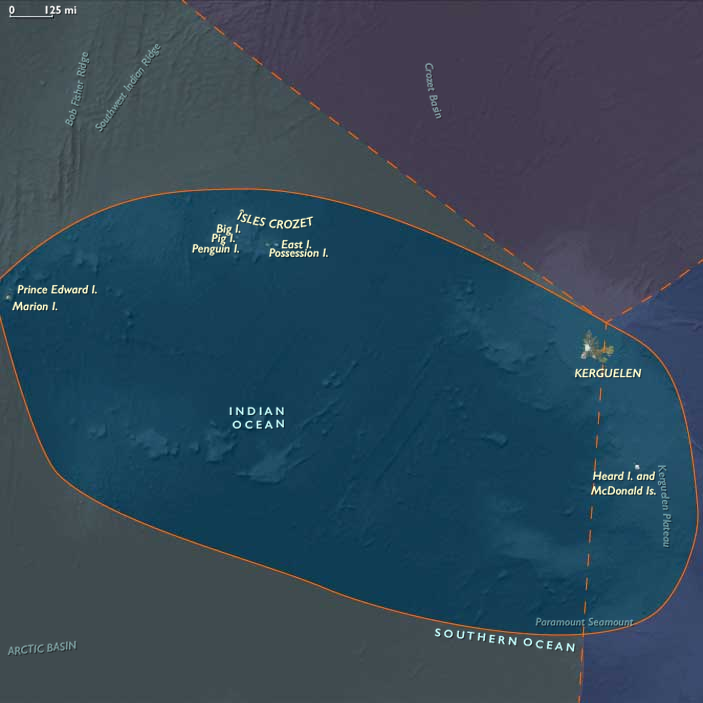
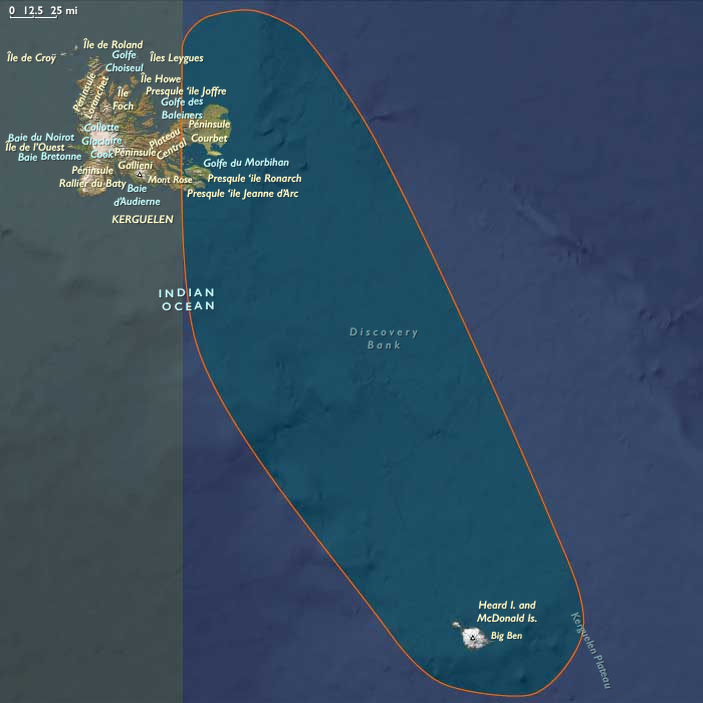
The subregion of Southeast Indian Ocean includes Kerguelen east of 70°E and Heard Island and McDonald Islands. Kerguelen’s eastern plateaus and fjord systems dominated the landscape, while Heard Island’s volcanic massif of Big Ben rose above glaciated coasts. The McDonald Islands remained small, rugged, and volcanically active, barely peeking above stormy seas.
Climate & Environmental Shifts
This epoch bridged the Last Glacial Maximum (c. 26,000–19,000 BCE) and the slow deglaciation that followed. Icefields on Kerguelen and Heard expanded dramatically at first, carving valleys and pushing tongues of ice toward the coasts. After 20,000 BCE, retreat began, revealing tundra and freshwater lakes. Sea levels gradually rose—by the end of the epoch, they had climbed tens of meters, re-drowning coastal shelves. The Southern Ocean warmed slightly, altering circulation and plankton blooms.
Subsistence & Settlement
Still uninhabited by humans, the islands were ecologically vibrant. Expanding tundra vegetation reclaimed glacial forelands. Migratory seabirds—especially penguins and petrels—flourished as new rookeries opened on ice-free coasts. Seal and sea lion populations rose in tandem with available haul-out sites. Nutrient cycling intensified, with guano-rich soils anchoring ecosystems. Heard’s volcanic activity intermittently reshaped its surface, creating ash-rich habitats that supported pioneering plant communities.
Technology & Material Culture
Globally, this was the era of Upper Paleolithic florescence: composite tools, bone harpoons, and artistic traditions from Lascaux to the Levant. None reached the Southeast Indian Ocean. Survival here would have demanded advanced maritime craft and cold-weather technologies, beyond the known reach of Paleolithic seafarers.
Movement & Interaction Corridors
Marine life moved along the circumpolar current, linking the subregion to Antarctica and Australasia. Whales traced seasonal migrations, while seabirds covered extraordinary distances, knitting together distant ecosystems. These biological corridors laid ecological foundations for later human exploitation of the Southern Ocean.
Cultural & Symbolic Expressions
No symbolic or cultural activity is tied to these islands. Elsewhere, symbolic traditions exploded: figurines, cave art, and ritual landscapes. The Southeast Indian Ocean remained beyond the human mental map, a space unknown yet ecologically rich.
Environmental Adaptation & Resilience
Plant and animal communities adapted to dramatic climatic shifts—retreating glaciers, rising seas, and fluctuating volcanic activity. Recolonization after ice retreat showcased resilience, as mosses, lichens, and seabird-driven nutrient webs rapidly expanded into new niches.
Transition
By 7,822 BCE, the Ice Age was waning. The Southeast Indian Ocean islands stood transformed: glaciers reduced, coasts reshaped, ecosystems rebounding. Though still unseen by humans, they embodied subantarctic resilience at the cusp of the Holocene.
Topics
Commodoties
Subjects
Regions
Subregions
Years: 28577BCE - 7821BCE
Topics
Commodoties
Subjects
Regions
Subregions