
Maritime South Asia (964 – 1107 CE): …
Years: 964 - 1107
Maritime South Asia (964 – 1107 CE): Chola Expansion, Western Chalukyas, and Polonnaruwa’s Ascent
Maritime South Asia includes peninsular India south of the Narmada River (Tamil Nadu, Kerala, Karnataka, Andhra Pradesh, Telangana, Maharashtra, Goa, Dadra and Nagar Haveli and Daman and Diu, southern Odisha, southern Chhattisgarh), Sri Lanka, Lakshadweep, the Maldives, and the Chagos Archipelago.
-
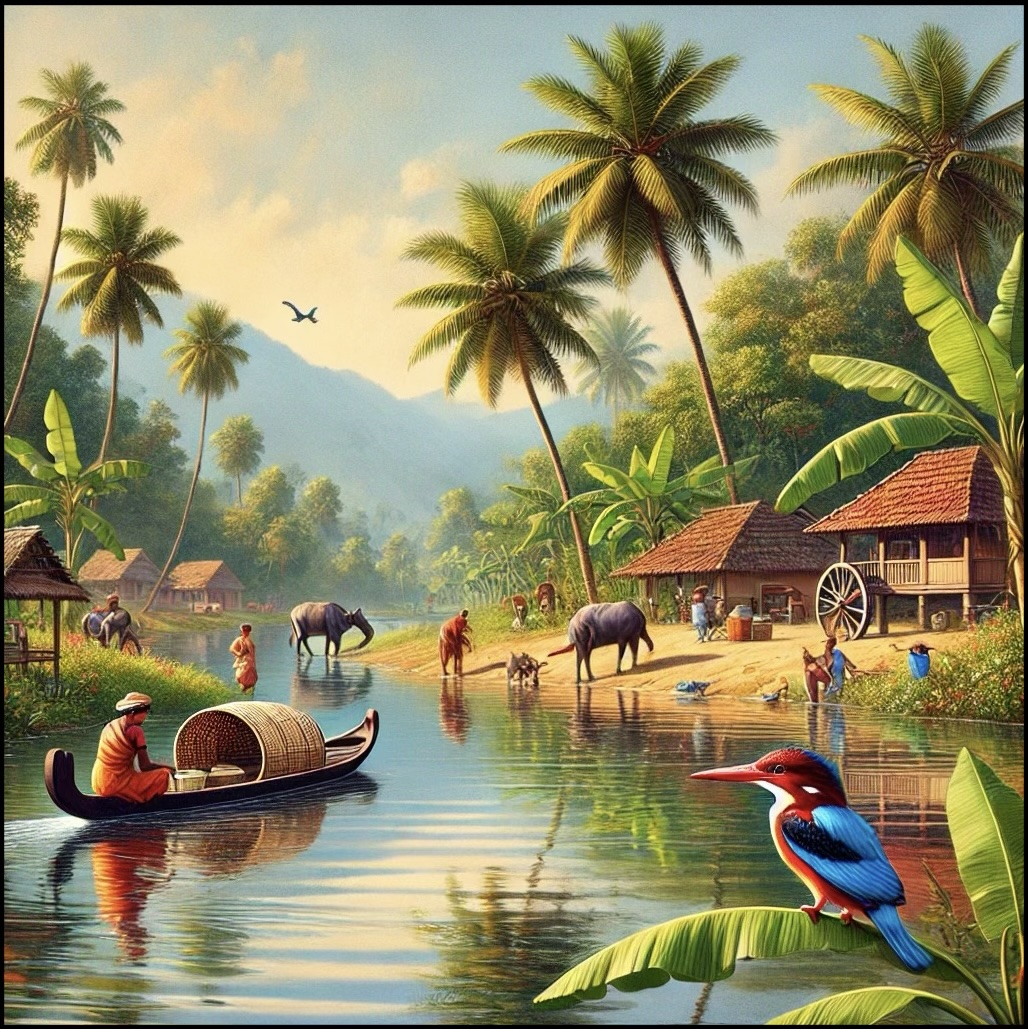
Anchors: the Tamil plains, Deccan plateau, Kerala backwaters, Sri Lanka’s dry and wet zones, and the Maldives–Chagos island chains.
Climate and Environmental Shifts
-
Monsoons remained reliable during the later Medieval Warm Period, supporting agricultural expansion in Tamil Nadu, Kerala, and Andhra.
-
Occasional droughts affected the Deccan interior, but extensive irrigation tanks and Kerala’s backwaters cushioned the impact.
-
Sri Lanka shifted from Anuradhapura toward Polonnaruwa, continuing to invest in reservoirs and canals.
-
The Maldives were increasingly tied into South Indian trade circuits under Chola influence, though still reliant on coconuts and fisheries; Lakshadweep and Chagos remained small-scale subsistence islands.
Societies and Political Developments
-
Cholas (Tamil Nadu):
-
Rajaraja I (r. 985–1014) and Rajendra I (r. 1014–1044) expanded across South India, Sri Lanka, and into the Maldives.
-
Built monumental temples (Brihadeshvara, 1010).
-
-
Western Chalukyas contested Deccan with Cholas.
-
Kerala (Cheras): spice trade enriched port towns.
-
Sri Lanka:
-
Cholas annexed northern Sri Lanka (Polonnaruwa) in 993, held until local Sinhalese resurgence under Vijayabahu I (r. 1055–1110).
-
-
Islands: Maldives under Chola influence; Lakshadweep and Chagos peripheral, integrated into maritime circuits.
Economy and Trade
-
Textiles (cotton from Coromandel) exported widely.
-
Spices and cinnamon central exports from Kerala and Sri Lanka.
-
Cowries from Maldives circulated as currency in Bengal and Africa.
-
Chola navy dominated Bay of Bengal trade, projecting to Southeast Asia.
Belief and Symbolism
-
Hinduism: Chola rulers championed Shaivism, monumental temples.
-
Buddhism: still strong in Sri Lanka, declining in Tamilakam.
-
Islands: Buddhist traditions persisted; Hindu influence spread.
Long-Term Significance
By 1107, Cholas dominated peninsular India and maritime South Asia; Sri Lanka recovered autonomy; island chains were drawn into Indian Ocean circuits.
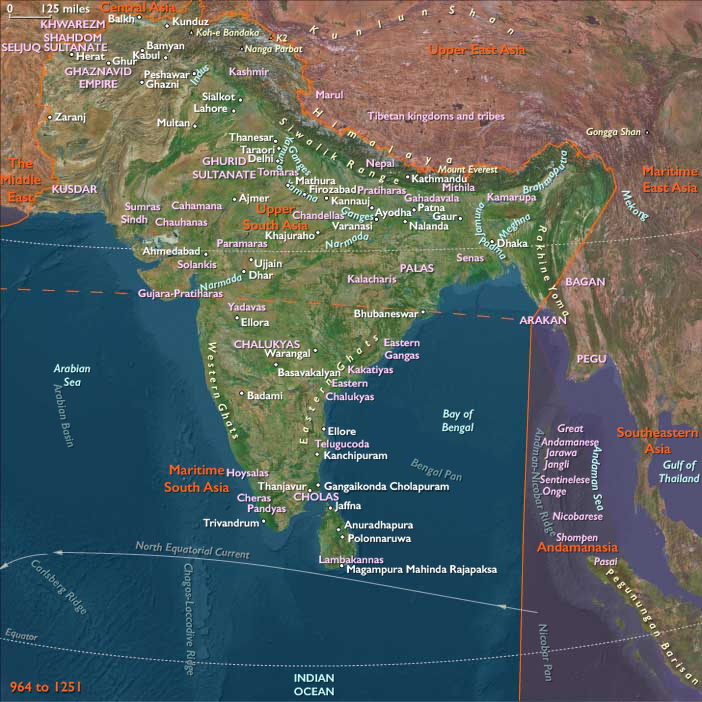
Southern South Asia (with civilization) ©2024-25 Electric Prism, Inc.
People
- Raja Raja Chola I
- Rajendra Chola I
- Rajendra Chola II
- Rājādhiraja Chola I
- Vijayabahu I of Polonnaruwa
- Virarajendra Chola
Groups
- Hinduism
- Tamil people
- Jainism
- Sinhalese people
- Buddhism
- Anuradhapura Kingdom (Sinhalese)
- Cholas (Kolas), Kingdom of the
- Buddhists, Theravada
- Cholas (Kolas), Kingdom of the
- Srivijaya, Malay kingdom of
- Chalukyas, Eastern, Rajput Kingdom of
- Kalachuris of Tripuri
- Western Chalukya Empire
- Hoysalas, Kingdom of the
- Western Chalukya Empire
- Polonnaruwa, Kingdom of
Topics
- Indianization of Southeast Asia
- India, Medieval
- Medieval Warm Period (MWP) or Medieval Climate Optimum
Commodoties
- Gem materials
- Domestic animals
- Grains and produce
- Textiles
- Strategic metals
- Sweeteners
- Money
- Aroma compounds
- Spices
Subjects
Regions
Subregions

Related Events
Showing 1 events out of 1 total
Years: 964 - 1107
Southern South Asia (with civilization) ©2024-25 Electric Prism, Inc.
People
- Raja Raja Chola I
- Rajendra Chola I
- Rajendra Chola II
- Rājādhiraja Chola I
- Vijayabahu I of Polonnaruwa
- Virarajendra Chola
Groups
- Hinduism
- Tamil people
- Jainism
- Sinhalese people
- Buddhism
- Anuradhapura Kingdom (Sinhalese)
- Cholas (Kolas), Kingdom of the
- Buddhists, Theravada
- Cholas (Kolas), Kingdom of the
- Srivijaya, Malay kingdom of
- Chalukyas, Eastern, Rajput Kingdom of
- Kalachuris of Tripuri
- Western Chalukya Empire
- Hoysalas, Kingdom of the
- Western Chalukya Empire
- Polonnaruwa, Kingdom of
Topics
- Indianization of Southeast Asia
- India, Medieval
- Medieval Warm Period (MWP) or Medieval Climate Optimum
Commodoties
- Gem materials
- Domestic animals
- Grains and produce
- Textiles
- Strategic metals
- Sweeteners
- Money
- Aroma compounds
- Spices
Subjects
Regions
Subregions