
Southeast Asia (820 – 963 CE): Khmer …
Years: 820 - 963
Southeast Asia (820 – 963 CE): Khmer Beginnings, Pyu Decline, Cham Expansion, and Srivijaya’s Maritime Power
Geographic and Environmental Context
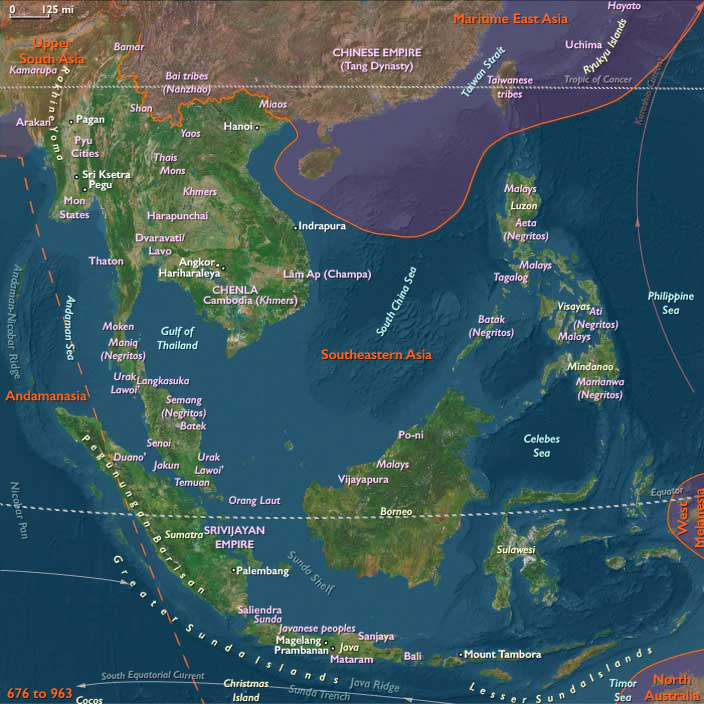
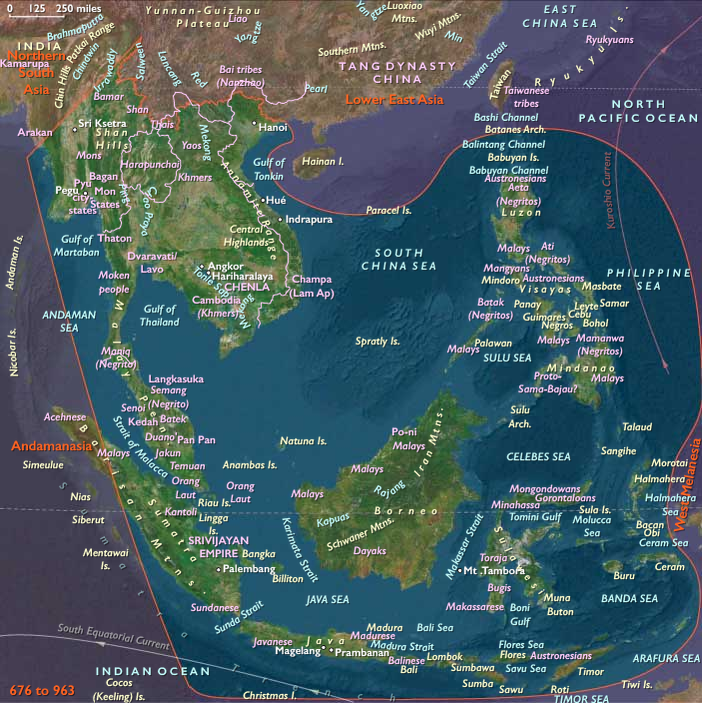
Southeast Asia in this age stretched from the Irrawaddy, Chao Phraya, Mekong, and Red River basins to the Malay Peninsula and the great insular corridors of the Malacca Strait, Java Sea, Makassar Strait, Sulu Sea, and the Moluccas—the hinge between the Indian Ocean and South China Sea.
Two complementary realms defined the region:
-
Mainland agrarian heartlands (southern & eastern Myanmar, Thailand, Cambodia, Laos, Vietnam) built on irrigated rice basins.
-
Insular thalassocracies (Sumatra—excl. Aceh & West offshore islands, Java, Borneo, Sulawesi, Bali–Timor, Banda–Moluccas–Ceram–Halmahera, Philippines) that mediated the Indian–China sea-lanes.
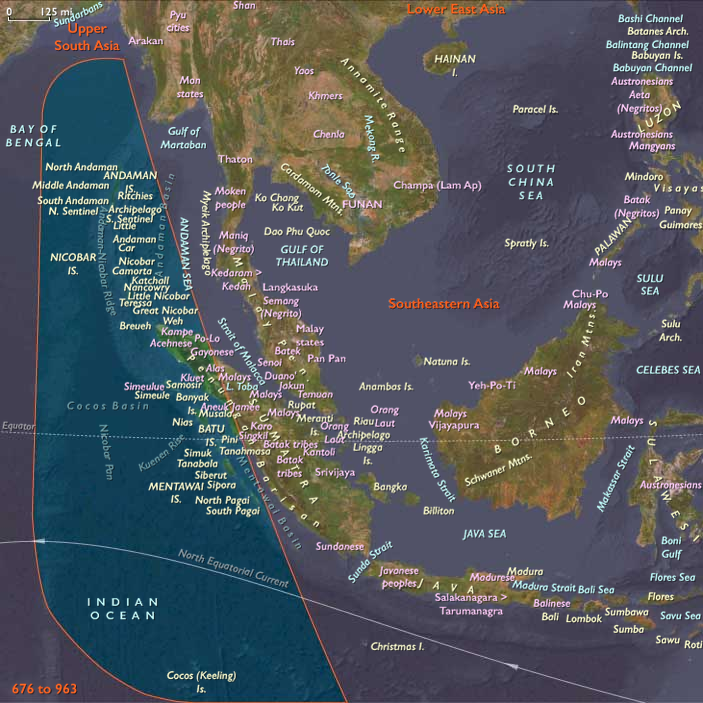
The adjacent Andamanasia arc—Andaman & Nicobar Islands, Aceh and its offshore chains (Simeulue, Nias, Batu, Mentawai), the Cocos (Keeling), and the Preparis–Coco islets—formed the Bay of Bengal’s island threshold into the Strait of Malacca.
Climate and Environmental Shifts
A warm, humid tropical regime prevailed with monsoon regularity.
-
Mainland basins enjoyed reliable flood–recession cycles for wet-rice expansion.
-
Insular corridors experienced stable sailing seasons; volcanic soils in Java and Sumatra yielded high rice outputs.
-
ENSO variability intermittently brought droughts and typhoons—hardest on atolls and windward coasts—yet diversified subsistence and maritime redistribution buffered shocks.
-
Toward the century’s end, conditions segued toward the Medieval Warm Period without major disruption.
Societies and Political Developments
Mainland Southeast Asia
-
Myanmar (southern & eastern): The Pyu city-states (Śrī Kṣetra, Beikthano, Halin) waned after Nanzhao incursions in the 9th century. Burman-speaking groups moved into the central Irrawaddy, laying foundations for the Pagan/Bagan polity of the next age; Pyu Buddhism persisted in hybrid forms.
-
Thailand & Laos: Dvaravati (Mon) states flourished in the Chao Phraya basin with moated towns and Buddhist stupas; Theravāda and Mahāyāna coexisted. Upland Lao chiefdoms maneuvered between Mon and Khmer influence.
-
Cambodia (Khmer beginnings): From post-Chenla fragmentation, Jayavarman II (c. 802–835) proclaimed the Devarāja and inaugurated Angkor’s line; early capitals around Kulen–Angkor show expanding irrigation and temple programs.
-
Vietnam: In 939, Ngô Quyền’s victory at Bạch Đằng ended nearly a millennium of Chinese rule, inaugurating an independent Vietnamese kingdom. South of the Red River, Champa consolidated as a Hindu-Shaiva seafaring kingdom, projecting force northward at intervals from temple-cities like Mỹ Sơn.
Insular Southeast Asia
-
Sumatra (excl. Aceh & W offshore islands): Srivijaya (Palembang) reached consolidation—commanding Malacca and Sunda Straits, taxing and protecting China–India traffic, and influencing western Borneo and parts of Java. Its monasteries drew international pilgrims and linked Nalanda to Tang ports.
-
Java: Sanjaya (Hindu Shaiva) and Sailendra (Buddhist) legacies framed competing courts across central/eastern Java; monumental idioms of Borobudur and Prambanan still shaped the cultural landscape; intensive rice economies underwrote dense populations and court power.
-
Borneo: Coastal polities aligned with Srivijaya’s tribute circuits, exporting camphor, resins, forest products; interiors housed Dayak clan communities, loosely tied to maritime trade.
-
Sulawesi: Coastal nodes in Makassar, Buton, and bays of the north acted as brokers between Java, the Philippines, and the Moluccas, honing navigational linkages that stitched the archipelago together.
-
Eastern Archipelagos (Bali–Timor, Banda–Moluccas–Ceram–Halmahera, Philippines):
-
Spice Islands (Banda, Moluccas) supplied the world’s cloves and nutmeg, routed via Sulawesi and Borneo.
-
Philippines: Barangay polities (20–50 boat-household clusters) along Luzon and Visayas bays mined gold, wove textiles, and exported pearls and forest goods.
-
Bali–Timor arc balanced wet-rice, taro, and dryland farming, funneling produce into spice circuits.
-
Andamanasia (Srivijayan supremacy, local autonomies)
-
Srivijaya at its height dominated Malacca, projecting authority into Aceh and offshore chains.
-
Barus—already famed for camphor—operated under Srivijaya’s influence; Lambri remained a small coastal settlement not yet in foreign records.
-
Andamanese (Onge, Jarwa, Sentinelese) maintained autonomous hunter-gatherer lifeways; Nicobar Islanders practiced Austronesian horticulture and canoe voyaging; Nias, Simeulue, Mentawai sustained fortified villages, megalithic traditions, and ritual feasting economies.
-
Cocos (Keeling) and Preparis–Coco islets served as uninhabited waypoints.
Economy and Trade
-
Mainland agrarian cores: expansion of wet-rice in Mekong, Chao Phraya, Red River valleys supported temple endowments and administrative elites.
-
Insular thalassocracy: Srivijaya controlled strait chokepoints, taxing multi-regional traffic between India and China; Java’s rice surplus and shipyards supplied regional fleets.
-
Exports: spices (clove, nutmeg), camphor and resins, gold (Philippines), tin (Malay Peninsula), rice (Java), forest and marine products.
-
Redistribution hubs: Palembang, Kedah/Tambralinga, Javanese ports, Sulawesi harbors, and Philippine bays integrated inland producers with long-distance merchants.
Subsistence and Technology
-
Hydraulics: Khmer and Vietnamese waterworks managed floods and extended paddy cultivation; dike–canal systems underwrote urban-temple growth.
-
Naval/shipbuilding: plank-built vessels with lash-lug construction, quarter-rudders, and multi-sail rigs; harbor pilotage in straits; navigational astronomy and monsoon timing.
-
Craft industries: brick temple and stone carving (Angkor, Prambanan); ceramic traditions from mainland kilns to insular polities; metalwork from Java to Champa.
-
Insular subsistence: arboriculture (coconut, sago) alongside rice; reef fisheries and lagoon management sustained coastal towns.
Movement and Interaction Corridors
-
Malacca Strait: Srivijaya’s toll and convoy system linked India–Arabia–East Africa with China.
-
Java Sea—Makassar—Moluccas: rice and timber outbound; spices inbound; Sulawesi the cross-beam.
-
Sulu–Philippine seas: gold, pearls, forest goods into Chinese and insular markets.
-
Mainland river routes: Irrawaddy, Chao Phraya, Mekong, Red River channeled grain, ceramics, and ritual bronzes between interior and coast.
-
Bay of Bengal stepping-stones: Nicobars, Aceh islets, and Andaman lanes as waypoints into Malacca under Srivijayan shadow.
Belief and Symbolism
-
Khmer: Devarāja (divine kingship) fused Hindu sovereignty with monumental temples and linga cults.
-
Mon & Pyu: Theravāda/Mahāyāna Buddhist traditions embedded in stupas and monasteries.
-
Vietnam: emergence of Confucian bureaucracy alongside vital Buddhism.
-
Srivijaya: Buddhist scholastic hub with Nalanda connections and Tang embassies.
-
Champa: Shaiva Hindu cults in brick sanctuaries (Mỹ Sơn), merged with Austronesian ritual.
-
Eastern archipelagos: robust animism and ancestor/sea-spirit cults, with Indic icons appearing in littoral shrines; Philippine ritual and barangay leadership consecrated authority through feast and exchange.
-
Andamanasia: Andamanese animism of forest/sea spirits; Nias–Mentawai megalithic feasting as embodiments of mana.
Adaptation and Resilience
-
Hydraulic states (Angkor, Vietnam) managed flood regimes and drought through canal–reservoir systems.
-
Maritime redistribution (Srivijaya, Java, Sulawesi brokers) moved staples and luxuries to cushion local shortfalls.
-
Diverse subsistence portfolios—rice, sago, root crops, arboriculture, reef fisheries—buffered climatic swings.
-
Ritual–political economies (feasts, temple endowments, tribute) transformed surplus into social cohesion and diplomatic reach.
Long-Term Significance
By 963 CE, Southeast Asia crystallized as a dual structure:
-
Mainland agrarian kingdoms: Khmer divine kingship taking root at Angkor; Pyu decline and Burman migrations; Mon Buddhist centers; independent Vietnam; rising Champa.
-
Insular thalassocracies: Srivijaya dominating straits commerce; Java sustaining Hindu–Buddhist courts and rice armies; Borneo and Sulawesi interlaced with the spice trade; Philippine barangays ascending in gold and sea trade.
-
Andamanasia: firmly within Srivijaya’s orbit at sea, yet sustaining local autonomies from the Andamans to Nias–Mentawai.
This age established Southeast Asia as the pivotal hinge of Afro-Eurasian exchange—rice empires inland, maritime federations at sea—setting the stage for Angkor’s hydraulic apogee, Pagan’s rise, Vietnamese consolidation, Cham–Khmer rivalries, and the long radiance of Srivijaya in the centuries to follow.
People
Groups
- Austronesian peoples
- Hinduism
- Vietnamese people
- Khmer people
- Tai peoples, or Thais
- Buddhism
- Confucianists
- Buddhists, Theravada
- Pyu city-states
- Cham people
- Malays, Ethnic
- Funan, Kingdom of
- Buddhism, Mahayana
- Dvaravati, Mon Kingdom of
- Sri Ksetra, Kingdom of
- Lavo, Mon Kingdom of
- Srivijaya, Malay kingdom of
- Nanzhao, or Nanchao, Bai Kingdom of
- Champa, Kingdom of
- Khmer Empire (Angkor)
- Bamar or Burmans
- Southern Han
- Ngô dynasty
Topics
Commodoties
- Weapons
- Oils, gums, resins, and waxes
- Grains and produce
- Textiles
- Ceramics
- Strategic metals
- Salt
- Lumber
- Aroma compounds
- Spices
Subjects
- Commerce
- Architecture
- Watercraft
- Painting and Drawing
- Environment
- Faith
- Government
- Custom and Law
- Metallurgy
Regions
Subregions
Years: 820 - 963
People
Groups
- Austronesian peoples
- Hinduism
- Vietnamese people
- Khmer people
- Tai peoples, or Thais
- Buddhism
- Confucianists
- Buddhists, Theravada
- Pyu city-states
- Cham people
- Malays, Ethnic
- Funan, Kingdom of
- Buddhism, Mahayana
- Dvaravati, Mon Kingdom of
- Sri Ksetra, Kingdom of
- Lavo, Mon Kingdom of
- Srivijaya, Malay kingdom of
- Nanzhao, or Nanchao, Bai Kingdom of
- Champa, Kingdom of
- Khmer Empire (Angkor)
- Bamar or Burmans
- Southern Han
- Ngô dynasty
Topics
Commodoties
- Weapons
- Oils, gums, resins, and waxes
- Grains and produce
- Textiles
- Ceramics
- Strategic metals
- Salt
- Lumber
- Aroma compounds
- Spices
Subjects
- Commerce
- Architecture
- Watercraft
- Painting and Drawing
- Environment
- Faith
- Government
- Custom and Law
- Metallurgy
Regions
Subregions