
Southwest Indian Ocean (7,821–6,094 BCE): Ecological Renewal …
Years: 7822BCE - 6094BCE
Southwest Indian Ocean (7,821–6,094 BCE): Ecological Renewal after the Ice
Geographic & Environmental Context
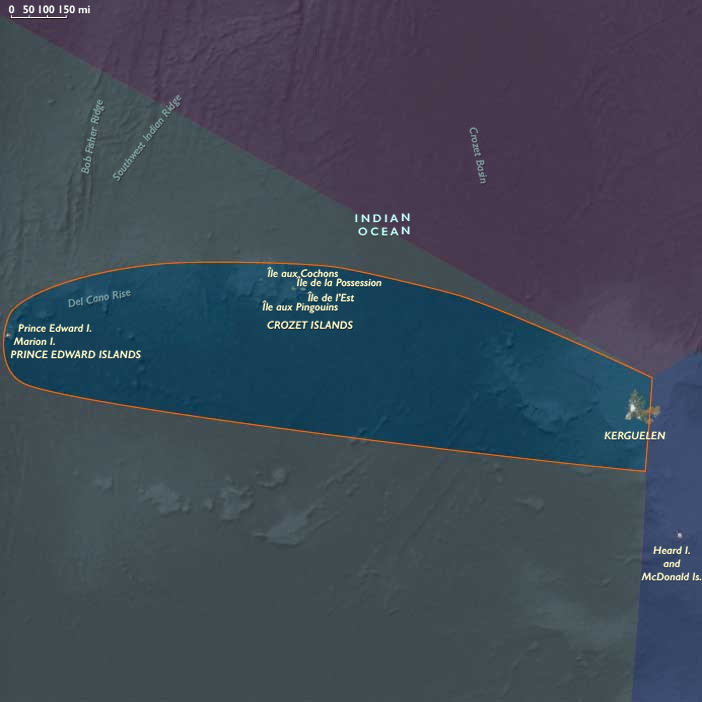
The subregion of Southwest Indian Ocean includes Kerguelen west of 70°E, the Îsles Crozet, Prince Edward Island, and Marion Island. Western Kerguelen’s plateaus were increasingly ice-free, the Crozet Islands rose as rocky volcanic bastions, and Prince Edward and Marion maintained their smaller, storm-battered profiles.
Climate & Environmental Shifts
The early Holocene brought climatic moderation. Glaciers on Kerguelen retreated into highlands, exposing lakes, valleys, and fertile coastal plains. The Crozets and Prince Edward Islands, less glaciated, saw expanding tundra vegetation. Rising sea levels drowned glacial shelves, bringing coastlines closer to their present shape. Wind intensity remained high, but longer ice-free periods reshaped ecological rhythms.
Subsistence & Settlement
No humans yet inhabited the islands, but biological communities thrived. Vegetation covered freshly deglaciated surfaces, creating niches for invertebrates. Penguins, albatrosses, and petrels flourished, while seals expanded breeding grounds on accessible coasts. Offshore, whales and fish followed currents that made these islands focal points of subantarctic productivity.
Technology & Material Culture
Human technological innovations in this epoch included microlithic tools, pottery in some regions, and the beginnings of settled farming. Yet these developments remained far from the storm-swept subantarctic. The Southwest Indian Ocean remained untouched.
Movement & Interaction Corridors
The circumpolar ocean system connected these islands ecologically with South Africa, Antarctica, and Australasia. Migratory seabirds nested here before dispersing across hemispheres. These corridors ensured that even in isolation, the islands played a vital role in the wider Southern Ocean ecology.
Cultural & Symbolic Expressions
No cultural expressions occurred here. Globally, humans were beginning to ritualize new landscapes—rivers, hills, and domesticated fields—yet the subantarctic islands remained outside human knowledge.
Environmental Adaptation & Resilience
Plant communities and seabird rookeries adapted dynamically to changing ice margins. Nutrient cycles intensified as populations of marine animals expanded. The volcanic soils of the Crozets and Prince Edward Islands became fertile hubs of tundra biodiversity.
Transition
By 6,094 BCE, the islands of the Southwest Indian Ocean had entered the Holocene firmly. Their landscapes were transformed from ice-dominated to biologically rich, though still unvisited by humans. They stood as ecological strongholds in a warming world.
Topics
Commodoties
Subjects
Regions
Subregions
Years: 7822BCE - 6094BCE
Topics
Commodoties
Subjects
Regions
Subregions