
Southeast Indian Ocean (7,821–6,094 BCE): Holocene Beginnings …
Years: 7822BCE - 6094BCE
Southeast Indian Ocean (7,821–6,094 BCE): Holocene Beginnings in the Subantarctic
Geographic & Environmental Context
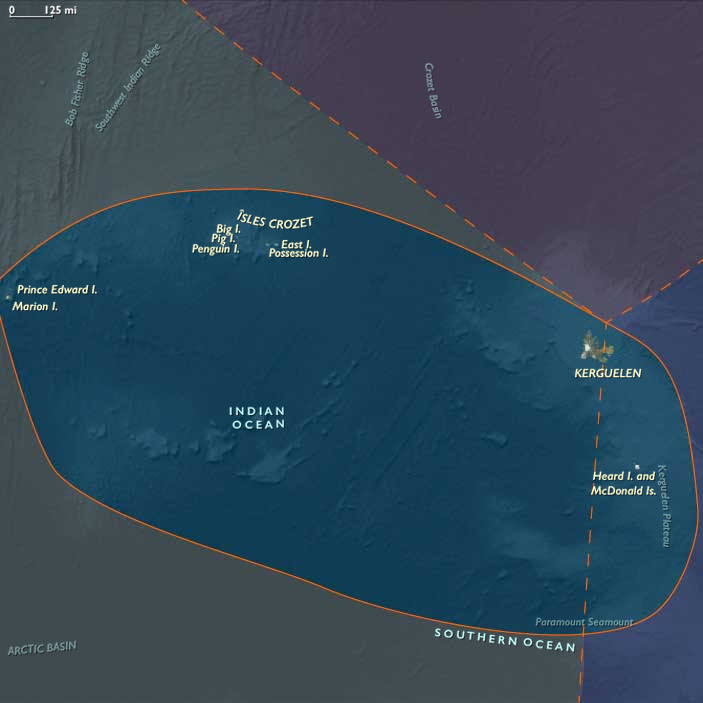
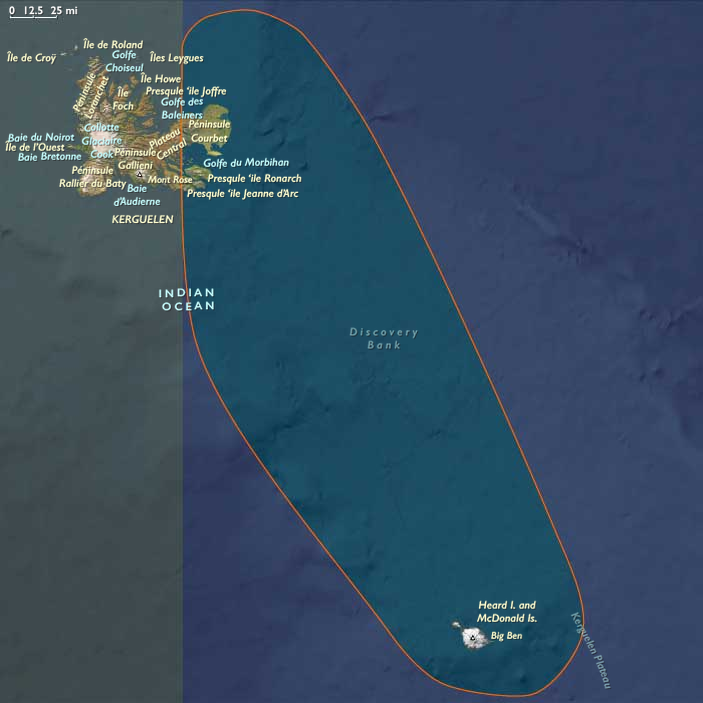
The subregion of Southeast Indian Ocean includes Kerguelen east of 70°E and Heard Island and McDonald Islands. Kerguelen’s fjord-indented eastern coasts and basaltic plateaus were reshaped by glacial retreat, while Big Benon Heard Island remained crowned with ice. The McDonald group continued as small, volcanic outcrops.
Climate & Environmental Shifts
This was the early Holocene, marked by rising global temperatures and accelerating sea-level rise. Glaciers on Kerguelen retreated into upland pockets, and Heard’s icefields shrank, though remaining substantial. Sea levels approached modern levels, submerging exposed shelves from the glacial lowstand. Strong circumpolar westerlies and storm systems continued, though seasonal variability grew with a slightly warmer and wetter climate.
Subsistence & Settlement
Still without human settlement, ecosystems grew increasingly complex. Mosses, lichens, and grasses spread rapidly across deglaciated ground. On Heard and Kerguelen, penguin rookeries expanded as ice-free shores became abundant, while elephant seals and fur seals established dense colonies. Seabird guano enriched soils, accelerating plant colonization. Offshore, whales and fish thrived in plankton-rich upwellings.
Technology & Material Culture
Globally, Holocene societies were beginning to shift toward agriculture in some regions, but such developments lay far from the subantarctic. No material culture touched these islands; their isolation was complete.
Movement & Interaction Corridors
The Antarctic Circumpolar Current and storm tracks continued to define ecological movement. Migratory species linked these islands with Antarctica, Australia, and Africa. These corridors would one day guide human navigation but remained exclusively biological in this epoch.
Cultural & Symbolic Expressions
No symbolic or cultural imprint was left here. However, the ecological richness of the islands—seabird gatherings, volcanic peaks, and storm-swept coasts—echoed themes of resilience and endurance that human societies elsewhere were embedding in their ritual landscapes.
Environmental Adaptation & Resilience
The resilience of life in the subantarctic was clear: seals and penguins adapted to new habitats, plants colonized ash-rich volcanic soils, and ecosystems stabilized under Holocene warmth. Volcanic activity on Heard and McDonald Islands periodically disrupted landscapes, but pioneer vegetation swiftly recolonized.
Transition
By 6,094 BCE, the Southeast Indian Ocean islands stood as thriving ecological refuges of the early Holocene. Still unknown to humans, they embodied the interplay of glacial legacy, volcanic dynamism, and biological resilience.
Topics
Commodoties
Subjects
Regions
Subregions
Years: 7822BCE - 6094BCE
Topics
Commodoties
Subjects
Regions
Subregions