
Southeastern Asia (964 – 1107 CE): Angkor’s …
Years: 964 - 1107
Southeastern Asia (964 – 1107 CE): Angkor’s Expansion, Pagan’s Rise, Srivijaya at Zenith, and the Maritime Spice Commonwealth
Geographic and Environmental Context
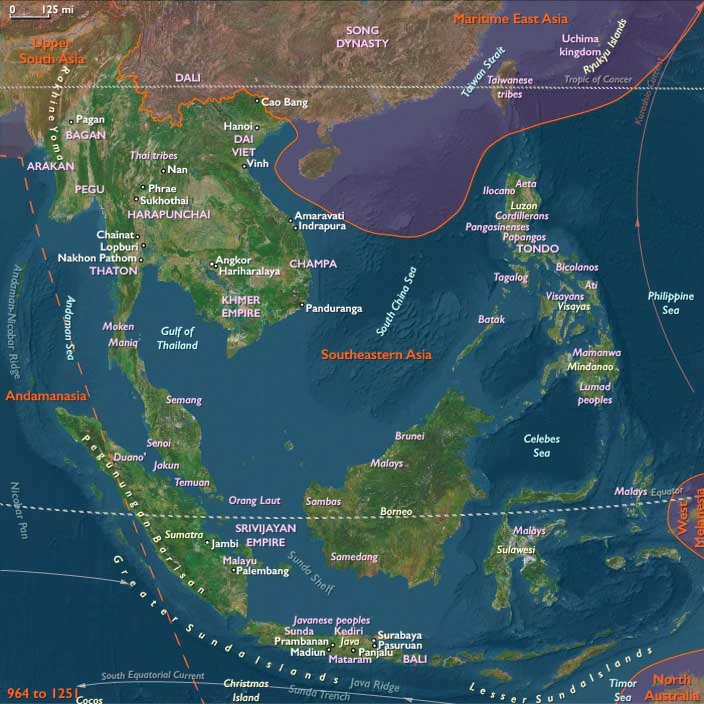
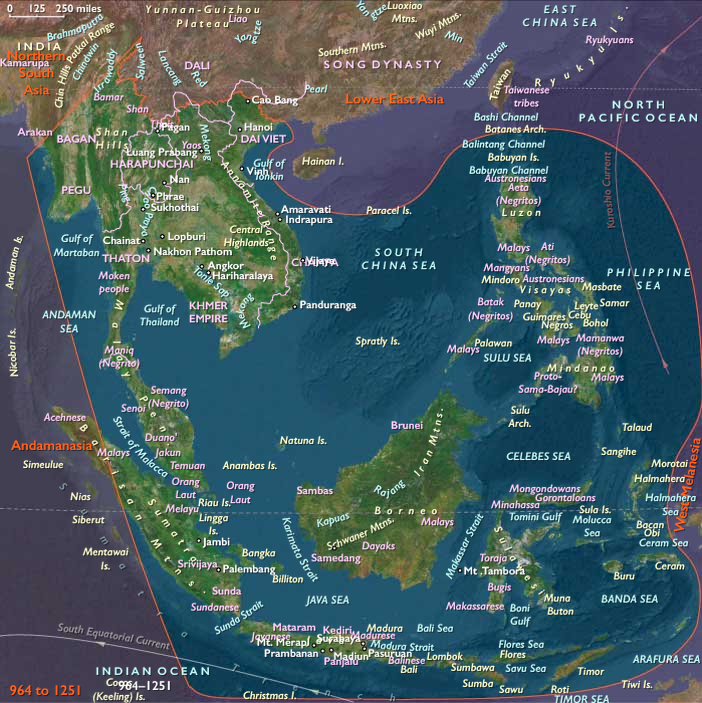
Southeastern Asia includes southern and eastern Myanmar, Thailand, Cambodia, Laos, Vietnam, the Malay Peninsula, Sumatra (excluding Aceh and the western offshore islands), Java, Borneo, Sulawesi, and surrounding archipelagos (Bali–Timor, Banda, Moluccas, Ceram, Halmahera, and the Philippines).
-
Mainland centers: Irrawaddy, Chao Phraya, Mekong, and Red River basins.
-
Insular hubs: the Malacca Strait, Java Sea, Makassar Strait, and the Moluccas–Banda spice islands, supplying global aromatics.
-
Stable Holocene monsoons and volcanic soils (Java, Sumatra) underpinned dense agrarian states.
Mainland Southeast Asia
Myanmar (southern & eastern)
-
The Pyu had faded by the 10th century after Nanzhao incursions.
-
Burman-speaking groups founded Pagan (Bagan) in the Irrawaddy valley.
-
Under Anawrahta (1044–1077), Pagan unified upper Myanmar, adopting Theravāda Buddhism from the Mon and building thousands of stupas and monasteries.
-
Pagan’s irrigation networks supported expansion, integrating upland and lowland zones.
Thailand & Laos
-
Dvaravati Mon polities declined in the Chao Phraya basin, many absorbed into Khmer and Pagan or reorganized into smaller Buddhist states.
-
Laos uplands saw fragmented chiefdoms, gradually influenced by Khmer expansion eastward.
-
The Thai-speaking migrations from the north had not yet created major polities, but foundations were being laid.
Cambodia (Khmer Empire)
-
The Khmer Empire entered its classic Angkorian phase.
-
Suryavarman I (1006–1050) consolidated power, extending Khmer influence into Laos and central Thailand.
-
Massive baray (reservoirs) and canals expanded Angkor’s rice output.
-
Temples like Phimeanakas embodied Hindu–Buddhist royal ideology.
Vietnam
-
The Early Lý dynasty (1009–1225) replaced the Ngô, centralizing rule in Thăng Long (Hanoi).
-
The state patronized Buddhism, built temples, and established enduring bureaucratic institutions.
-
Champa (central Vietnam): expanded along the coast, building brick towers at Mỹ Sơn, consolidating as a Hindu Shaiva kingdom, and sometimes clashing with both Khmer and Dai Viet.
Insular Southeast Asia
Malay Peninsula
-
Ports like Kedah and Tambralinga remained under Srivijayan influence, channeling India–China traffic.
-
These ports exported tin, forest products, and resins while importing ceramics, cloth, and beads.
Sumatra (excluding Aceh & western islands)
-
Srivijaya (Palembang) reached its peak, controlling both Malacca and Sunda Straits.
-
Its fleets patrolled Java Sea–South China Sea routes.
-
Buddhist monasteries in Srivijaya gained international repute; Chinese pilgrim Yijing had earlier studied there, and the tradition persisted.
-
Srivijaya’s suzerainty reached parts of the Malay Peninsula, western Borneo, and Java’s ports.
Java
-
Java was divided among competing courts; Hindu Shaiva traditions dominated central Java while Buddhist patronage persisted.
-
Rice surpluses supported temples, literature, and court culture.
-
Intermittent tensions with Srivijaya reflected Java’s ambition to control its own maritime outlets.
Borneo
-
Srivijayan influence reached coastal settlements; Dayak interior groups continued swidden cultivation and forest gathering.
-
Camphor, resins, and forest goods remained key exports.
Sulawesi
-
Coastal chiefdoms in Makassar, Buton, and northern Sulawesi expanded as maritime brokers, moving cloves and nutmeg from Moluccas into Java Sea trade.
-
Navigation and outrigger technologies here were critical to connecting east–west routes.
Eastern Archipelagos (Bali–Timor, Banda, Moluccas, Ceram, Halmahera, Philippines)
-
Spice Islands (Banda, Moluccas): cloves and nutmeg harvested by local chiefs entered Srivijayan trade circuits via Sulawesi and Java.
-
Philippines: barangay polities grew more complex, ruled by datu chiefs. Bay settlements in Luzon and Visayas exported gold, pearls, forest resins, and slaves.
-
Mindanao and Sulu archipelagos: became key links between Philippines and Moluccas.
-
Bali–Timor arc: mixed rice and root crop systems tied into maritime routes.
Economy and Trade
-
Mainland: Angkor’s irrigation-driven rice economy; Pagan’s surplus-supported temple building; Lý Vietnam’s rice and handicrafts.
-
Insular: Srivijaya dominated straits commerce, collecting tolls, distributing spices, resins, gold, pearls, and forest goods.
-
Spice trade reached new scale: cloves and nutmeg from the Moluccas were indispensable to India and China.
-
Gold from Philippines and Sumatra; tin from the Malay Peninsula; rice from Java fed expanding circuits.
Belief and Symbolism
-
Angkor: Hindu–Buddhist royal ideology expressed in monumental temples and inscriptions.
-
Pagan: Theravāda Buddhism institutionalized, stupas proliferated, monks became landholders.
-
Vietnam (Lý): Buddhist cosmology intertwined with Confucian administrative ideals.
-
Champa: Shaiva Hinduism blended with Austronesian ritual at Mỹ Sơn towers.
-
Srivijaya: Buddhist scholasticism and pilgrimage networks integrated Sumatra into trans-Asian learning.
-
Philippines & Moluccas: animist–ancestor worship remained dominant; Indic influences arrived through trade shrines.
Adaptation and Resilience
-
Hydraulic management in Angkor and Pagan mitigated monsoon variability.
-
Maritime redistribution in Srivijaya balanced shortages by moving surplus rice, spices, and goods across seas.
-
Dual economies of root crops and rice in insular archipelagos buffered against drought and volcanic disruption.
Long-Term Significance
By 1107 CE, Southeast Asia was a complex dual system:
-
Mainland rice empires: Angkor reaching classic scale, Pagan consolidating Theravāda Buddhism, Vietnam centralizing under Lý, Champa thriving on coastal trade.
-
Insular thalassocracies: Srivijaya controlling maritime choke points, Java balancing agrarian and maritime ambitions, Sulawesi and the Philippines anchoring eastern spice flows.
-
This integration positioned Southeast Asia as a critical hinge in Afro-Eurasian exchange, with Angkor and Pagan as monumental agrarian states inland, and Srivijaya and Spice Island networks ensuring global demand for aromatics was met.
People
Groups
- Hinduism
- Mon people
- Khmer people
- Vietnamese people
- Tai peoples, or Thais
- Buddhism
- Buddhists, Theravada
- Cham people
- Malays, Ethnic
- Buddhism, Mahayana
- Srivijaya, Malay kingdom of
- Champa, Kingdom of
- Khmer Empire (Angkor)
- Bamar or Burmans
- Mon Kingdoms
- Pagan (Bagan), Kingdom of
- Ngô dynasty
- Chinese Empire, Pei (Northern) Song Dynasty
- Champa, Kingdom of
- Dai Viet, Kingdom of
Topics
Commodoties
- Weapons
- Glass
- Oils, gums, resins, and waxes
- Grains and produce
- Textiles
- Ceramics
- Strategic metals
- Salt
- Slaves
- Lumber
- Aroma compounds
- Spices
Subjects
- Commerce
- Architecture
- Watercraft
- Painting and Drawing
- Environment
- Faith
- Government
- Custom and Law
- Metallurgy
Regions
Subregions
Related Events
Showing 10 events out of 52798 total
Years: 964 - 1107
People
Groups
- Hinduism
- Mon people
- Khmer people
- Vietnamese people
- Tai peoples, or Thais
- Buddhism
- Buddhists, Theravada
- Cham people
- Malays, Ethnic
- Buddhism, Mahayana
- Srivijaya, Malay kingdom of
- Champa, Kingdom of
- Khmer Empire (Angkor)
- Bamar or Burmans
- Mon Kingdoms
- Pagan (Bagan), Kingdom of
- Ngô dynasty
- Chinese Empire, Pei (Northern) Song Dynasty
- Champa, Kingdom of
- Dai Viet, Kingdom of
Topics
Commodoties
- Weapons
- Glass
- Oils, gums, resins, and waxes
- Grains and produce
- Textiles
- Ceramics
- Strategic metals
- Salt
- Slaves
- Lumber
- Aroma compounds
- Spices
Subjects
- Commerce
- Architecture
- Watercraft
- Painting and Drawing
- Environment
- Faith
- Government
- Custom and Law
- Metallurgy
Regions
Subregions