
Southeastern Asia (820 – 963 CE): Khmer …
Years: 820 - 963
Southeastern Asia (820 – 963 CE): Khmer Beginnings, Pyu Decline, Cham Expansion, and Srivijaya’s Maritime Power
Geographic and Environmental Context
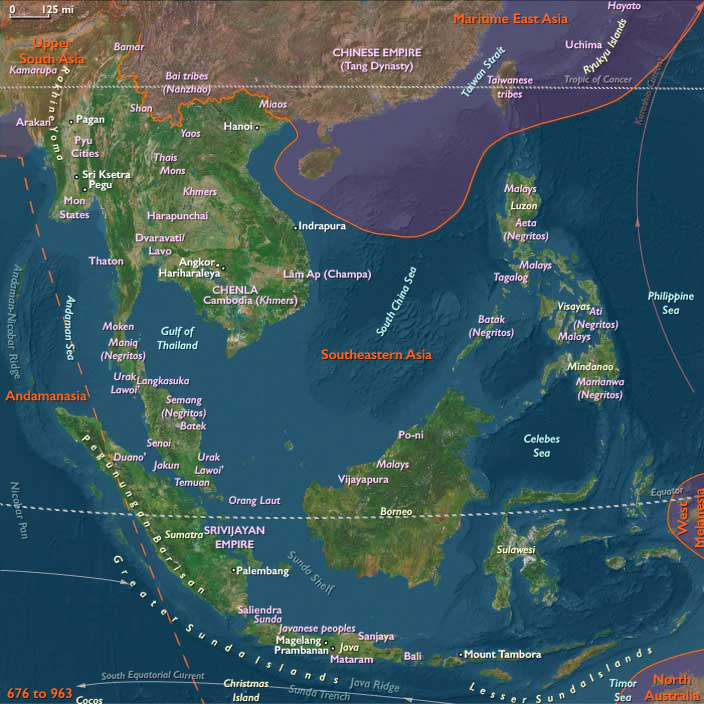
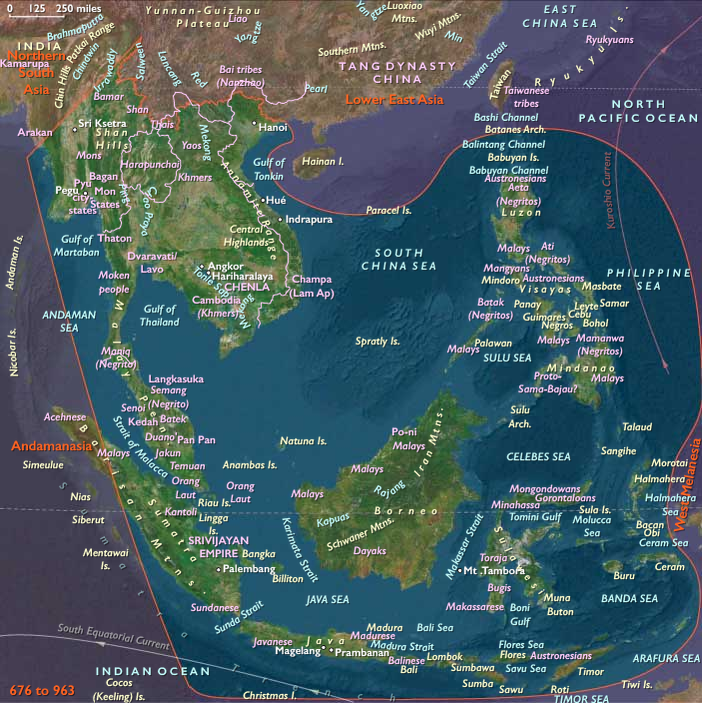
Southeastern Asia includes southern and eastern Myanmar, Thailand, Cambodia, Laos, Vietnam, the Malay Peninsula, Sumatra (excluding Aceh and the western offshore islands), Java, Borneo, Sulawesi, and the surrounding archipelagos (Bali–Timor, Banda, Moluccas, Ceram, Halmahera, and the Philippines).
-
The Irrawaddy, Chao Phraya, Mekong, and Red River basins supported intensive wet-rice farming.
-
Insular corridors — the Malacca Strait, Java Sea, Makassar Strait, Sulu Sea, and the Moluccas — connected Indian Ocean and South China Sea trade, making maritime Southeast Asia pivotal for long-distance commerce.
-
Volcanic soils in Java and Sumatra produced high agricultural yields, while the Spice Islands (Moluccas, Banda) remained the world’s sole source of cloves and nutmeg.
Mainland Southeast Asia
Myanmar (southern & eastern)
-
The Pyu city-states — Śrī Kṣetra, Beikthano, and Halin — were in decline after devastating raids from Nanzhao (Yunnan) in the 9th century.
-
Burman-speaking groups were moving into the central Irrawaddy basin, laying groundwork for the Pagan (Bagan) polity that would rise in the next age.
-
Pyu Buddhist traditions persisted, blending with new influences from India and China.
Thailand and Laos
-
Dvaravati (Mon) city-states in the Chao Phraya basin flourished, building moated towns, Buddhist stupas, and shrines.
-
Theravāda and Mahāyāna Buddhist traditions coexisted.
-
In the uplands of Laos, smaller chiefdoms maintained shifting alliances, often under Mon and Khmer influence.
Cambodia (Khmer beginnings)
-
The old polity of Chenla fragmented, giving way to ambitious rulers in the Mekong basin.
-
Jayavarman II (r. c. 802–835) established the Devarāja cult, legitimizing divine kingship and founding the Angkorian line.
-
Early capitals near the Kulen hills and Angkor bore evidence of expanding irrigation and temple construction.
Vietnam
-
The Red River delta threw off Chinese rule when Ngô Quyền defeated Southern Han forces at the Battle of Bạch Đằng (939).
-
This victory inaugurated an independent Vietnamese kingdom, ending nearly a millennium of Chinese administration.
-
Central Vietnam (Champa): the Cham, Austronesian seafarers, consolidated into a Hindu-Shaiva kingdom, raising brick temples like Mỹ Sơn and expanding northward at times.
Insular Southeast Asia
Malay Peninsula
-
Ports like Kedah and Tambralinga flourished as waystations for Srivijayan control of straits commerce.
-
These entrepôts exchanged Indian textiles, Chinese ceramics, and Arabian goods for local resins, tin, and forest products.
Sumatra (excluding Aceh & western islands)
-
Srivijaya (centered at Palembang) reached consolidation by this age, exercising naval hegemony over the Malacca and Sunda Straits.
-
It drew tribute from Malay Peninsula ports and exerted influence over western Borneo and parts of Java.
-
Buddhist monasteries at Palembang became international centers of learning, hosting Chinese pilgrims en route to India.
Java
-
Central and eastern Java supported competing dynasties — the Sanjaya (Hindu Shaiva) and Sailendra (Buddhist).
-
Monumental traditions (Borobudur, Prambanan) still influenced the cultural landscape, though major temple construction had peaked earlier.
-
Java’s fertile rice fields supported dense populations and powerful courts.
Borneo
-
Coastal settlements aligned with Srivijayan tribute networks, exporting camphor, resins, and forest products.
-
The Dayak interior remained under shifting clan-based communities, less integrated into maritime trade.
Sulawesi
-
The island developed as a maritime hub, with communities on the coasts of Makassar and Buton linking to trade routes between Java, the Philippines, and the Moluccas.
-
Navigation skills here were particularly influential in connecting the archipelago.
Eastern Archipelagos (Bali–Timor, Banda, Moluccas, Ceram, Halmahera, Philippines)
-
Spice Islands (Banda, Moluccas): cloves and nutmeg were harvested by local chiefdoms, traded via Sulawesi and Borneo intermediaries.
-
Philippines: barangay polities (20–50 boat-based clans) clustered along bays and rivers in Luzon and Visayas. They engaged in gold mining, weaving, and sea trade, exporting gold, pearls, and forest products.
-
Bali–Timor arc: mixed rice, taro, and dryland farming; local rulers tied into wider spice trade circuits.
Economy and Trade
-
Mainland: wet-rice agriculture expanded in Mekong, Chao Phraya, Red River valleys.
-
Insular: Srivijaya controlled straits shipping, taxing and protecting merchants between India and China.
-
Spices, camphor, and resins from Moluccas, Sumatra, and Borneo moved outward.
-
Gold from the Philippines, tin from the Malay Peninsula, and rice from Java entered Indian Ocean and South China Sea exchange.
Belief and Symbolism
-
Khmer: Devarāja cult fused Hindu divine kingship with monumental temple building.
-
Mon and Pyu: Buddhist traditions (Theravāda and Mahāyāna) persisted, expressed in stupas and monasteries.
-
Vietnam: Confucian bureaucracy replaced Chinese rule, but Buddhism remained vital.
-
Srivijaya: international Buddhist hub, sending embassies to Tang China and maintaining Nalanda connections.
-
Champa: Shaiva Hindu cults merged with Austronesian ritual; temples served as both sanctuaries and political symbols.
-
Philippines–Sulawesi–Moluccas: animist traditions of ancestor and sea spirits dominated, with imported Indic icons appearing in coastal shrines.
Adaptation and Resilience
-
Hydraulic works in Angkor and Vietnam managed flood regimes and expanded farming.
-
Maritime orientation in Srivijaya and the islands allowed resilience through redistribution of goods.
-
Diversified economies combining rice, root crops, foraging, and trade buffered against climate shocks.
Long-Term Significance
By 963 CE, Southeastern Asia was firmly divided into:
-
Mainland agrarian kingdoms: Khmer beginnings at Angkor, Pyu decline and Burman migrations, Mon Buddhist centers, independent Vietnam, rising Champa.
-
Insular thalassocracies: Srivijaya commanding the straits, Java sustaining Hindu-Buddhist courts, Borneo and Sulawesi tied to spice trade.
-
Eastern archipelagos: Spice Islands and Philippine chiefdoms expanding their role in long-distance commerce.
This age crystallized Southeastern Asia’s dual structure: land-based rice empires inland, and maritime federations at sea, both feeding into the great Indian Ocean–China exchange system.
People
Groups
- Austronesian peoples
- Hinduism
- Vietnamese people
- Khmer people
- Tai peoples, or Thais
- Buddhism
- Confucianists
- Buddhists, Theravada
- Pyu city-states
- Cham people
- Malays, Ethnic
- Funan, Kingdom of
- Buddhism, Mahayana
- Dvaravati, Mon Kingdom of
- Sri Ksetra, Kingdom of
- Lavo, Mon Kingdom of
- Srivijaya, Malay kingdom of
- Nanzhao, or Nanchao, Bai Kingdom of
- Champa, Kingdom of
- Khmer Empire (Angkor)
- Bamar or Burmans
- Southern Han
- Ngô dynasty
Topics
Commodoties
- Weapons
- Oils, gums, resins, and waxes
- Grains and produce
- Textiles
- Ceramics
- Strategic metals
- Salt
- Lumber
- Aroma compounds
- Spices
Subjects
- Commerce
- Architecture
- Watercraft
- Painting and Drawing
- Environment
- Faith
- Government
- Custom and Law
- Metallurgy
Regions
Subregions
Years: 820 - 963
People
Groups
- Austronesian peoples
- Hinduism
- Vietnamese people
- Khmer people
- Tai peoples, or Thais
- Buddhism
- Confucianists
- Buddhists, Theravada
- Pyu city-states
- Cham people
- Malays, Ethnic
- Funan, Kingdom of
- Buddhism, Mahayana
- Dvaravati, Mon Kingdom of
- Sri Ksetra, Kingdom of
- Lavo, Mon Kingdom of
- Srivijaya, Malay kingdom of
- Nanzhao, or Nanchao, Bai Kingdom of
- Champa, Kingdom of
- Khmer Empire (Angkor)
- Bamar or Burmans
- Southern Han
- Ngô dynasty
Topics
Commodoties
- Weapons
- Oils, gums, resins, and waxes
- Grains and produce
- Textiles
- Ceramics
- Strategic metals
- Salt
- Lumber
- Aroma compounds
- Spices
Subjects
- Commerce
- Architecture
- Watercraft
- Painting and Drawing
- Environment
- Faith
- Government
- Custom and Law
- Metallurgy
Regions
Subregions