
Upper South Asia (49,293 – 28,578 BCE) …
Years: 49293BCE - 28578BCE
Upper South Asia (49,293 – 28,578 BCE) Upper Pleistocene I — Loess Terraces, Cave Shelters, and Monsoon Windows
Geographic and Environmental Context
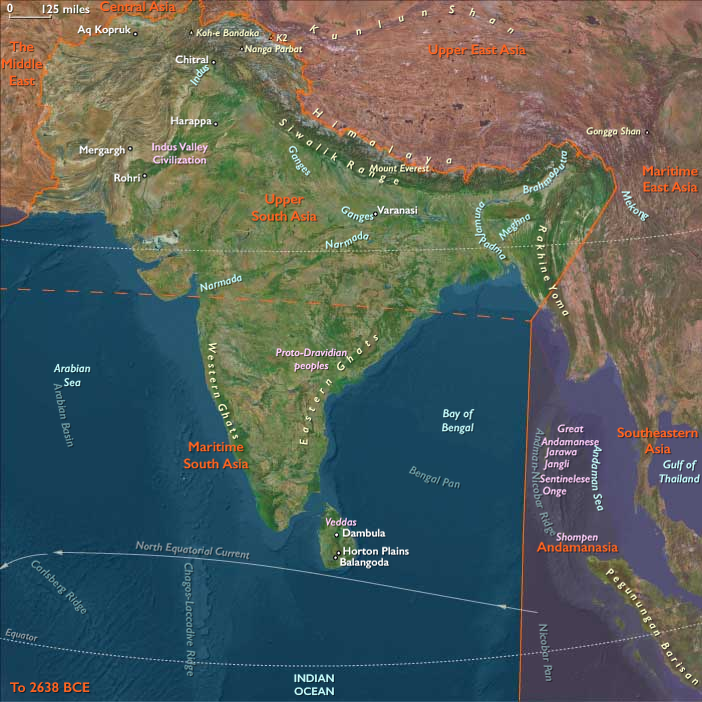
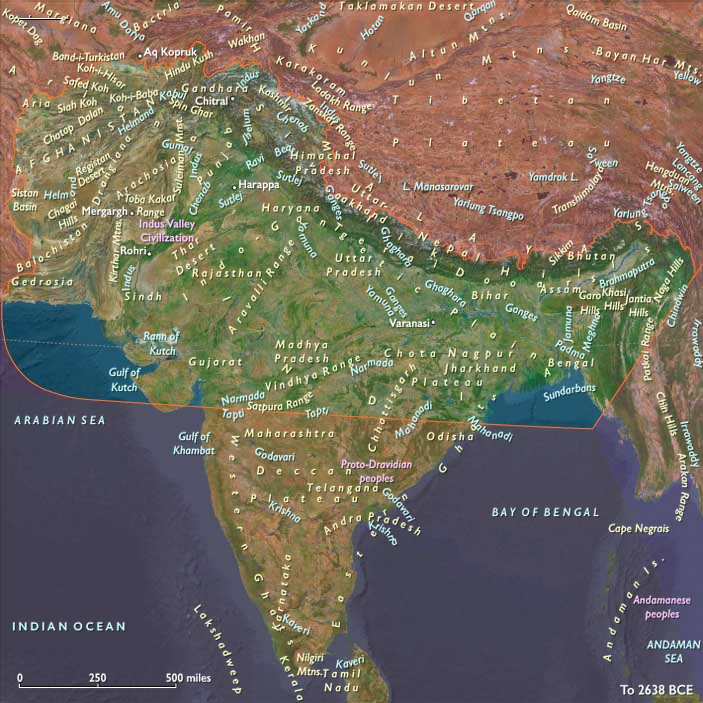
Upper South Asia includes Afghanistan, Pakistan, North India, Nepal, Bhutan, Bangladesh, and northwestern Myanmar (the northern Arakan/Rakhine sector and Chindwin valley).-
Anchors: the Hindu Kush–Kabul–Gandhara gates (Kabul, Swat, Peshawar), the Indus–Punjab (Ravi, Beas, Chenab, Jhelum, Sutlej), the Thar–Ghaggar margins, the Ganga–Yamuna Doab and Middle Ganga plain, Kashmir and Siwalik/Terai belts, the Brahmaputra–Meghna delta (Sundarbans) and Chittagong Hill Tracts, and the Chindwin–northern Arakan corridor.
Climate & Environmental Shifts
-
Late Pleistocene oscillations with cooler/drier phases; weakened summer monsoon, stronger winter westerlies. Glaciers capped the High Himalaya; broad Indus and Ganga terraces formed under braided rivers.
Subsistence & Settlement
-
Highly mobile foragers used caves and rock shelters in Swat, Kashmir, and the Siwalik foothills; open camps along Indus and Doab bluffs.
-
Prey portfolios: wild equids, aurochs, nilgai, blackbuck, ibex, and markhor; opportunistic fish/waterfowl.
Technology & Material Culture
-
Late Middle → Upper Paleolithic microlithic trajectories (e.g., Rohri chert landscapes in Sindh); bladelets, burins, geometric microliths; bone points and eyed needles for tailored clothing.
Movement & Interaction Corridors
-
Khyber–Kurram–Bolan passes knit Gandhara to Iranian plateaus; Indus and Ganga benches guided seasonal migrations; Terai gaps connected foothills to plains.
Symbolism & Ritual
-
Ochred features, curated ornaments; hearth renewals in caves; prey-animal engravings on bone/stone.
Adaptation & Resilience
-
Upland–lowland switching across seasons buffered aridity; riverine fishing supplemented lean hunts.
Topics
Commodoties
Subjects
Regions
Subregions
Related Events
Showing 10 events out of 69706 total
Years: 49293BCE - 28578BCE
Topics
Commodoties
Subjects
Regions
Subregions