
Southern Australasia (909 BCE – CE 819): …
Years: 909BCE - 819
Southern Australasia (909 BCE – CE 819): Evolving Lifeways in Southern Australia and New Zealand
Geographic and Environmental Context
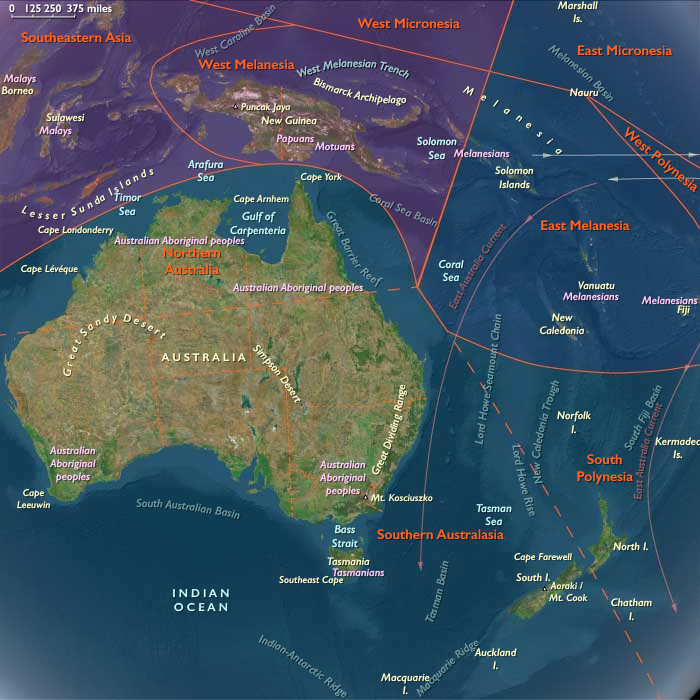
Southern Australasia includes the southern regions of Australia (New South Wales, Victoria, South Australia, Tasmania, southern Western Australia) and the temperate zones of New Zealand’s North and South Islands.
-
Landscapes ranged from open grasslands and coastal plains in Australia to forested valleys and mountain ranges in New Zealand.
-
This subregion provided rich seasonal hunting and foraging grounds.
Climate and Environmental Shifts
-
A temperate climate, with wetter conditions in the south and east, contrasted with drier interior margins.
-
In New Zealand, cool temperate climates supported lush forests and abundant bird populations.
-
Periodic droughts, bushfires, and sea-level changes influenced mobility and resource distribution.
Societies and Political Developments
-
In Australia, Aboriginal peoples organized into clan- and language-based groups, maintaining flexible land tenure systems tied to songlines and sacred sites.
-
Seasonal gatherings reinforced political and ritual alliances across groups.
-
In New Zealand, the Māori settlement horizon had not yet occurred; the islands remained uninhabited until c. CE 1200.
Economy and Trade
-
Subsistence centered on hunting kangaroos, wallabies, and emus, and gathering roots, seeds, and shellfish.
-
Fishing in rivers and coastal waters provided a major food source.
-
Trade networks circulated stone tools (e.g., greenstone from New Zealand after later settlement), ochre, shells, and ritual objects across large distances in Australia.
Subsistence and Technology
-
Stone tools, wooden spears, boomerangs, and digging sticks formed the technological base.
-
Fire-stick farming shaped landscapes, promoting grasses and game populations.
-
In Tasmania, cooler climates emphasized seal hunting, shellfish collection, and root crops.
Movement and Interaction Corridors
-
Seasonal mobility structured settlement, with groups moving between inland hunting grounds and coastal fisheries.
-
River valleys and coasts acted as corridors of resource exchange and intergroup contact.
-
In New Zealand, migratory seabirds and marine mammals remained abundant in an untouched ecosystem.
Belief and Symbolism
-
Dreamtime cosmologies framed landscapes as sacred, with spirits embodied in rivers, mountains, and totems.
-
Ritual gatherings reinforced shared mythologies and encoded ecological knowledge.
-
Rock art and engravings expressed cosmological and social themes.
Adaptation and Resilience
-
Seasonal calendars synchronized hunting, fishing, and gathering with ecological cycles.
-
Fire management increased ecological resilience by maintaining open landscapes.
-
Social reciprocity across kin groups ensured survival during lean years.
Long-Term Significance
By CE 819, Temperate Australasia was home to resilient Aboriginal societies whose lifeways integrated fire, ritual, and mobility—sustaining millennia of continuity and shaping landscapes still recognizable today.
Tropical Australia (909 BCE – CE 819): Rock Art Traditions, Coastal Abundance, and Wet–Dry Adaptations
Geographic and Environmental Context
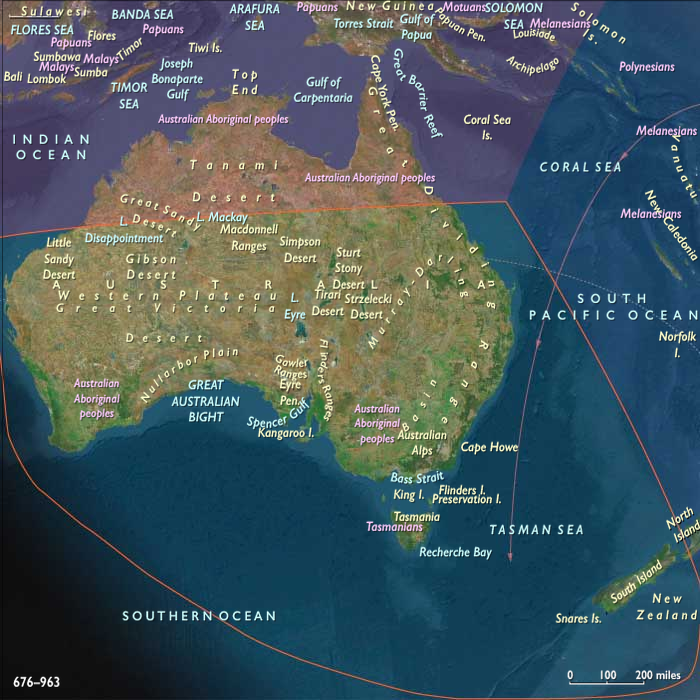
Tropical Australia includes the northern regions of Australia, spanning Arnhem Land, the Kimberley, Cape York Peninsula, and adjacent coasts and wetlands.
-
The subregion is defined by savannas, monsoon-fed wetlands, mangrove coasts, and reef ecosystems(including the Great Barrier Reef).
Climate and Environmental Shifts
-
A tropical monsoon climate, with distinct wet and dry seasons, structured subsistence.
-
Abundant rainfall supported wetlands during the wet season, while the dry season demanded careful resource scheduling.
-
Cyclones and floods periodically reshaped coasts and river mouths.
Societies and Political Developments
-
Aboriginal groups lived in clan-based societies, tied to sacred geographies and seasonal mobility.
-
Rock art traditions flourished in Arnhem Land and the Kimberley, depicting ancestral beings, animals, and ritual practices.
-
Political authority resided in elders and ritual leaders, reinforced through kinship and ceremonial exchanges.
Economy and Trade
-
Coastal and reef economies provided fish, shellfish, turtles, and dugongs, while inland zones supported hunting wallabies, kangaroos, and emus, and gathering roots and fruits.
-
Long-distance trade exchanged ochre, shells, stone axes, and ritual objects between northern and central Australia.
-
Early contact zones may have connected northern Australia with seafarers from Southeast Asia in late prehistory, though direct influence remained minimal in this age.
Subsistence and Technology
-
Fish traps, spears, and nets supported intensive fishing.
-
Bark canoes and rafts enabled coastal navigation and reef exploitation.
-
Stone tools, boomerangs, and digging sticks remained central technologies.
-
Rock shelters preserved food and provided ritual space.
Movement and Interaction Corridors
-
Seasonal migration tracked the monsoon: wet-season inland dispersal, dry-season coastal congregation.
-
River valleys and floodplains served as hubs of exchange and ritual.
-
Trade routes extended ocher from the Kimberley far inland.
Belief and Symbolism
-
Dreamtime stories embedded landscapes with spiritual meaning, linking clans to specific totems and ancestral beings.
-
Rock art depicted both mythological and everyday themes, reinforcing ritual authority.
-
Ceremonial cycles tied ecological abundance to ancestral sanction.
Adaptation and Resilience
-
Seasonal calendars synchronized food procurement with ecological cycles.
-
Fire regimes in savannas increased hunting success and renewed vegetation.
-
Kin-based reciprocity extended survival strategies across ecological zones.
Long-Term Significance
By CE 819, Southern Australia sustained a rich blend of coastal abundance, inland foraging, and symbolic landscapes, expressed in enduring rock art traditions and Dreamtime cosmologies that anchored one of the world’s longest continuous cultural histories.
Groups
Commodoties
Subjects
Regions
Subregions
Years: 909BCE - 819
Groups
Commodoties
Subjects
Regions
Subregions