
South Polynesia (1828–1971 CE): Colonial Annexations, War …
Years: 1828 - 1971
South Polynesia (1828–1971 CE): Colonial Annexations, War Mobilization, and Indigenous Revivals
Geography & Environmental Context
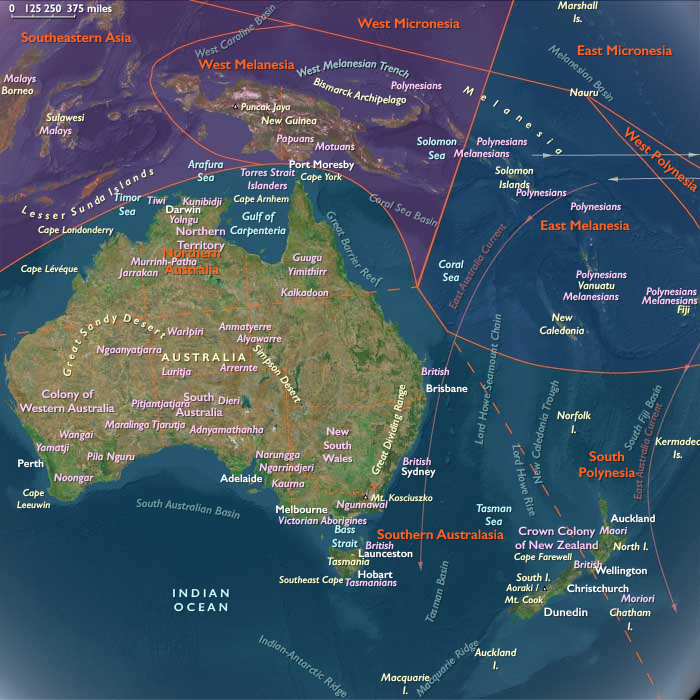
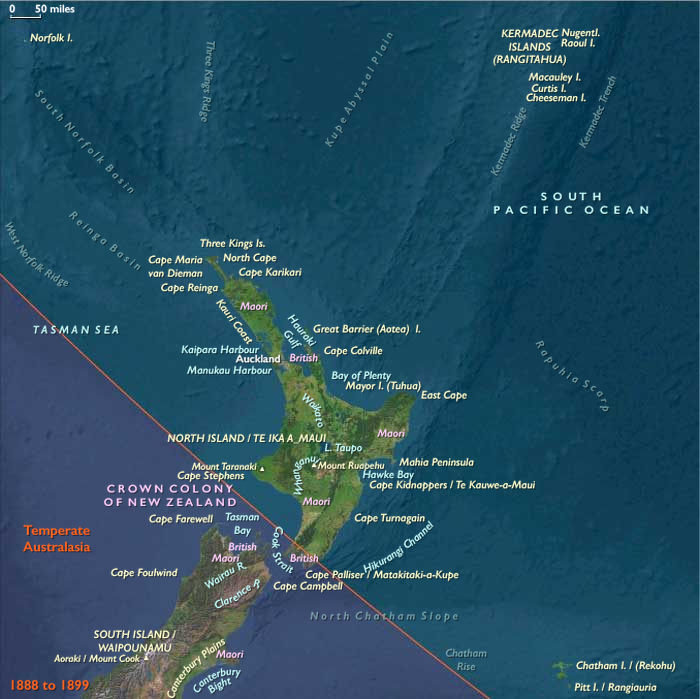
South Polynesia includes New Zealand’s North Island (except its southwestern tip), the Chatham Islands, Norfolk Island, and the Kermadec Islands. Anchors include the Auckland–Waikato corridor, Bay of Plenty, Bay of Islands, the Central Plateau (Taupō–Tongariro–Taranaki arc), the Chatham Islands, and outliers Norfolk and the Kermadecs. Temperate-to-subtropical regimes prevail, with reliable rainfall on the North Island, cooler oceanic climates on the Chathams, and storm-exposed Kermadec and Norfolk coasts.
Climate & Environmental Shifts
Floods and periodic droughts shaped North Island agriculture; volcanic activity persisted on the Central Plateau and offshore (White Island/Whakaari). The Chathams faced cooler, wetter conditions that constrained horticulture. Cyclones and storms periodically struck Norfolk and the Kermadecs. Over the 20th century, deforestation, erosion, and river control works (stopbanks, hydro schemes) transformed landscapes; reforestation and soil conservation followed mid-century.
Subsistence & Settlement
-
North Island (Aotearoa New Zealand):
-
1828–1860s: Māori agriculture (kūmara, potatoes) and trade with Pākehā settlers flourished in coastal hubs (Bay of Islands, Auckland).
-
1860s–70s: The New Zealand Wars over land and sovereignty devastated Māori communities, leading to large-scale confiscations (raupatu) and the growth of settler farms.
-
1880s–1930s: Refrigeration enabled dairy and meat exports; towns expanded; Māori urban migration accelerated after WWII.
-
1950s–70s: State housing, hydro projects, and road networks reshaped settlement; Māori organizations drove a cultural renaissance.
-
-
Chatham Islands (Rēkohu): Moriori and Māori communities lived by fishing, sheep farming from the late 19th century, and limited cropping; whaling stations operated in the 19th century.
-
Norfolk Island: A British penal colony (1825–1855); resettled by Pitcairn Islanders (1856); subsistence gardening, later small-scale tourism and strategic wartime role.
-
Kermadec Islands: Uninhabited; scientific stations and occasional weather outposts appeared in the 20th century.
Technology & Material Culture
Railways and roads connected North Island farms to ports; refrigerated shipping (from the 1880s) globalized meat and dairy. Sawmills, wool scours, and freezing works dotted coastal towns. Urban households adopted radios, refrigerators, and televisions by mid-century. On Norfolk, WWII airfields and coastal defenses left lasting infrastructure; the Chathams saw lighthouses, depots, and later airstrips.
Movement & Interaction Corridors
-
Migration: British and Irish settlers dominated the 19th century; postwar migration diversified cities. Māori moved from rural marae to urban neighborhoods (Auckland, Wellington) after WWII.
-
Maritime routes: Whaling and sealing circuits connected Bay of Islands and Chathams in the 19th century; refrigerated shipping tied Auckland and Napier to London; Norfolk linked to Australia and New Zealand.
-
War mobilization: North Island ports mobilized troops for the Boer War, both World Wars, Korea, and Vietnam; Norfolk hosted Allied wartime facilities.
Cultural & Symbolic Expressions
-
Māori renaissance: From the late 19th century, leaders like Sir Apirana Ngata promoted arts, haka, carving, and land development; after WWII, urban marae and Te Reo Māori revival accelerated.
-
Moriori revival: In the late 20th century (beyond 1971, but with roots earlier), Moriori cultural renewal began; 19th-century trauma remained a core memory.
-
Literature & arts: New Zealand writers and painters (e.g., Frank Sargeson, Colin McCahon) forged national modernism; kapa haka and carving schools thrived.
-
Norfolk identity: Blended Pitcairn/Polynesian and British traditions; Norf’k language and Bounty heritage became central symbols.
Environmental Adaptation & Resilience
-
Agriculture: Pasture improvement and fertilizer stabilized dairy and sheep farming; erosion control and reforestation responded to earlier depletion.
-
Urban services: State housing, electrification, and health systems raised living standards; flood control and hydro schemes moderated river risks.
-
Island strategies: Chathams and Norfolk balanced imports with local fishing and gardening; small economies relied on subsidies and seasonal work.
Political & Military Shocks
-
Treaty and land: The Treaty of Waitangi (1840) framed Crown–Māori relations; subsequent breaches and raupatu shaped politics and law for generations.
-
Wars & nationhood: The New Zealand Wars (1860s) consolidated settler control; dominion status (1907) and WWI/WWII service forged national identity.
-
Postwar policy: Welfare state expansion, hydro development, and immigration reshaped society; Māori activism and land claims gathered momentum.
-
Islands governance: Norfolk oscillated between colonial and self-governing arrangements; Chathams remained part of New Zealand with limited local autonomy; Kermadecs stayed as protected outliers.
Transition
Between 1828 and 1971, South Polynesia moved from Māori–Pākehā encounter to settler nationhood and, later, to urbanized welfare-state modernity. Māori endured land loss and conflict, then led cultural revival and urban adaptation. The Chathams and Norfolk navigated whaling economies, penal histories, and small-island resilience; the uninhabited Kermadecs entered science and conservation circuits. By 1971, South Polynesia was a firmly integrated part of New Zealand’s national project, increasingly conscious of Indigenous rights and regional island identities—poised for the late-20th-century surge in bicultural policy and Pacific regionalism.
People
Groups
- Aotearoa
- Moriori people
- Maori people
- France, (Bourbon) Kingdom of
- British Empire
- Britain (United Kingdom of Great Britain and Ireland)
- Netherlands, Kingdom of The United
- New Zealand, (British) Crown Colony of
- New Zealand, British Colony of
- New Zealand, (British) Dominion of
- Britain (United Kingdom of Great Britain and Northern Ireland)
- Commonwealth of Nations (British)
- New Zealand (Aotearoa)
Topics
- Women's Suffrage in the West
- New Zealand Wars
- Taranaki War, First
- Waikato, Invasion of
- Taranaki War, Second
Commodoties
Subjects
- Commerce
- Watercraft
- Environment
- Labor and Service
- Conflict
- Mayhem
- Exploration
- Government
- Custom and Law
- Catastrophe
- Human Migration
Regions
Subregions
Years: 1828 - 1971
People
Groups
- Aotearoa
- Moriori people
- Maori people
- France, (Bourbon) Kingdom of
- British Empire
- Britain (United Kingdom of Great Britain and Ireland)
- Netherlands, Kingdom of The United
- New Zealand, (British) Crown Colony of
- New Zealand, British Colony of
- New Zealand, (British) Dominion of
- Britain (United Kingdom of Great Britain and Northern Ireland)
- Commonwealth of Nations (British)
- New Zealand (Aotearoa)
Topics
- Women's Suffrage in the West
- New Zealand Wars
- Taranaki War, First
- Waikato, Invasion of
- Taranaki War, Second
Commodoties
Subjects
- Commerce
- Watercraft
- Environment
- Labor and Service
- Conflict
- Mayhem
- Exploration
- Government
- Custom and Law
- Catastrophe
- Human Migration
Regions
Subregions