
South India’s Muslim kingdoms, often collectively termed …
Years: 1542 - 1542
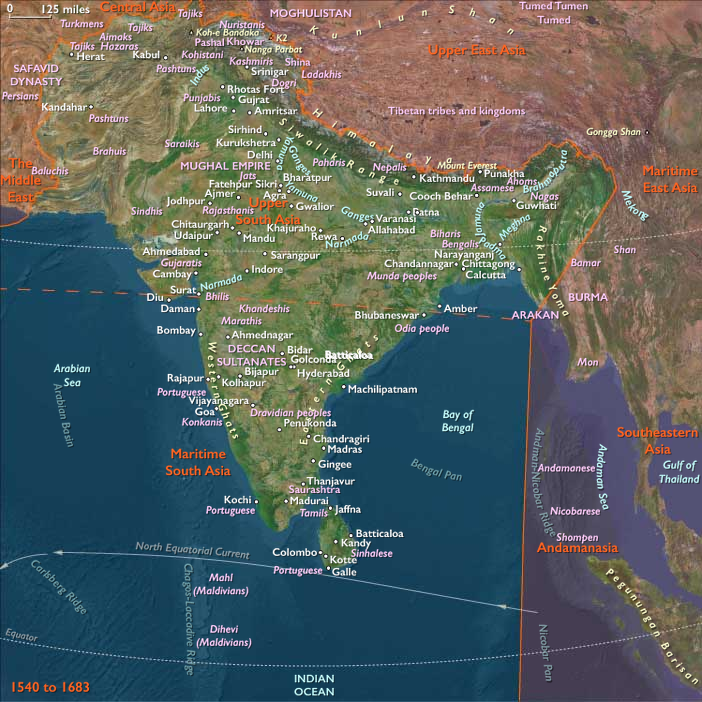
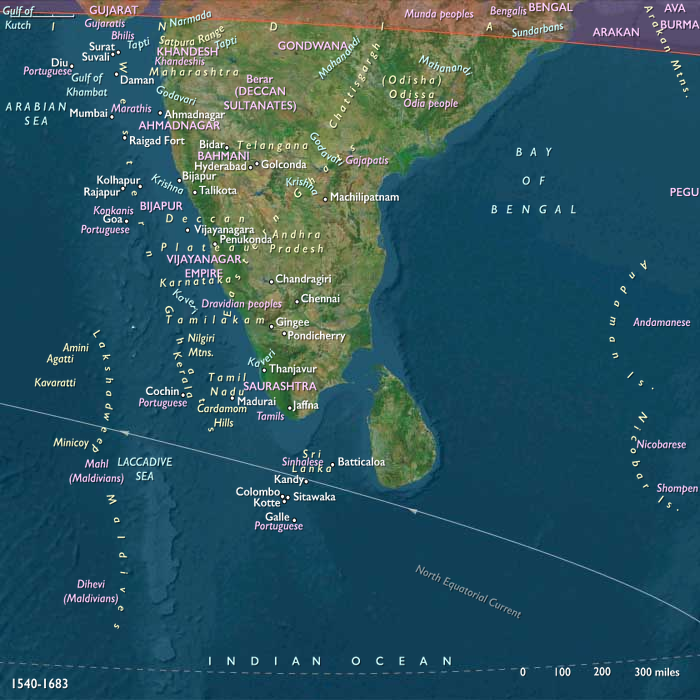
South India’s Muslim kingdoms, often collectively termed the Deccan sultanates, had become established in the northern Deccan after the fall of the Bahmani sultanate in 1527.
Ahmadnagar is the strongest and best organized of the Bahmani successor states during the sixteenth century, followed by Bijapur and then Golconda.
All three are much larger and more important than Berar and Bidar, and all three either began with or had soon come to accept the Shi'ite form of Islam (the religion of the Persian newcomers) as the official faith of their rulers.
The three major states form shifting patterns of alliances, which sometimes (both before and after 1565) also include Vijayanagar, while the two smaller Muslim states range themselves on one side or the other in order to protect their independence.
The goal of military campaigns normally is to humble the adversary without doing irreparable harm, for all three major Muslim states fear the supremacy of any one state, and a tripartite division of territory seems more likely to insure the continued independence of all.
Locations
People
Groups
- Hinduism
- Muslims, Shi'a
- Orissa, Kingdom of
- Deccan Sultanates
- Adil Shahi dynasty (Bijapur, Sultanate of)
- Ahmadnagar Sultanate
- Vijayanagara, (Tuluva) Kingdom of
- Qutb Shahi dynasty of Golconda
Topics
Commodoties
Subjects
Regions
Subregions
Years: 1542 - 1542
Locations
People
Groups
- Hinduism
- Muslims, Shi'a
- Orissa, Kingdom of
- Deccan Sultanates
- Adil Shahi dynasty (Bijapur, Sultanate of)
- Ahmadnagar Sultanate
- Vijayanagara, (Tuluva) Kingdom of
- Qutb Shahi dynasty of Golconda
Topics
Commodoties
Subjects
Regions
Subregions