
South Central Europe (964 – 1107 CE): …
Years: 964 - 1107
South Central Europe (964 – 1107 CE): Alpine Toll Economies, Monastic Hospitality, and Imperial Leverage
Geographic and Environmental Context
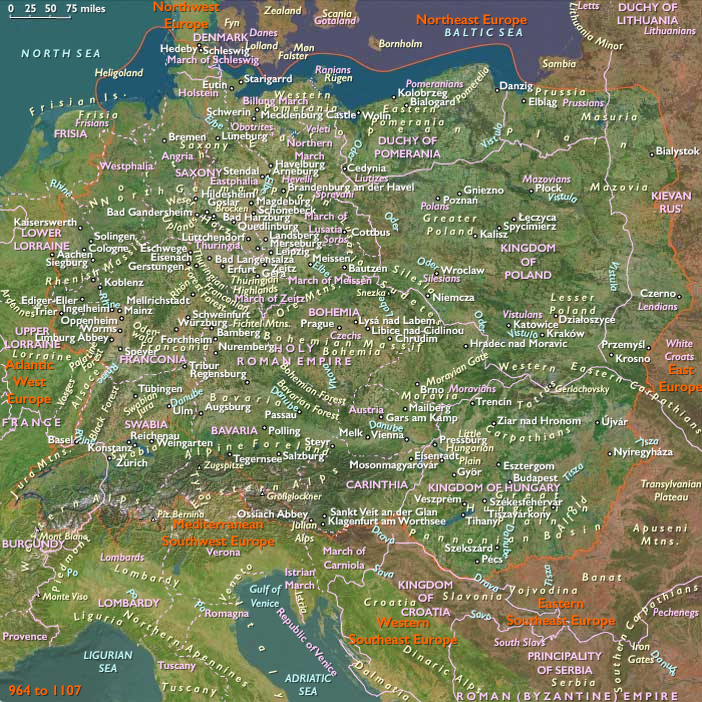
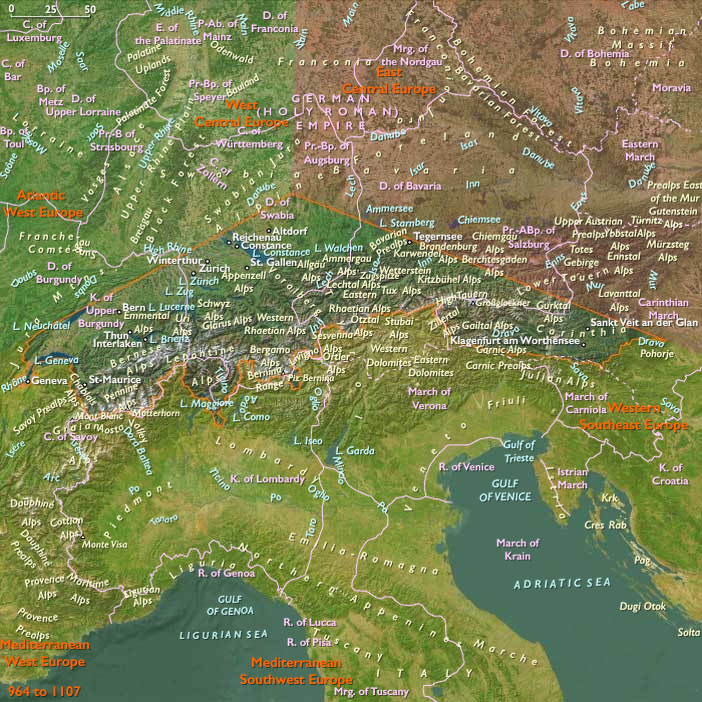
South Central Europe includes southern and western Austria (including Carinthia, excluding Salzburg), Liechtenstein, Switzerland (excluding Basel and the eastern Jura), southeastern Swabia (southeastern Baden-Württemberg), and southwestern Bavaria.
-
Key arteries: Inn–Brenner, Vorarlberg–Liechtenstein–Rheintal, the Swiss Plateau (Zürich, Bern, Geneva), Valais–Great St. Bernard, and the Carinthian–Drava basin.
-
Passes in full use: Brenner, Reschen, Septimer, Julier, Splügen, Great St. Bernard; proto–St. Gotthard tracks gained use by the late 11th century.
Climate and Environmental Shifts
-
The Medieval Warm Period brought longer grazing and wine seasons, boosting dairy exports and viticulture.
-
Avalanche hazards persisted, but route redundancy ensured corridor resilience.
-
Political Developments
-
Ottonian–Salian emperors relied on bishoprics and abbeys (Chur, Sion, Geneva, Brixen, Trento) to police Alpine crossings.
-
Carinthia functioned as a strategic marcher duchy, buffering Magyar and Slavic frontiers while overseeing Drava–Inn passes.
-
By the 11th century, local noble families (precursors to the later Counts of Tyrol) gained prominence in the Inn valley, but the formal County of Tyrol would not be established until 1140.
-
Towns like Zürich and Geneva grew as markets; Bern began developing in Zähringer frontier projects.
-
Monastic reforms (Cluny) invigorated Einsiedeln, St. Gall, Disentis, and Pfäfers, which ran estates, offered pilgrim hospitality, and guarded bridges.
-
Feudalization: castles and hilltop burgs proliferated; ministeriales enforced tolls and road escorts.
Economy and Trade
-
Transit economy boomed:
-
Northbound: oil, silk, spices, papyrus, and southern luxuries.
-
Southbound: timber, metals, cheese, salt, and hides.
-
-
Agriculture: Alpine dairying intensified; vineyards expanded in Valais, around Zürichsee, and Geneva; flax, hemp, and cereals broadened rotation.
-
Coinage: Zürich, Tyrol, and bishoprics minted denarii; tolls and fairs stabilized moneyed exchange.
Subsistence and Technology
-
Irrigation and terrace farming on forelands; vineyards supported presses and cooperage.
-
Road-building: stone causeways, culverts, and pass-towers reduced brigandage.
-
Alpine crafts: wood, metal, and dairy processing served local and export demand.
Movement and Interaction Corridors
-
Brenner–Inn–Adige: main artery for German–Italian commerce.
-
Raetian spine (Chur–Septimer/Julier/Splügen): summer routes to Lombardy.
-
Great St. Bernard–Valais: Burgundy ⇄ Italy.
-
Proto–St. Gotthard: emerging mule trail linking Reuss to Ticino.
Belief and Symbolism
-
Orthodox Latin Christianity framed public life; Romanesque churches rose in valleys and towns.
-
Monastic hospitality: abbeys provided food, lodging, and escorts across dangerous cols.
-
Saints of the mountains (e.g., St. Bernard) were venerated as guardians of Alpine travelers.
Adaptation and Resilience
-
Redundant pass systems allowed detours when one corridor closed.
-
Monastic–feudal partnerships ensured policing and provisioning of traffic.
-
Diversified subsistence (Alpine dairying + vineyards + cereals) stabilized communities and funded towns.
Long-Term Significance
By 1107 CE, South Central Europe had entered a high-transit age:
-
Imperial reliance on bishops and abbeys kept corridors open.
-
Counts of Tyrol and Carinthian dukes grew influential as gatekeepers of passes.
-
Zürich, Geneva, and Bern (incipient) matured as regional nodes.
-
Monasteries like Einsiedeln, St. Gall, and Disentis became hubs of piety, commerce, and road-keeping.
This laid the foundations for the 12th–13th-century Alpine communes and the durable status of the region as the north–south commercial hinge of Europe.

South Central Europe (with civilization) ©2-24-25 Electric Prism, Inc. All rights reserved.
Groups
- Christianity, Chalcedonian
- Carinthia, March of
- Swabia, Duchy of
- Holy Roman Empire
- German, or Ottonian (Roman) Empire
- Italy, Kingdom of (Holy Roman Empire)
- Austria, Margravate of
- Carinthia, Duchy of
- Christians, Roman Catholic
Topics
Commodoties
- Fish and game
- Weapons
- Hides and feathers
- Domestic animals
- Grains and produce
- Strategic metals
- Salt
- Beer, wine, and spirits
- Lumber
Subjects
- Commerce
- Architecture
- Painting and Drawing
- Decorative arts
- Government
- Custom and Law
- Technology
- Metallurgy
Regions
Subregions
Years: 964 - 1107
South Central Europe (with civilization) ©2-24-25 Electric Prism, Inc. All rights reserved.
Groups
- Christianity, Chalcedonian
- Carinthia, March of
- Swabia, Duchy of
- Holy Roman Empire
- German, or Ottonian (Roman) Empire
- Italy, Kingdom of (Holy Roman Empire)
- Austria, Margravate of
- Carinthia, Duchy of
- Christians, Roman Catholic
Topics
Commodoties
- Fish and game
- Weapons
- Hides and feathers
- Domestic animals
- Grains and produce
- Strategic metals
- Salt
- Beer, wine, and spirits
- Lumber
Subjects
- Commerce
- Architecture
- Painting and Drawing
- Decorative arts
- Government
- Custom and Law
- Technology
- Metallurgy
Regions
Subregions