
Western Southeast Europe (49,293 – 28,578 …
Years: 49293BCE - 28578BCE
Western Southeast Europe (49,293 – 28,578 BCE) Upper Pleistocene I — Ice-Edge Steppes, Karst Caves, and Coastal Refugia
Geographic and Environmental Context
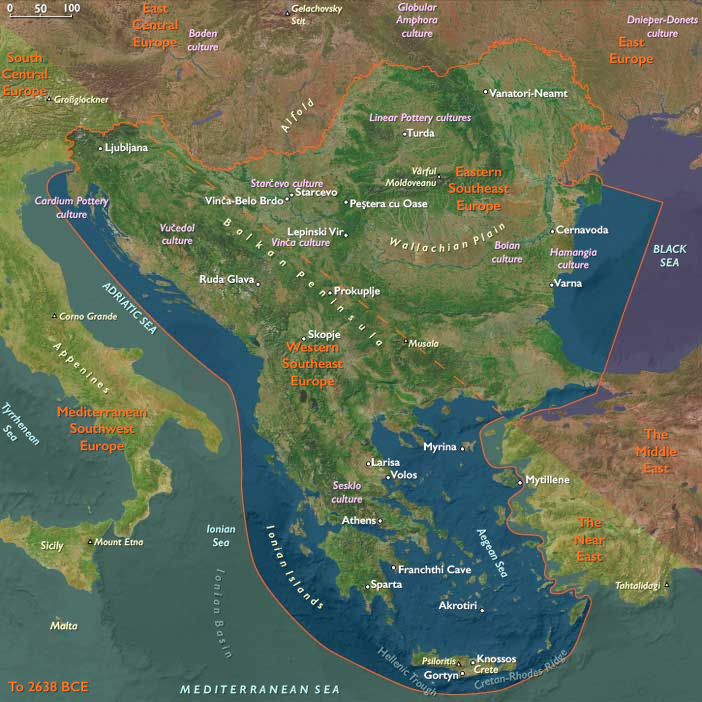
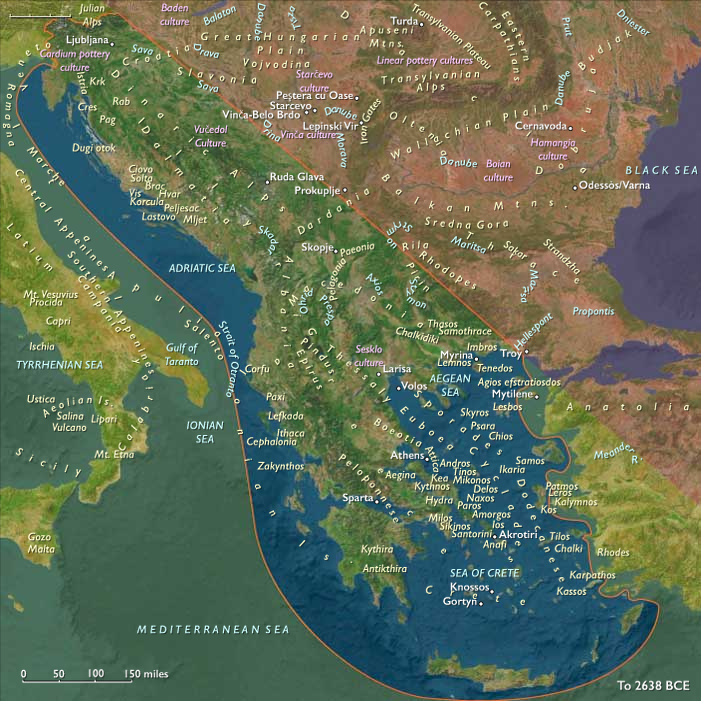
Western Southeast Europe includes Greece (outside Thrace), Albania, Montenegro, North Macedonia, Kosovo, most of Bosnia, southwestern Serbia, most of Croatia, and Slovenia.-
Anchors: Istrian karst caves, Dalmatian coastal benches, Velebit foreland, Neretva delta plain, Epirus–Pindus valleys, Peloponnese capes.
-
The Adriatic stood far below modern level, exposing a broad shelf; inland, steppe–tundra bordered mountain snowlines.
Climate & Environmental Shifts
-
Last Glacial Maximum: cold, dry, windy; periglacial loess mantled forelands; glaciers held high passes.
Subsistence & Settlement
-
Big-game foragers hunted horse, bison, ibex, red deer along terrace edges; coastal groups exploited shellfish and fish on the widened shelf.
-
Caves/rockshelters (Istria, Dalmatia, Epirus) served as winter bases; open camps along river mouths.
Technology & Material Culture
-
Blade–microblade toolkits, burins and endscrapers; bone points; eyed needles for tailored hides.
-
Ornaments (pierced teeth, shell, amber), extensive ochre use.
Movement & Interaction Corridors
-
Sava–Drava–Danube foreland routes; Neretva and Cetina mouths as seasonal nodes; coastal shelf “highway” in summer.
Cultural & Symbolic Expressions
-
Engraved bone/stone motifs; ochred burials in caves; ritual hearth renewal.
Topics
Commodoties
Subjects
Regions
Subregions
Related Events
Showing 10 events out of 69706 total
Years: 49293BCE - 28578BCE
Topics
Commodoties
Subjects
Regions
Subregions