
Filters:
South Central Europe (7,821 – 6,094 …
Years: 7821BCE - 6094BCE
South Central Europe (7,821 – 6,094 BCE) Early Holocene — Mesolithic Lake Villages and Broad-Spectrum Economies
Geographic and Environmental Context
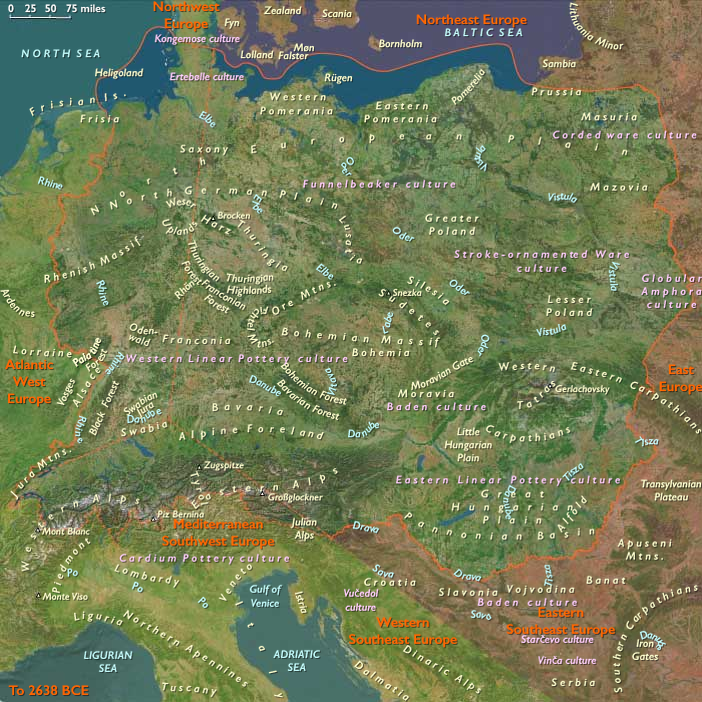
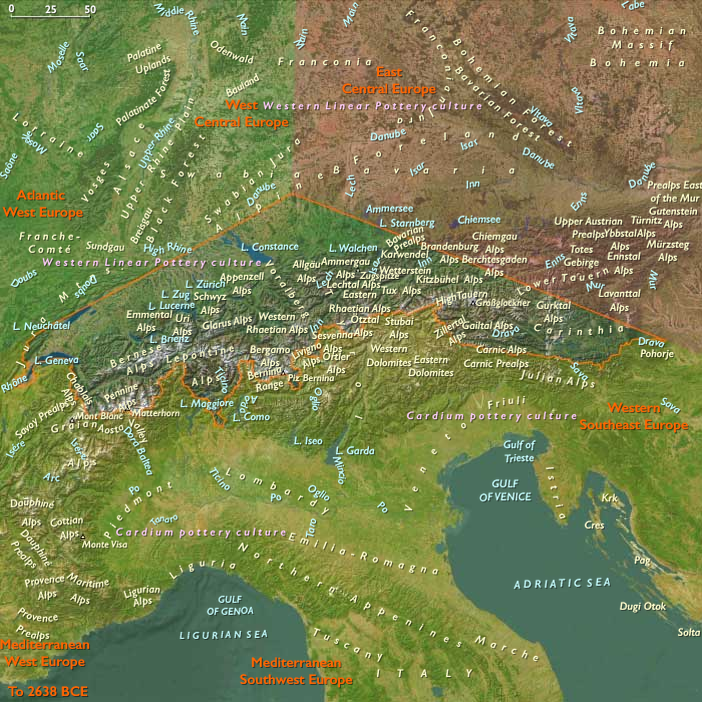
Western Southeast Europe includes southern and western Austria (including Carinthia; excluding Salzburg), Liechtenstein, Switzerland (excluding Basel and the eastern Jura), southeastern Swabia (southeastern Baden-Württemberg), and southwestern Bavaria.-
Anchors: Swiss Plateau lakes (Geneva, Zürich, Neuchâtel), Valais–Rhône, Inn–Tyrol, Aare–Reuss, Drava–Carinthia.
Climate & Environmental Shifts
-
Holocene thermal optimum: warm, wet, stable lakes.
Subsistence & Settlement
-
Semi-sedentary lake-edge villages; fishing (pike, perch), red deer/boar, hazelnut and acorn gathering; upland summer hunts.
-
Early pile-supported platforms in wetlands.
Technology & Material Culture
-
Ground-stone adzes; nets, weirs, fishhooks; dugouts; early pottery appears late at fringes.
Movement & Interaction Corridors
-
Canoe routes laced Aare–Reuss–Rhône–Rheintal; passes carried prestige goods.
Cultural & Symbolic Expressions
-
Wetland burials and offerings; antler/bone ornaments; ritualized hearths.
Topics
- Neolithic Revolution
- Mesolithic Europe
- Boreal Period
- Neolithic Subpluvial, or Holocene climatic optimum, or Holocene Wet Phase
- Neolithic Europe
- 8.2 kiloyear event during the Neolithic Subpluvial
Commodoties
Subjects
Regions
Subregions
Years: 7821BCE - 6094BCE
Topics
- Neolithic Revolution
- Mesolithic Europe
- Boreal Period
- Neolithic Subpluvial, or Holocene climatic optimum, or Holocene Wet Phase
- Neolithic Europe
- 8.2 kiloyear event during the Neolithic Subpluvial
Commodoties
Subjects
Regions
Subregions