
Virgil, sometime after the publication of his …
Years: 26BCE - 26BCE
Virgil, sometime after the publication of his Eclogues (probably before 37 BCE), had become part of the circle of Maecenas, Octavian's capable agent d'affaires, who sought to counter sympathy for Antony among the leading families by rallying Roman literary figures to Octavian's side.
Virgil seems to have made connections with many of the other leading literary figures of the time, including Horace, in whose poetry he is often mentioned, and Varius Rufus, who will later help finish the Aeneid.
At Maecenas' insistence (according to the tradition), Virgil had spent the ensuing years (perhaps 37–29 BCE) on the longer didactic hexameter poem called the Georgics (from Greek, "On Working the Earth") which he dedicates to Maecenas.
A didactic poem in four books purporting to teach farming, completes them in 26 BCE, Virgil sums up the poem's overall plan in the opening lines: what to plant and when, the cultivation of trees, especially the vine, and of livestock, and the art of beekeeping.
Displaying the influence of Hesiod, Aratus, Callimachus, Varro, and Lucretius, as well as other poets in lesser degree, Virgil interweaves his diverse materials into an astonishingly lyrical composition.
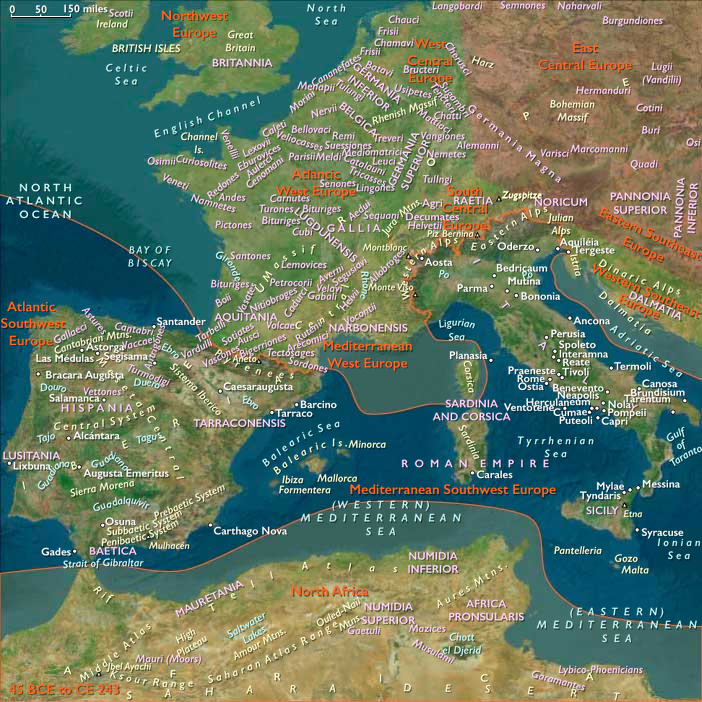
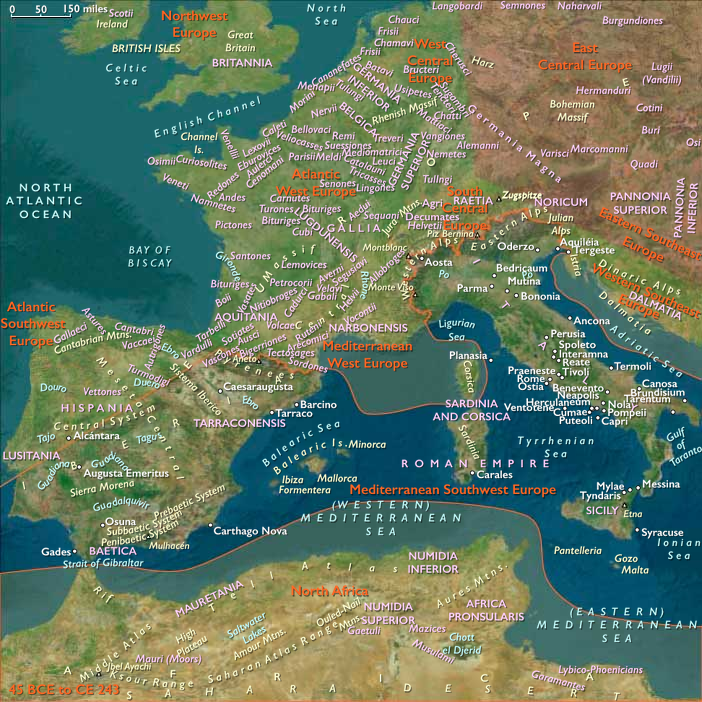
Evoking a tremendous love of the land, he writes of Italy as the beautiful "Saturnian land," fertile and varied in its produce, over which Saturnus ruled during the golden age.
He masterfully balances the horror of disease, embodied in the ravages of a plague, with the picture of the light and joyous bees, whose cultivation he traces to the tragedy of Orpheus and Eurydice.
He closes the poem with Aristaeus appeasing the offended deities and in the process discovering the art of beekeeping.
Virgil now begins work on the story of the legendary Aeneas, commissioned, according to Propertius, by Augustus.
Locations
People
Groups
Topics
Commodoties
Subjects
Regions
Subregions
Related Events
Showing 10 events out of 62205 total
Years: 26BCE - 26BCE
Locations
People
Groups
Topics
Commodoties
Subjects
Regions
Subregions