
Filters:
The Lemovices and the Roman Conquest of …
Years: 52BCE - 52BCE
November
The Lemovices and the Roman Conquest of Limousin (52 BCE)
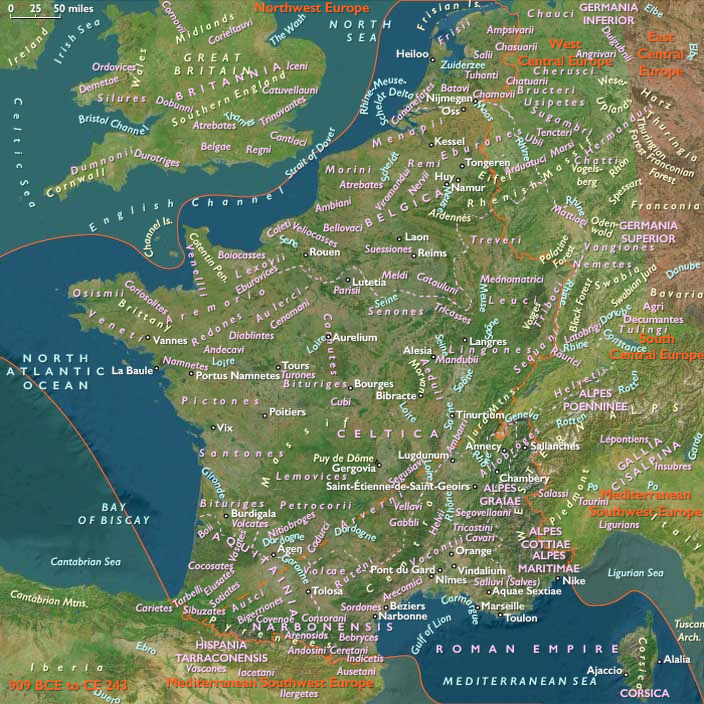
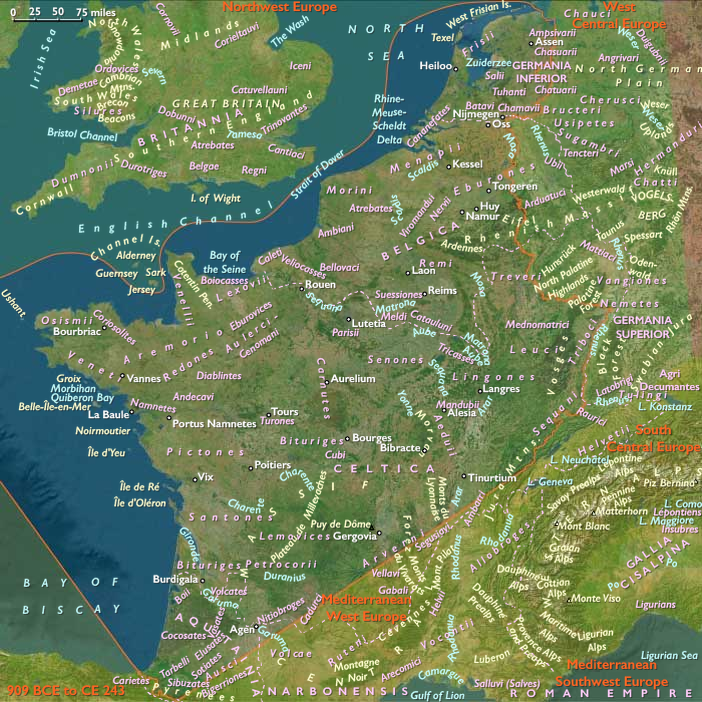
During the Battle of Alesia (52 BCE), 10,000 Lemovician warriors fought alongside Vercingetorix in the final stand against Rome. Their chief, Sedullos, was killed in the battle, marking the end of their independent resistance.
Roman Control Over the Limousin Region
- Following the Gallic defeat at Alesia, the Romans took control of the Lemovices’ homeland, located in the northwestern part of the Massif Central.
- This territory became part of Roman Gaul, where the Romans imposed their administration, economy, and culture.
- The region’s name, Limousin, originates from the Lemovices, preserving the legacy of the Gallic tribe despite their subjugation.
Significance of the Lemovices' Defeat
- The loss at Alesia ended the military resistance of the Lemovices, and they were incorporated into the Roman provincial system.
- Like other Gallic tribes, the Lemovices were gradually Romanized, adopting Latin, Roman laws, and new urban centers.
- The region remained strategically important, due to its mineral wealth and central location in Gaul.
With the fall of the Lemovices and other Gallic tribes, Caesar’s conquest of Gaul was complete, leading to the permanent integration of the region into the Roman world.
Locations
People
Groups
Topics
- Classical antiquity
- Pre-Roman Iron Age of Northern Europe
- Roman Age Optimum
- Roman Republic, Crisis of the
- Gallic Wars
Commodoties
Subjects
Regions
Subregions
Years: 52BCE - 52BCE
November
Locations
People
Groups
Topics
- Classical antiquity
- Pre-Roman Iron Age of Northern Europe
- Roman Age Optimum
- Roman Republic, Crisis of the
- Gallic Wars
Commodoties
Subjects
Regions
Subregions