
Some members of the Bohemian aristocracy have …
Years: 1618 - 1618
May
Some members of the Bohemian aristocracy have rebelled following the 1617 election of Ferdinand (Duke of Styria and a Catholic) as King of Bohemia to succeed the aging Emperor Matthias.
Roman Catholic officials had in 1617 ordered the cessation of construction of some Protestant chapels on land of which the Catholic clergy claim ownership.
Protestants contend the land in question is royal, rather than owned by the Catholic Church, and is thus available for their own use.
Protestants interpret the cessation order as a violation of the right to freedom of religious expression granted in the Letter of Majesty issued by Emperor Rudolf II in 1609.
They also fear that the fiercely Catholic Ferdinand, a staunch supporter of the German Catholic League, will revoke the Protestant rights altogether once he comes to the throne.
An assembly of Protestants at Prague Castle, led by Count Jindrich Matyas Thurn, ‘try’ two Imperial governors, Vilem Slavata of Chlum and Jaroslav Borzita of Martinice, for violating the Letter of Majesty, find them guilty, and throw them, together with their scribe Philip Fabricius, out of the windows of the Bohemian Chancellery on May 23, 161.
They land on a large pile of manure in a dry moat and survive.
Philip Fabricius will later be ennobled by the emperor and granted the title von Hohenfall (lit. meaning "of Highfall").
Roman Catholic Imperial officials claim that the three men had survived due to the mercy of angels assisting the righteousness of the Catholic cause.
Protestant pamphleteers assert that their survival had more to do with the horse excrement in which they landed than the benevolent acts of the angels.
This event, known as the Second Defenestration of Prague (the first had occurred in 1419), exacerbates a low-key rebellion into into armed conflict—the Bohemian Revolt—thus precipitating what is to become known as the Thirty Years’ War, which is to further polarize Europe on religious grounds.
Locations
People
Groups
- Passau, Bishopric of
- Eichstätt, Prince-Bishopric of
- Mainz, Electoral Archbishopric of
- Augsburg, Prince-Bishopric of
- Speyer, Prince-Bishopric of
- Christians, Roman Catholic
- Constance, Bishopric of
- Austria, Archduchy of
- Würzburg, Bishopric of
- Trier, Electoral Archbishop of
- Ulm, Free Imperial City of
- Bohemia, Kingdom of
- Kempten in the Allgäu, Imperial Ducal Abbey (Free City) of
- Nuremberg, Free Imperial City of
- Strasbourg, Imperial Free City of
- Salzburg, Archbishopric of
- Cologne, Electorate of
- Palatinate, Electoral (Wittelsbach)
- Worms, Bishopric of
- Brandenburg, (Hohenzollern) Margravate of
- Württemberg, Duchy of
- Regensburg (Ratisbon), Imperial Free City of
- Palatinate-Neuburg
- Bavaria, Wittelsbach Duchy of
- Baden-Durlach, Margravate of
- Protestantism
- Hungary, Royal
- Hungary, Kingdom of
- Baden-Rodenheim, Margravate of
- Anhalt-Köthen, Principality of
- Anhalt-Zerbst, Principality of
- Anhalt-Plotzkau, Principality of
- Anhalt-Dessau, Principality of
- Anhalt-Bernburg, Principality of
- Protestant League (League of Evangelical Union)
- Catholic League, the (German)
- Habsburg Monarchy, or Empire
Topics
- Protestant Reformation
- Counter-Reformation (also Catholic Reformation or Catholic Revival)
- Bohemian-Palatine War
- Thirty Years' War
Commodoties
Subjects
Regions
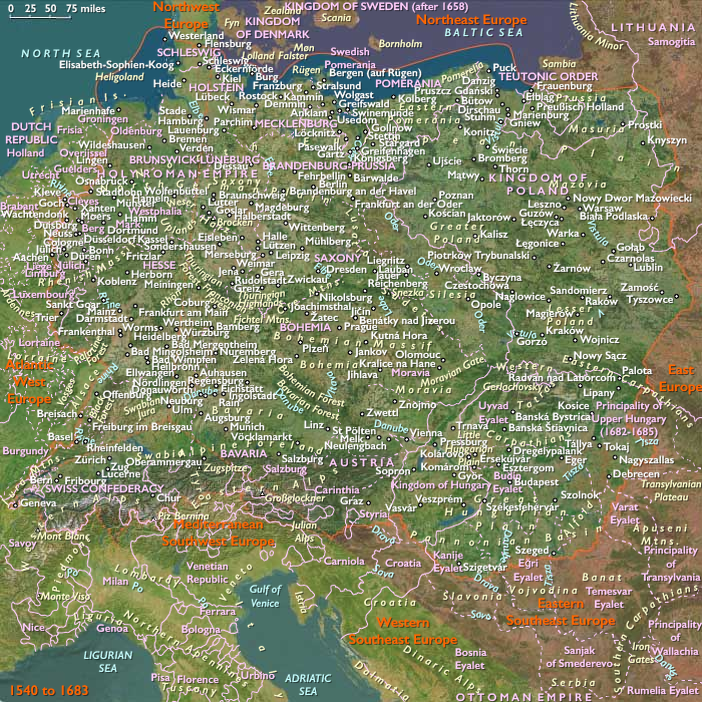
Subregions
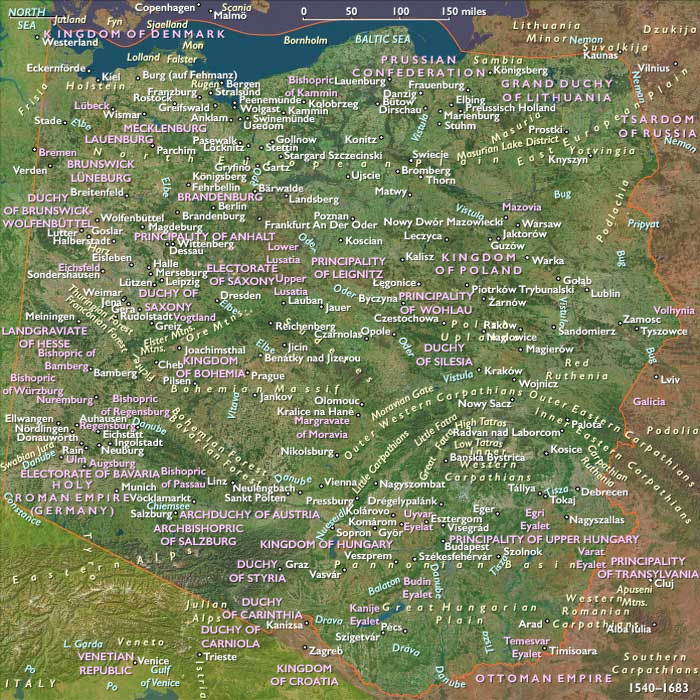
Related Events
Showing 10 events out of 33086 total
Years: 1618 - 1618
May
Locations
People
Groups
- Passau, Bishopric of
- Eichstätt, Prince-Bishopric of
- Mainz, Electoral Archbishopric of
- Augsburg, Prince-Bishopric of
- Speyer, Prince-Bishopric of
- Christians, Roman Catholic
- Constance, Bishopric of
- Austria, Archduchy of
- Würzburg, Bishopric of
- Trier, Electoral Archbishop of
- Ulm, Free Imperial City of
- Bohemia, Kingdom of
- Kempten in the Allgäu, Imperial Ducal Abbey (Free City) of
- Nuremberg, Free Imperial City of
- Strasbourg, Imperial Free City of
- Salzburg, Archbishopric of
- Cologne, Electorate of
- Palatinate, Electoral (Wittelsbach)
- Worms, Bishopric of
- Brandenburg, (Hohenzollern) Margravate of
- Württemberg, Duchy of
- Regensburg (Ratisbon), Imperial Free City of
- Palatinate-Neuburg
- Bavaria, Wittelsbach Duchy of
- Baden-Durlach, Margravate of
- Protestantism
- Hungary, Royal
- Hungary, Kingdom of
- Baden-Rodenheim, Margravate of
- Anhalt-Köthen, Principality of
- Anhalt-Zerbst, Principality of
- Anhalt-Plotzkau, Principality of
- Anhalt-Dessau, Principality of
- Anhalt-Bernburg, Principality of
- Protestant League (League of Evangelical Union)
- Catholic League, the (German)
- Habsburg Monarchy, or Empire
Topics
- Protestant Reformation
- Counter-Reformation (also Catholic Reformation or Catholic Revival)
- Bohemian-Palatine War
- Thirty Years' War
Commodoties
Subjects
Regions
Subregions