
Filters:
The Albany Congress is the first time …
Years: 1754 - 1754
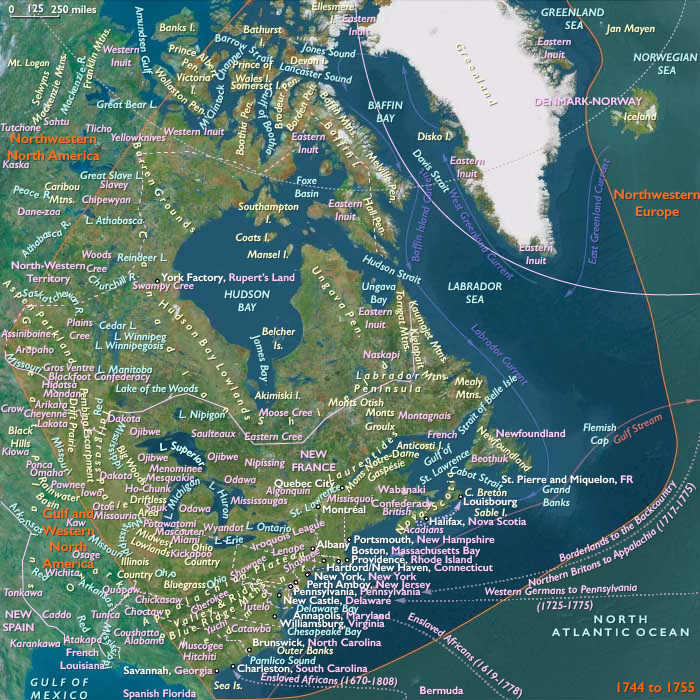
The Albany Congress is the first time in the eighteenth century that colonial representatives meet to discuss some manner of formal union.
In the seventeenth century, some New England colonies had formed a loose association called the New England Confederation, principally for purposes of defense, as raiding by French and allied native tribes was frequent.
In the 1680s, the British Government created the Dominion of New England as a unifying government on the colonies between the Delaware River and Penobscot Bay; it was dissolved in 1689.
The following year, Jacob Leisler had summoned an intercolonial congress, which met in New York on 1, May 1690, to plan concerted action against the French and the natives.
Because of differences in threat, he had attracted only the colonies as far south as Maryland.
The Albany delegates spend most of their time debating Benjamin Franklin's Albany Plan of union to create a unified level of colonial government.
The delegates vote approval of a plan that call for a union of eleven colonies, with a president appointed by the British Crown.
Each colonial assembly is to send two to seven delegates to a "grand council," which is to have legislative powers.
The Union is to have jurisdiction over Native affairs.
The plan is rejected by the colonies' legislatures, which are jealous of their powers, and by the Colonial Office, which wants a military command.
Much of the elements of the plan will later be the basis for the American governments established by the Articles of Confederation of 1777 and the Constitution of 1787.
Benjamin Franklin will later speculate that the colonial separation from England might not have happened so soon had the 1754 plan been adopted.
In the seventeenth century, some New England colonies had formed a loose association called the New England Confederation, principally for purposes of defense, as raiding by French and allied native tribes was frequent.
In the 1680s, the British Government created the Dominion of New England as a unifying government on the colonies between the Delaware River and Penobscot Bay; it was dissolved in 1689.
The following year, Jacob Leisler had summoned an intercolonial congress, which met in New York on 1, May 1690, to plan concerted action against the French and the natives.
Because of differences in threat, he had attracted only the colonies as far south as Maryland.
The Albany delegates spend most of their time debating Benjamin Franklin's Albany Plan of union to create a unified level of colonial government.
The delegates vote approval of a plan that call for a union of eleven colonies, with a president appointed by the British Crown.
Each colonial assembly is to send two to seven delegates to a "grand council," which is to have legislative powers.
The Union is to have jurisdiction over Native affairs.
The plan is rejected by the colonies' legislatures, which are jealous of their powers, and by the Colonial Office, which wants a military command.
Much of the elements of the plan will later be the basis for the American governments established by the Articles of Confederation of 1777 and the Constitution of 1787.
Benjamin Franklin will later speculate that the colonial separation from England might not have happened so soon had the 1754 plan been adopted.
Locations
People
Groups
- New France (French Colony)
- France, (Bourbon) Kingdom of
- Connecticut (English Crown Colony)
- Rhode Island and Providence Plantation, English Crown Colony of
- New York, Province of (English Colony)
- Delaware Bay, Lower Counties on the (English Colony)
- Pennsylvania, Province of (English Colony)
- New Hampshire, English royal Province of
- Massachusetts, Province of (English Crown Colony)
- Maryland, Province of (English Colony)
- Virginia (English Crown Colony)
- Newfoundland (British Colony)
- New Jersey (English Colony)
- Britain, Kingdom of Great
- Nova Scotia (British Colony)
- South Carolina, Province of (British Colony)
- North Carolina, Province of (British Colony)
- Georgia, Province of (British Colony)
Topics
Subjects
Regions
Subregions
Years: 1754 - 1754
Locations
People
Groups
- New France (French Colony)
- France, (Bourbon) Kingdom of
- Connecticut (English Crown Colony)
- Rhode Island and Providence Plantation, English Crown Colony of
- New York, Province of (English Colony)
- Delaware Bay, Lower Counties on the (English Colony)
- Pennsylvania, Province of (English Colony)
- New Hampshire, English royal Province of
- Massachusetts, Province of (English Crown Colony)
- Maryland, Province of (English Colony)
- Virginia (English Crown Colony)
- Newfoundland (British Colony)
- New Jersey (English Colony)
- Britain, Kingdom of Great
- Nova Scotia (British Colony)
- South Carolina, Province of (British Colony)
- North Carolina, Province of (British Colony)
- Georgia, Province of (British Colony)
Topics
Subjects
Regions
Subregions