
Indian opium has become a major global …
Years: 1684 - 1827
Indian opium has become a major global commodity under the British, who dominate the trade.
Opium's peculiar properties make it the ideal trade good during this age, combining the reliable demand of a basic food with the logistics of a luxury good.
As an addictive drug, opium requires a daily dose, giving it the inelastic demand of a basic foodstuff.
Long distance sea-trade in bulk foods is beyond the capacity of current maritime technology, but opium has the low weight and high markup of a luxury good like cloves or pepper.
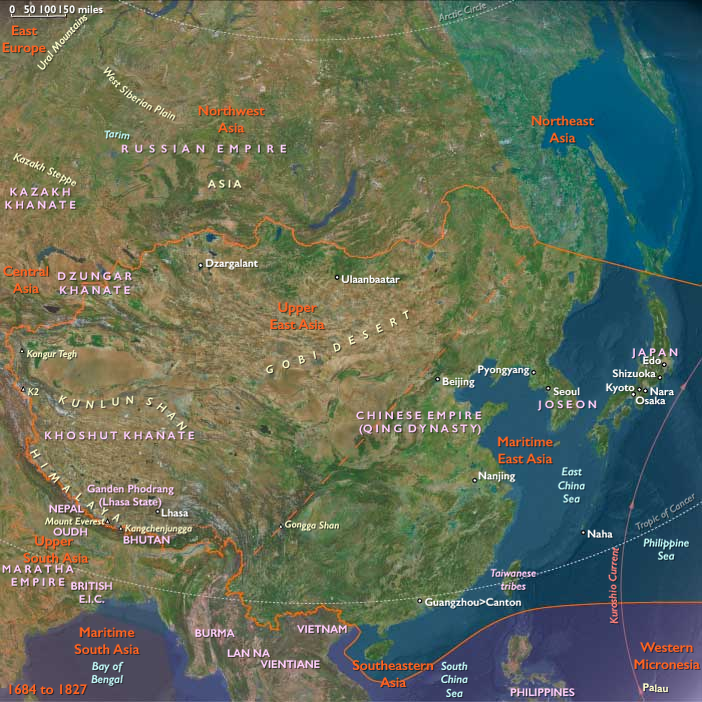
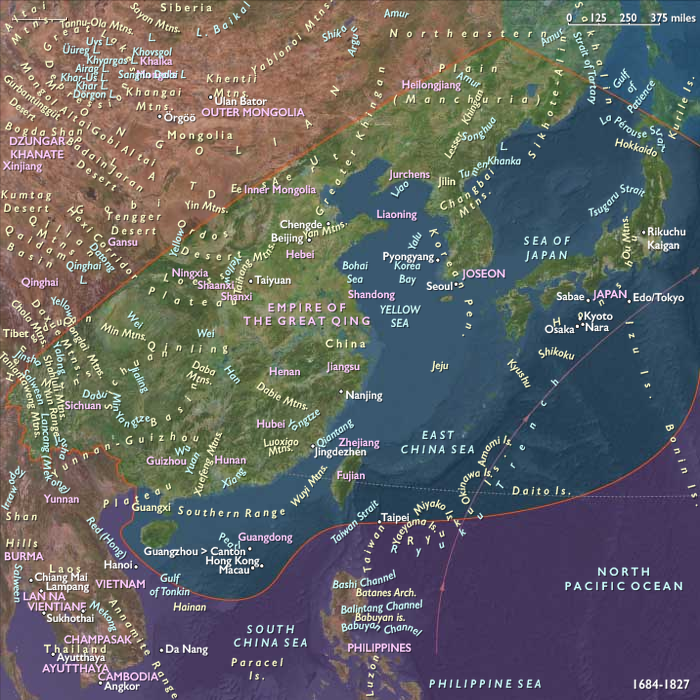
Compounding its extraordinary profitability, China's Yongzheng emperor reacts to the rise of mass addiction by banning opium in 1729 and thus denying China the opportunity to produce opium locally to undercut the high price of Indian imports.
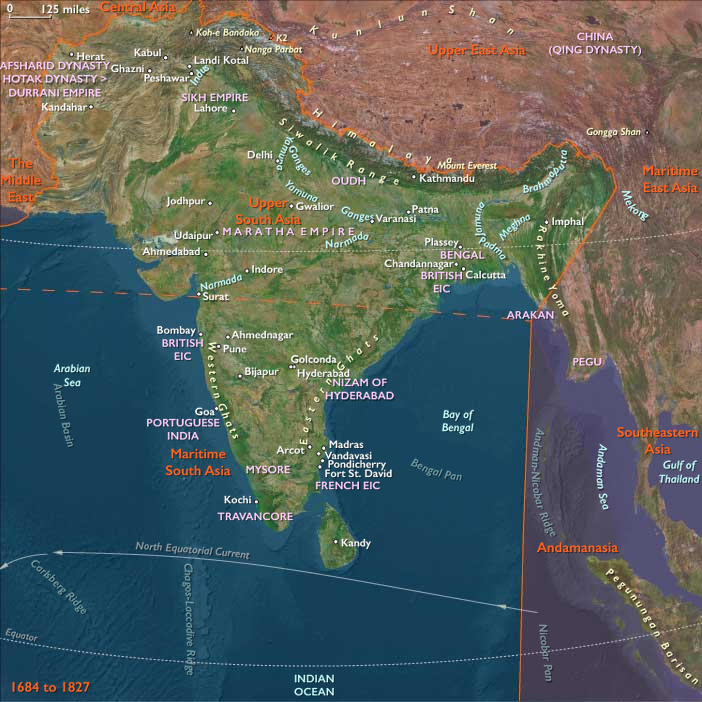
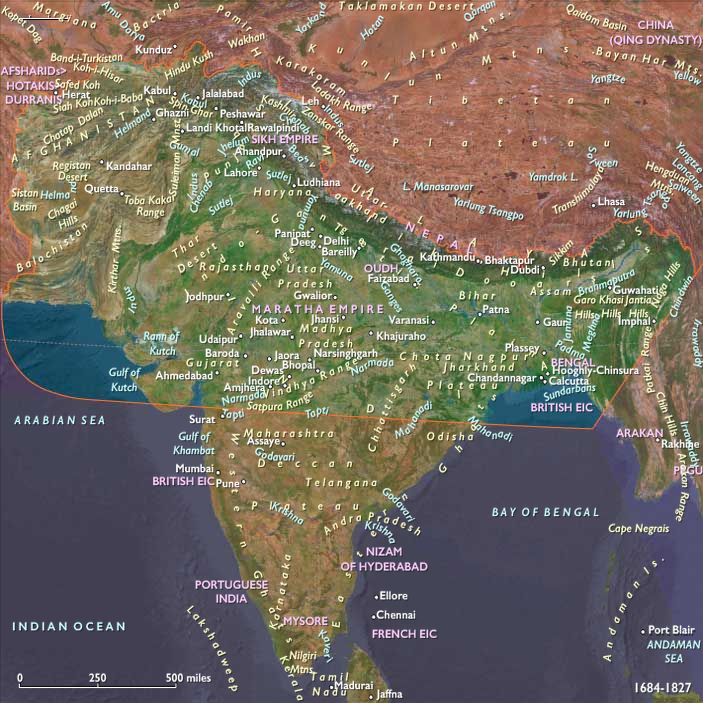
A syndicate of Indian merchants up the Ganges River at Patna holds a monopoly over the Bengal opium trade, making cash advances to peasant farmers and selling the processed opium to Dutch, British and French merchants.
Forces of the British East India Company in 1764 march inland from their port at Calcutta to conquer Bengal.
They soon discover the financial potential of India's richest opium zone.
The Company assumes control of a well-established opium industry involving peasant producers, merchants, and long-distance traders.
British exports of Indian opium to China increase from fifteen tons in 1720 to seventy-five tons in 1773, in which year the British governor-general of Bengal abolishes the Indian opium syndicate at Patna and establishes a colonial monopoly on the sale of opium.
Opium not only solves the fiscal crisis that accompanied the British conquest of Bengal; it remains a staple of colonial finances, providing from six to fifteen percent of British India's tax revenues throughout the nineteenth Century.
More important, opium exports are an essential component of a triangular trade that is the foundation of Britain's status as a world power.
People
Groups
- France, (Bourbon) Kingdom of
- Chinese Empire, Qing (Manchu) Dynasty
- India, Dutch
- India, British
- Britain, Kingdom of Great
- East India Company, British (United Company of Merchants of England Trading to the East Indies)
- India, East India Company rule in
- India, French
- Britain (United Kingdom of Great Britain and Ireland)
Topics
- Colonization of Asia, Dutch
- Colonization of Asia, English
- Colonization of Asia, French
- Colonization of Asia, British
Commodoties
Subjects
Regions
Subregions
Years: 1684 - 1827
People
Groups
- France, (Bourbon) Kingdom of
- Chinese Empire, Qing (Manchu) Dynasty
- India, Dutch
- India, British
- Britain, Kingdom of Great
- East India Company, British (United Company of Merchants of England Trading to the East Indies)
- India, East India Company rule in
- India, French
- Britain (United Kingdom of Great Britain and Ireland)
Topics
- Colonization of Asia, Dutch
- Colonization of Asia, English
- Colonization of Asia, French
- Colonization of Asia, British
Commodoties
Subjects
Regions
Subregions