
Each slave society in the colonies has …
Years: 1684 - 1827
Each slave society in the colonies has an intermediate group, called the "free persons of color," an ambiguous position.
Governor Francis Seaforth of Barbados colorfully expresses this dilemma in 1802: "There is, however, a third description of people from whom I am more suspicious of evil than from either the whites or the slaves: these are the Black and Coloured people who are not slaves, and yet whom I cannot bring myself to call free. I think unappropriated people would be a more proper denomination for them, for though not the property of other individuals they do not enjoy the shadow of any civil right."
This group originates in the miscegenation of European masters and their African slaves.
By the nineteenth century, the group can be divided into blacks who have gained their freedom or are the descendants of slaves, and the mixed, or mulatto, descendants of the associations between Europeans and non-Europeans.
By the time of Britain's abolition of slavery in the 1830s, the heterogeneous free nonwhite population will represent about ten percent of the population of Jamaica, twelve percent of the population of Barbados, and about twenty percent of the population of Trinidad.
A number of these free nonwhites have been free for generations, if not centuries, and have carved a niche in the local societies as successful merchants, planters, professionals, and slave owners.
Governor Francis Seaforth of Barbados colorfully expresses this dilemma in 1802: "There is, however, a third description of people from whom I am more suspicious of evil than from either the whites or the slaves: these are the Black and Coloured people who are not slaves, and yet whom I cannot bring myself to call free. I think unappropriated people would be a more proper denomination for them, for though not the property of other individuals they do not enjoy the shadow of any civil right."
This group originates in the miscegenation of European masters and their African slaves.
By the nineteenth century, the group can be divided into blacks who have gained their freedom or are the descendants of slaves, and the mixed, or mulatto, descendants of the associations between Europeans and non-Europeans.
By the time of Britain's abolition of slavery in the 1830s, the heterogeneous free nonwhite population will represent about ten percent of the population of Jamaica, twelve percent of the population of Barbados, and about twenty percent of the population of Trinidad.
A number of these free nonwhites have been free for generations, if not centuries, and have carved a niche in the local societies as successful merchants, planters, professionals, and slave owners.
Groups
- Dutch people
- French people (Latins)
- English people
- Spaniards (Latins)
- Netherlands, United Provinces of the (Dutch Republic)
- England, (Stuart) Kingdom of
- England, (Stewart, Restored) Kingdom of
- England, (Orange and Stewart) Kingdom of
- Britain, Kingdom of Great
- Britain (United Kingdom of Great Britain and Ireland)
Topics
- Colonization of the Americas, Spanish
- Colonization of the Americas, French
- Colonization of the Americas, English
- Colonization of the Americas, Dutch
Commodoties
Subjects
Regions
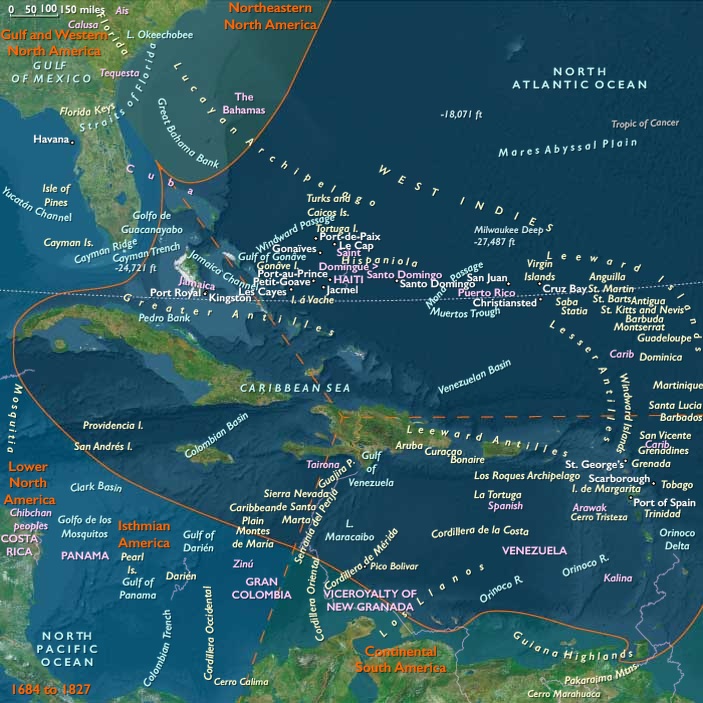
Subregions
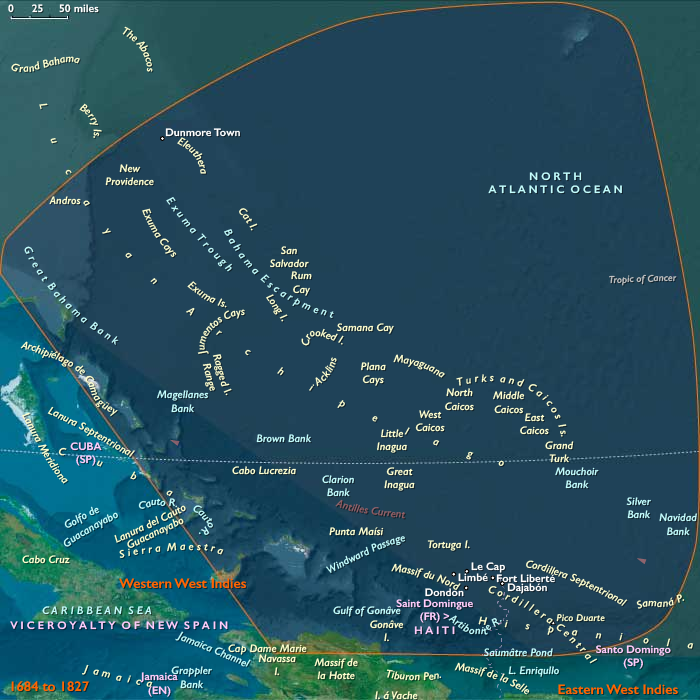
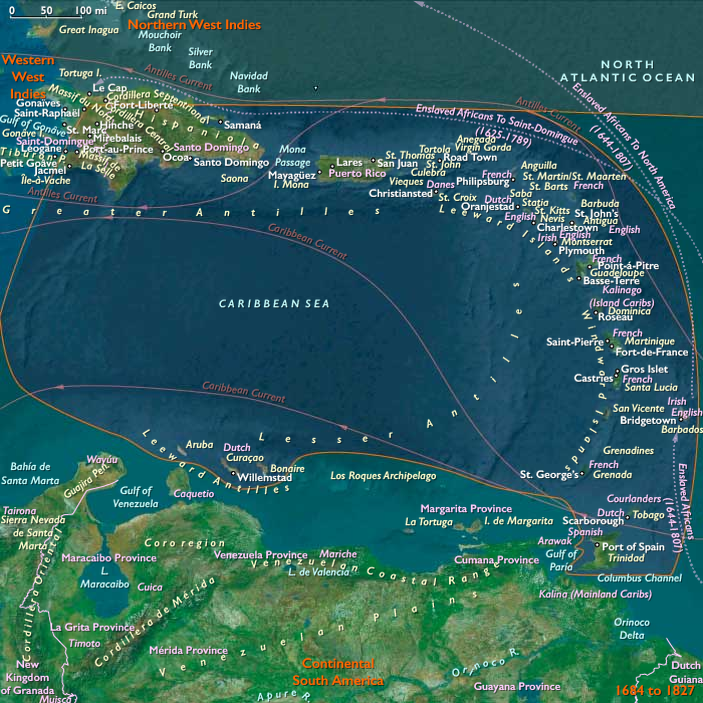
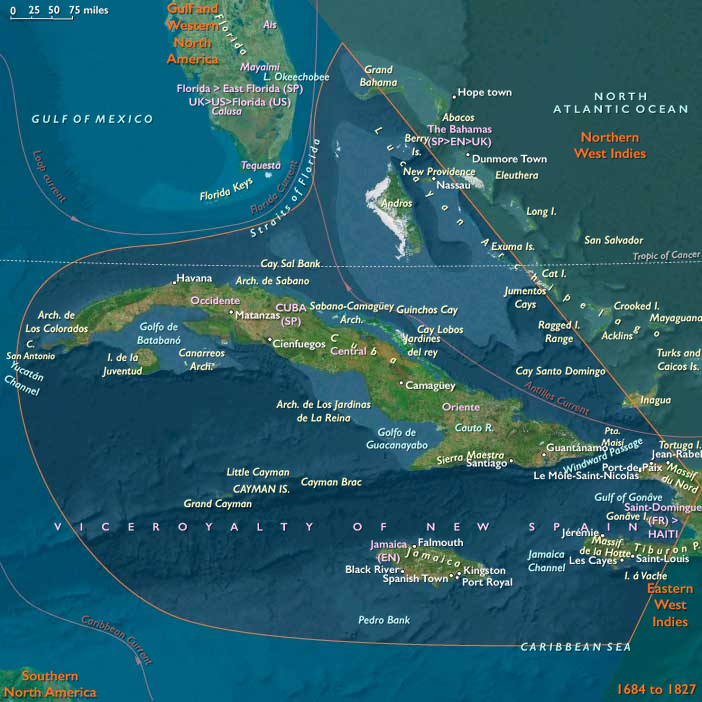
Related Events
Showing 10 events out of 30218 total
Years: 1684 - 1827
Groups
- Dutch people
- French people (Latins)
- English people
- Spaniards (Latins)
- Netherlands, United Provinces of the (Dutch Republic)
- England, (Stuart) Kingdom of
- England, (Stewart, Restored) Kingdom of
- England, (Orange and Stewart) Kingdom of
- Britain, Kingdom of Great
- Britain (United Kingdom of Great Britain and Ireland)
Topics
- Colonization of the Americas, Spanish
- Colonization of the Americas, French
- Colonization of the Americas, English
- Colonization of the Americas, Dutch
Commodoties
Subjects
Regions
Subregions