
…Sittas and Dorotheus, commanding a cavalry force …
Years: 530 - 530
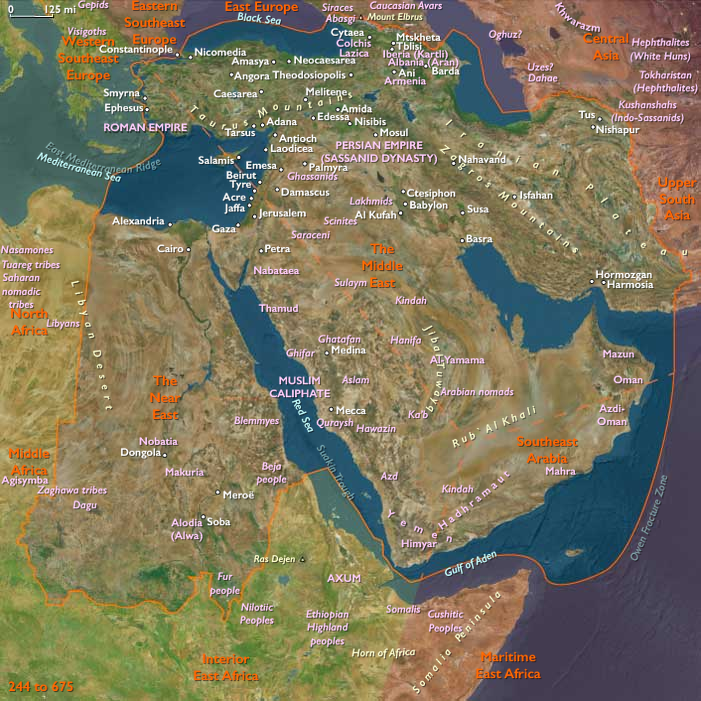
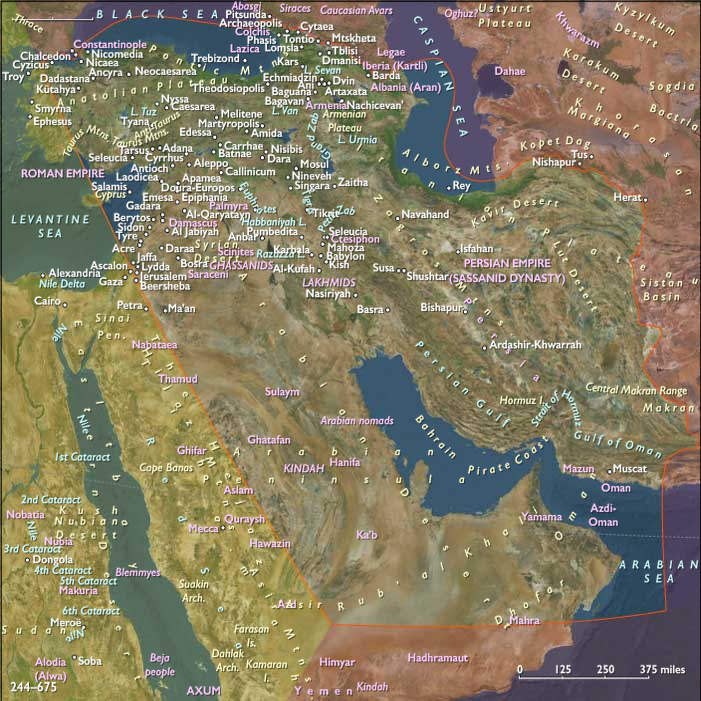
…Sittas and Dorotheus, commanding a cavalry force of thirty thousand troops, defeat a second Persian thrust in the Caucasus under Mihr-Mihroe at Satala.
Locations
People
- Al-Harith ibn Jabalah
- Al-Mundhir III ibn al-Nu'man
- Belisarius
- Justin I
- Justinian I
- Kavadh I
- Khosrau I
- Sittas
Groups
- Arab people
- Zoroastrians
- Lazica (Egrisi), Kingdom of
- Iberia, Caucasian (Kartli, Kingdom of)
- Himyarite Kingdom
- Aksum (or Axum), Kingdom of
- Mesopotamia (Roman province)
- Persian Empire, Sassanid, or Sasanid
- Lakhmid kingdom of al-Hira
- Christians, Armenian Apostolic Orthodox
- East, Diocese of the
- East, or Oriens, Praetorian prefecture of
- Hephthalite Empire
- Christianity, Chalcedonian
- Mazdakites
- Ghassan, Kingdom of
- Roman Empire, Eastern: Justinian dynasty
Topics
Commodoties
Subjects
Regions
Subregions
Related Events
Showing 10 events out of 58092 total
Years: 530 - 530
Locations
People
- Al-Harith ibn Jabalah
- Al-Mundhir III ibn al-Nu'man
- Belisarius
- Justin I
- Justinian I
- Kavadh I
- Khosrau I
- Sittas
Groups
- Arab people
- Zoroastrians
- Lazica (Egrisi), Kingdom of
- Iberia, Caucasian (Kartli, Kingdom of)
- Himyarite Kingdom
- Aksum (or Axum), Kingdom of
- Mesopotamia (Roman province)
- Persian Empire, Sassanid, or Sasanid
- Lakhmid kingdom of al-Hira
- Christians, Armenian Apostolic Orthodox
- East, Diocese of the
- East, or Oriens, Praetorian prefecture of
- Hephthalite Empire
- Christianity, Chalcedonian
- Mazdakites
- Ghassan, Kingdom of
- Roman Empire, Eastern: Justinian dynasty
Topics
Commodoties
Subjects
Regions
Subregions