
Portuguese investment in the Indian Ocean trade …
Years: 1838 - 1838
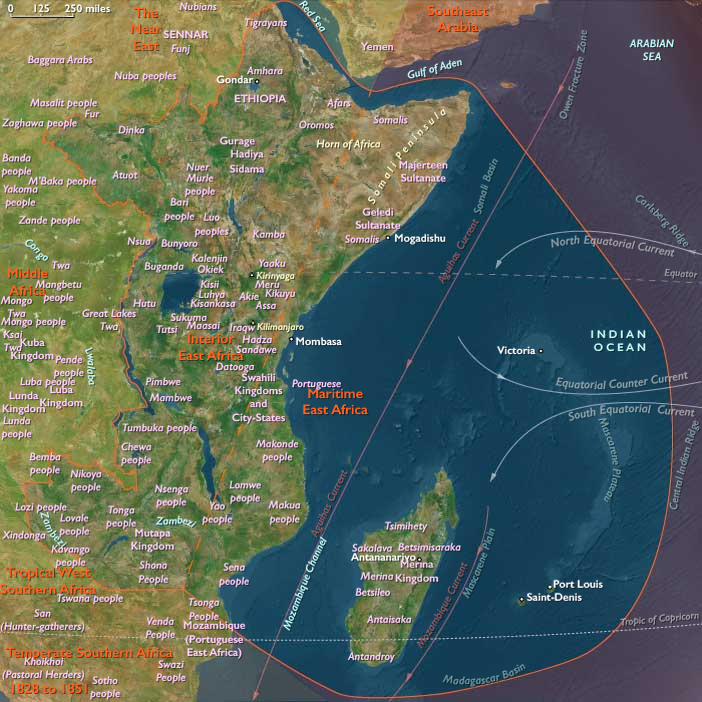
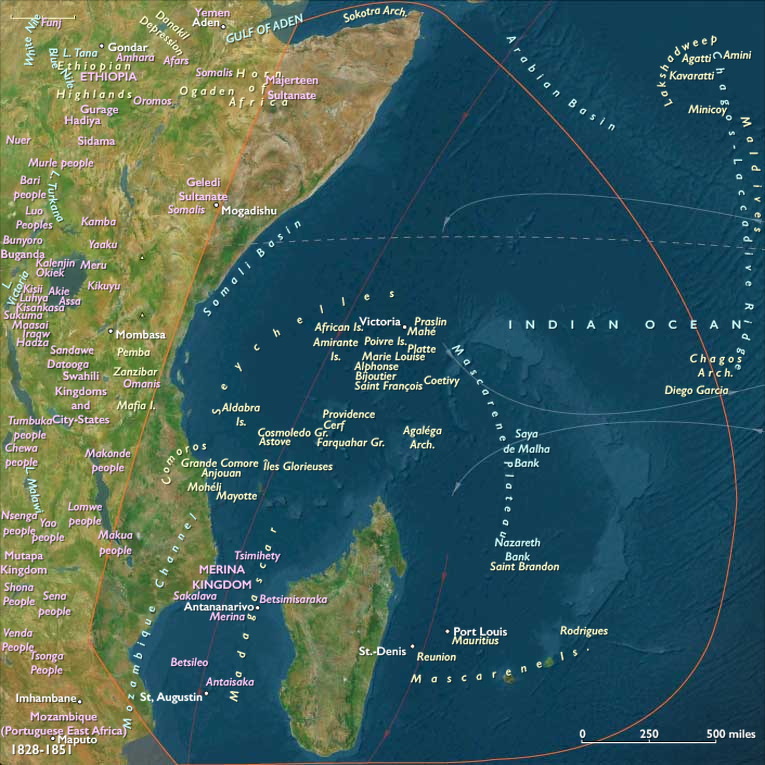
Portuguese investment in the Indian Ocean trade had lagged after the Arab seizure of Portugal's key foothold at Fort Jesus on Mombasa Island (now in Kenya) in 1698; Lisbon has since devoted itself to the more lucrative trade with India and the Far East and to the colonization of Brazil.
The Mazrui and other Omani Arab tribes have reclaimed much of the Indian Ocean trade during the eighteenth and early nineteenth centuries, forcing the Portuguese to retreat south.
Other European powers, particularly the British and the French, begin to become increasingly involved in the trade and politics of the region.
Into the nineteenth century, a system has prevailed of dividing the land into prazos (large agricultural estates) which the natives cultivate for the benefit of the European leaseholders, who are also tax-collector for each district and claim the tax either in labor or produce, a system that keeps the sharecropping farmers in a state of serfdom.
Direct Portuguese influence is limited.
On the coast between several native ports of call and Madagascar a large surreptitious trade supplies slaves for Arabia and the Ottomans.
European traders and prospectors barely penetrate the interior regions.
Locations
Groups
- Arab people
- Ottoman Empire
- Portuguese Mozambique
- Portugal, Bragança Kingdom of
- Mazrui
- Oman, Sultanate of
- Britain (United Kingdom of Great Britain and Ireland)
- France, constitutional monarchy of
Commodoties
Subjects
Regions
Subregions
Related Events
Showing 10 events out of 18259 total
Years: 1838 - 1838
Locations
Groups
- Arab people
- Ottoman Empire
- Portuguese Mozambique
- Portugal, Bragança Kingdom of
- Mazrui
- Oman, Sultanate of
- Britain (United Kingdom of Great Britain and Ireland)
- France, constitutional monarchy of
Commodoties
Subjects
Regions
Subregions