
Sima Guang, born in 1019 in present-day …
Years: 1067 - 1067
Sima Guang, born in 1019 in present-day Yuncheng, Shanxi to a wealthy family, had obtained early success as a scholar and officer.
When he was barely twenty, he passed the Imperial examination with the highest rank of jìnshì ("metropolitan graduate"), and spent the next several years in official positions.
In 1064, Sima presented to Emperor Yingzong of Song a book of five volumes, the Liniantu ("Chart of Successive Years").
It chronologically summarized events in Chinese history from 403 BCE to 959 CE, and was something like a prospectus for sponsorship of his ambitious project in historiography.
These dates were chosen because 403 BCE was the beginning of the Warring States period, when the ancient State of Jin was subdivided, which eventually led to the establishment of the Qin Dynasty; and because 959 CE was the end of the Five Dynasties and Ten Kingdoms period and the beginning of the Song Dynasty.
In 1066, he presented a more detailed eight-volume Tongzhi ("Comprehensive Records"), which chronicled Chinese history from 403 BCE to 207 BCE (the end of the Qin Dynasty).
The emperor issued an edict for compiling a groundbreaking universal history of China, granting full access to the imperial libraries, and allocating funds for all the costs of compilation, including research assistance by experienced historians such as Liu Ban (1022–88), Liu Shu (1032-78), and Fan Zuyu (1041–98).
After Yingzong dies in 1067, Sima is invited to the palace to introduce his work in progress to Emperor Shenzong of Song.
The new emperor not only confirms the interest his father had shown, but proclaims his favor by changing the title from Tongzhi ("Comprehensive Records") to the honorific Zizhi Tongjian ("Comprehensive Mirror to Aid in Government").
Scholars interpret this titular "Mirror" to mean a work of reference and guidance; indicating that Shenzong accepted Sima as his mentor in the science of history and its application to government.
Locations
People
Groups
- Chinese (Han) people
- Tanguts
- Liao Dynasty, or Khitan Empire
- Chinese Empire, Pei (Northern) Song Dynasty
- Western Xia, or Tangut Kingdom
Subjects
Regions
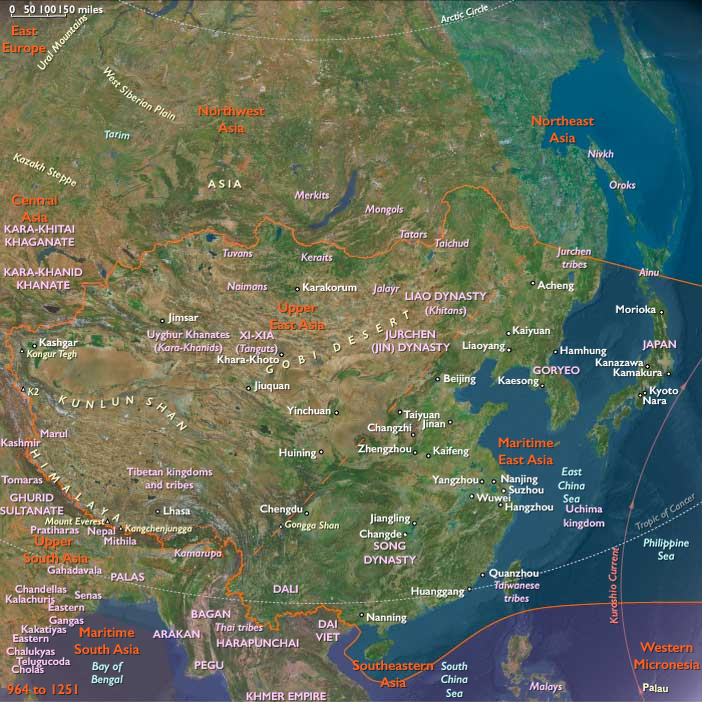
Subregions
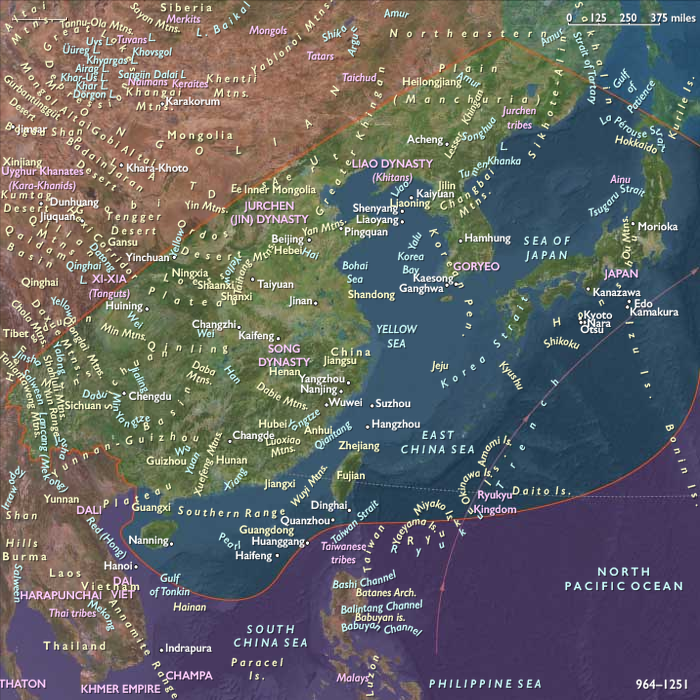
Years: 1067 - 1067
Locations
People
Groups
- Chinese (Han) people
- Tanguts
- Liao Dynasty, or Khitan Empire
- Chinese Empire, Pei (Northern) Song Dynasty
- Western Xia, or Tangut Kingdom
Subjects
Regions
Subregions