
Sigismund, the Habsburg Duke of Austria, had …
Years: 1460 - 1460
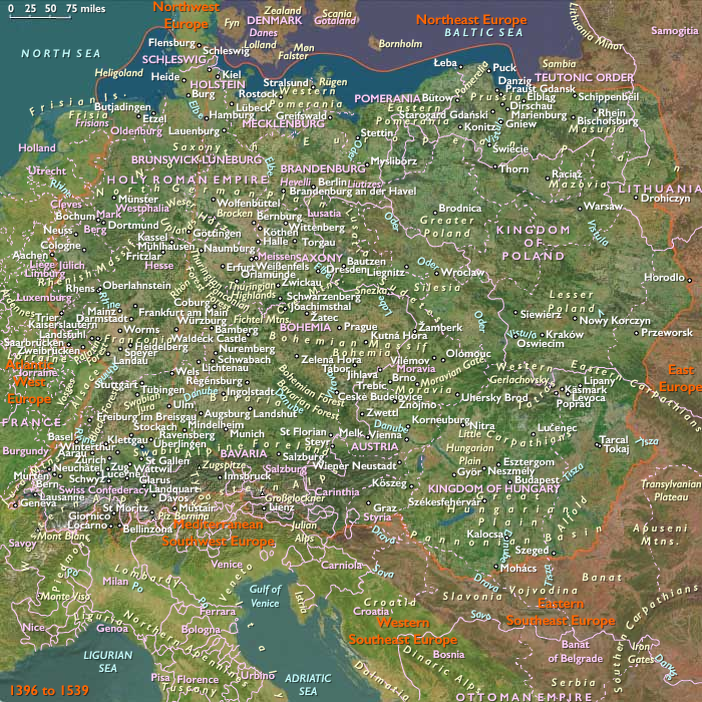
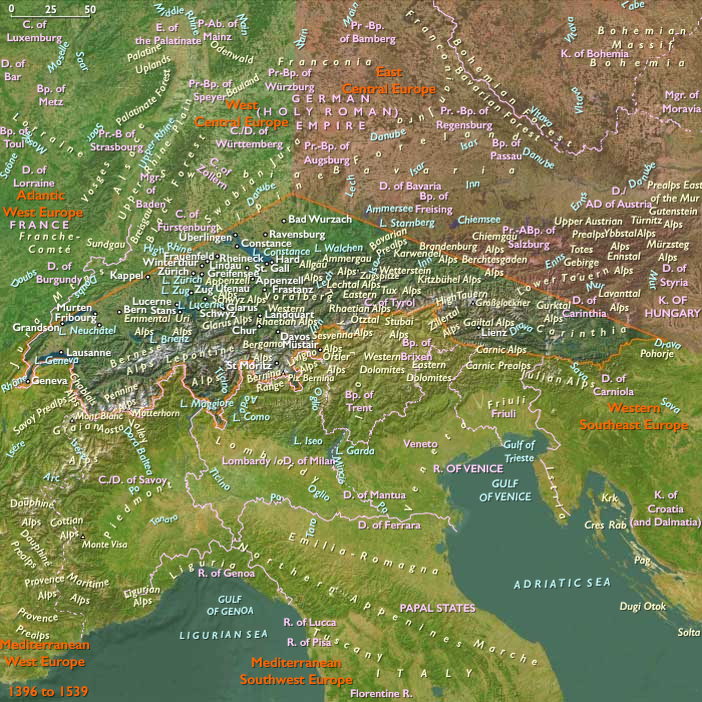
Sigismund, the Habsburg Duke of Austria, had inherited from his father rulership over Tyrol in 1446, together with (other) Further Austria Vorderösterreich, which include the Sundgau in the Alsace, the Breisgau, and some possessions in Swabia.
Emperor Frederick III, of a rival branch of this expansionist family, backs his cousin’s family claim rather than assert imperial rights in the region.
Frederick attempts to split the Swiss Confederation, which now includes the abbeys of Saint Gall, Rapperswill, and Stein am Rhein as allies and Appenzell and Steinhausen as members.
When Pope Pius II excommunicates Duke Sigismund over the investiture issue in 1460, the Swiss, not yet under attack, act against the imperial menace by dispatching their troops north as far as the Rhine River, meeting with scarcely any opposition.
Occupying Frauenfeld and taking Thurgau canton from Sigismund’s forces, …
Locations
People
Groups
- Christians, Roman Catholic
- Tyrol, County of
- Austria, Archduchy of
- Swiss Confederacy, Old (Swiss Confederation)
- Holy Roman Empire
Topics
Commodoties
Subjects
Regions
Subregions
Related Events
Showing 10 events out of 41276 total
Years: 1460 - 1460
Locations
People
Groups
- Christians, Roman Catholic
- Tyrol, County of
- Austria, Archduchy of
- Swiss Confederacy, Old (Swiss Confederation)
- Holy Roman Empire
Topics
Commodoties
Subjects
Regions
Subregions