
Shelikhov seeks exclusive control of the fur …
Years: 1788 - 1788
Shelikhov seeks exclusive control of the fur trade, and Empress Catherine II decides in 1788 to grant his company a monopoly only over the area it already occupies.
Other traders are free to compete elsewhere.
Catherine's decision is issued as the imperial ukase (proclamation) of September 28, 1788.
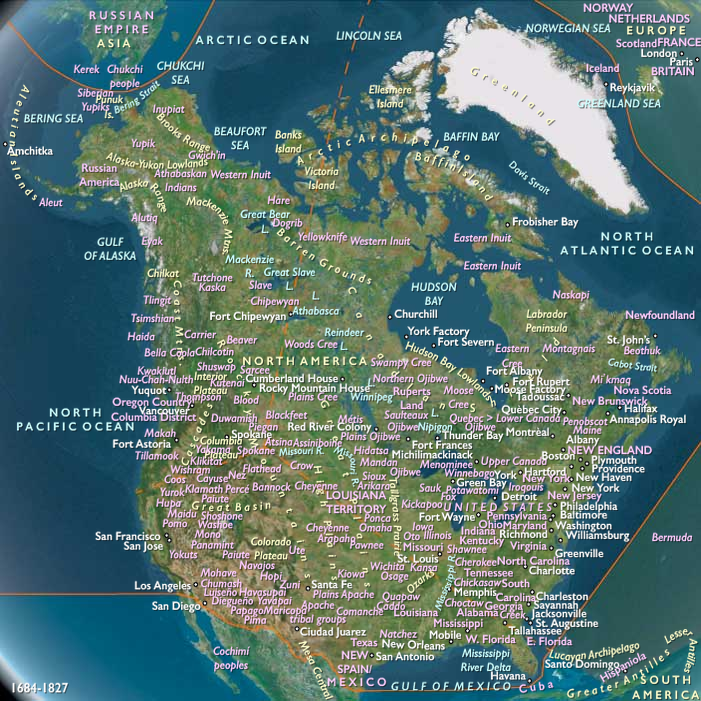
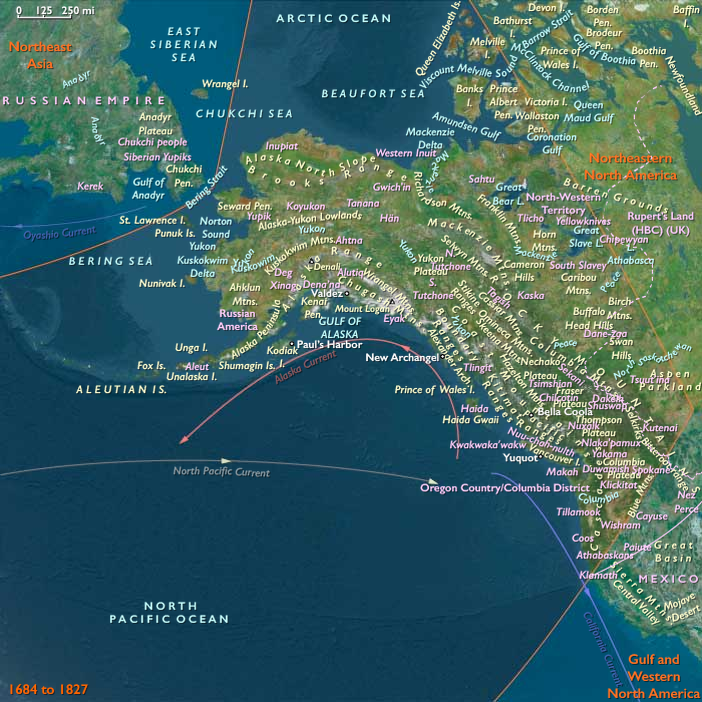
The Russians have spent over forty years establishing and expanding their maritime operations in North America by the time of Catherine's ukase of 1788, just as other nations are entering the maritime fur trade.
A number of colonies are being established over a large region stretching from the Aleutian Islands to Cook Inlet and Prince William Sound.
Many ships sail from Kamchatka to Alaska each year.
The Russians not only have an early start, but they control the habitats of the most valuable sea otters.
The Kurilian, Kamchatkan, and Aleutian sea otters have fur that is thicker, glossier, and blacker than those on the Northwest Coast and California.
There are four grades of fur based on color, texture, and thickness.
The most prized furs are those of Kurilian and Kamchatkan sea otters, Aleutian furs are second grade, those of the Northwest Coast third, and the poorest grade is that of Californian sea otters.
Russia also controls the sources of sable furs, the most valuable fur-bearing land mammal.
The Russian system differs from the British and American systems in its relationship with indigenous peoples.
Using the same method they had used in Siberia the Russians have employed or enserfed Aleut and Alutiiq people, the latter being a subgroup of the Yupik Eskimo people.
The Aleut and Alutiiq people are expert sea otter hunters, noted for their use of kayaks and baidarkas.
Russian ships are mainly used for transporting and assisting native hunting parties.
This differs from the British and American system, where the natives hunt sea otters and prepare the furs on their own, and are essentially independent agents of the fur trade.
The Russians do not trade freely with the native Alaskans, rather they impose a fur tribute known as yasak.
The yasak system, which is widely used in Siberia, essentially enslaves the natives.
It is banned in Russian America in 1788, only to be replaced by compulsory labor.
Locations
People
Groups
- Alutiiq (Eskimo tribe)
- Aleut people
- Russians (East Slavs)
- Britain, Kingdom of Great
- Russian Empire
- United States of America (US, USA) (Philadelphia PA)
Topics
- Colonization of the Americas, Spanish
- “yasak” system
- Indian Trade
- Maritime Fur Trade
- Colonization of the Americas, Russian
Commodoties
- Fish and game
- Weapons
- Hides and feathers
- Gem materials
- Strategic metals
- Slaves
- Sweeteners
- Land
- Tobacco
Subjects
Regions
Subregions
Related Events
Showing 10 events out of 24474 total
Years: 1788 - 1788
Locations
People
Groups
- Alutiiq (Eskimo tribe)
- Aleut people
- Russians (East Slavs)
- Britain, Kingdom of Great
- Russian Empire
- United States of America (US, USA) (Philadelphia PA)
Topics
- Colonization of the Americas, Spanish
- “yasak” system
- Indian Trade
- Maritime Fur Trade
- Colonization of the Americas, Russian
Commodoties
- Fish and game
- Weapons
- Hides and feathers
- Gem materials
- Strategic metals
- Slaves
- Sweeteners
- Land
- Tobacco
Subjects
Regions
Subregions