
Shao Yong is a member of a …
Years: 1077 - 1077
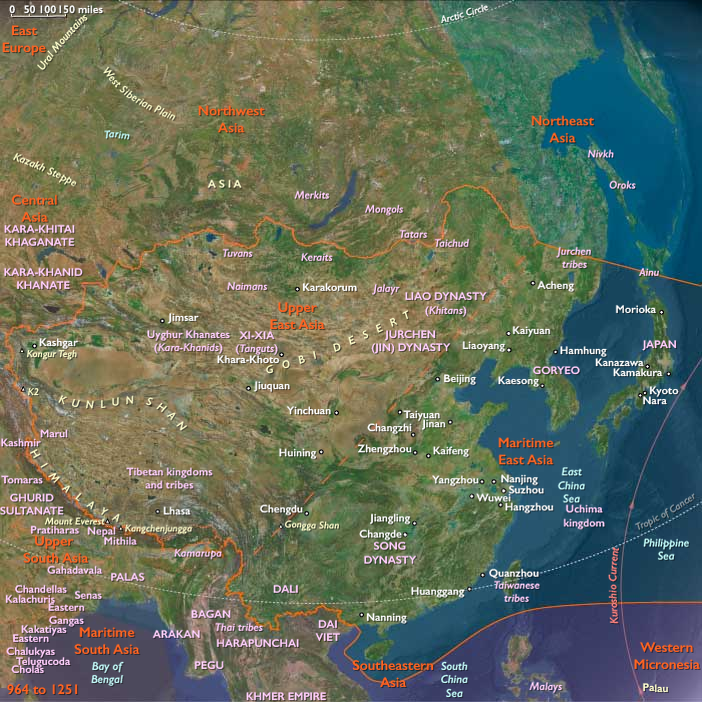
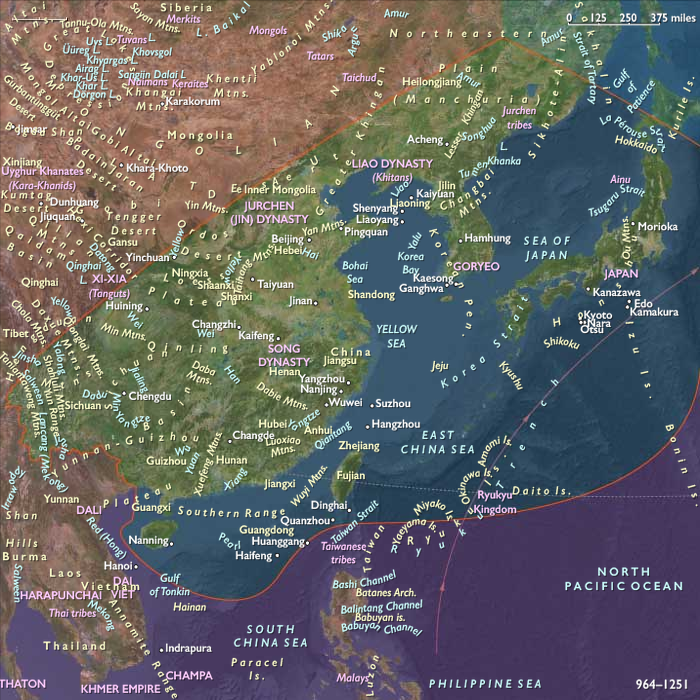
Shao Yong is a member of a group of thinkers who gathers in Luoyang toward the last three decades of the eleventh century.
This group has two primary objectives.
One of these is to draw parallels between their own streams of thought and that of Confucianism as understood by Mencius.
Secondly, the men set out to undermine any links, real or otherwise, between fourth-century Confucianism and what they viewed as inferior philosophical schools of thinking, namely Buddhism and Taoism.
Other loosely connected members of this so-called network of thinkers include: Cheng Yi, Zhang Zai, Cheng Hao and Zhou Dunyi.
Central to each of these men was the ancient text I Ching, which each had studied closely.
The way in which Shao studies this ancient text, however, differs from the other members.
During the Song Dynasty, there are two main approaches in I Ching studies.
Together with the majority of scholars, the other members of the group take the yili xue (principle study") approach, which is based on literalistic and moralistic concepts.
The other approach, taken by Shao alone, is the xiangshu xue ("image-number study") approach, which is based much more on iconographic and cosmological concepts.
An approach to I Ching divination known as Mei Hua Yi has been attributed to him.
Shao Yong also edits the "Tai Hsuan Jing" by Yang Hsiung (CE 10).
Influenced by the Base Three number system found in the Tai Hsuan, Shao Yong then sets the Hexagrams of the I Ching into a binary order (the Fu Hsi Ordering).
This in turn will influence Leibniz and his thinking on binary arithmetic, and in turn the language of modern computers.
Shao is also famous for his poetry and for his interest in the game of Go (wéiqí).
He writes a Great Ode to Watching Wéiqí, one of the longest surviving classical Chinese poems, as well as a Long Ode to Watching Wéiqí.
Locations
People
Groups
Topics
Subjects
Regions
Subregions
Years: 1077 - 1077
Locations
People
Groups
Topics
Subjects
Regions
Subregions