
Several nobles, including the deposed Duke Henry …
Years: 1115 - 1115
February
Several nobles, including the deposed Duke Henry of Lower Lorraine and the Saxon bishop Reinhard of Halberstadt, disgusted by Henry's haughty behavior, have joined the insurgents.
Among them is Otto, the eldest son of Adalbert II, Count of Ballenstedt and Adelheid, daughter of Otto I, Margrave of Meissen.
After the death of his father-in-law, Magnus, Duke of Saxony, in 1106, Otto had inherited a significant part of Magnus' properties, and had hoped to succeed him as duke.
However, Lothar of Supplinburg had been named duke in his stead.
In 1112, after Lothar had been banned, Otto had been appointed duke of Saxony by Emperor Henry V; but in the same year, he had come into a dispute with the emperor and had been stripped of his ducal title.
He now allies himself with Lothar to help defeat Hoyer I, Count of Mansfeld, who the Emperor has named duke of Saxony.
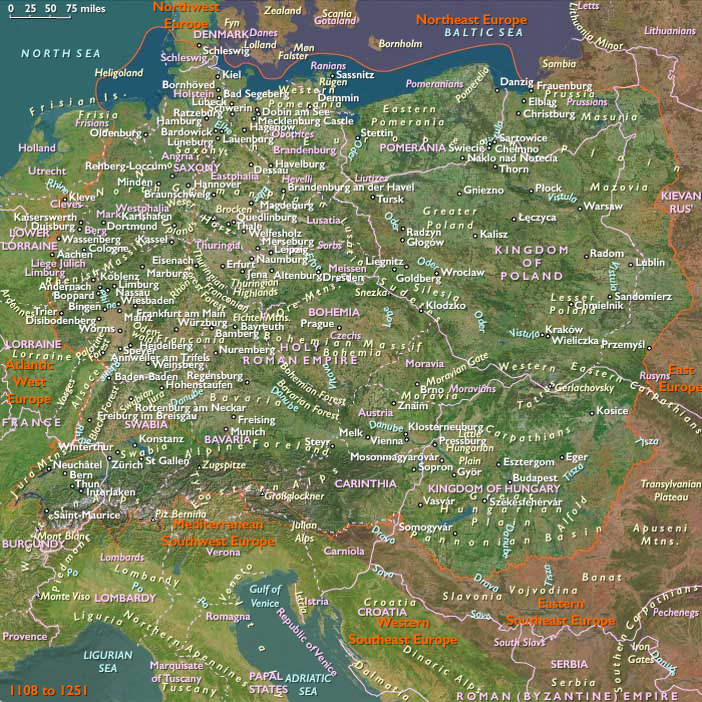
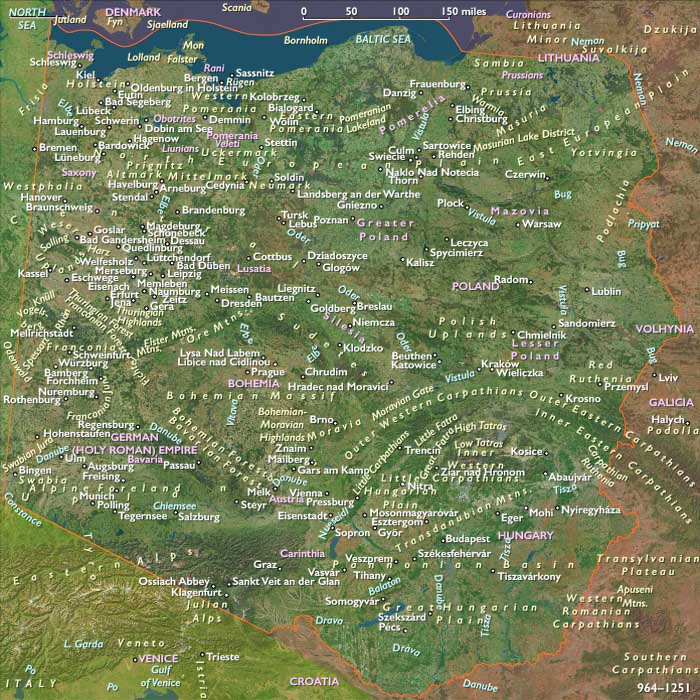
According to the chronicles of Pegau Abbey, on February 10, 1115, the Imperial forces gathered at the Kaiserpfalz of Wallhausen and moved about forty kilometers (twenty-five miles) towards Welfesholz (today part of Gerbstedt in Saxony-Anhalt) to meet the united Saxon troops led by Duke Lothair, with first skirmish occurring already on the same evening.
The next day, Henry's commander, Hoyer of Mansfeld, launches an offensive whereby he is killed in a sword combat by the young robber knight Wiprecht II, son of the arrested Count Wiprecht of Groitzsch.
The incident decides the battle: the Saxon armies of Lothair are victorious, forcing Henry's troops to take flight.
In his twelfth-century Chronica Slavorum the Saxon chronicler Helmold describes the battle as "the largest encounter in our time".
The emperor's power to rule Saxony is denied; the Bishop of Halberstadt even refuses a Christian burial of the slain imperial troops.
In November, the Mainz citizens enforce the release of Archbishop Adalbert.
However, Henry can still rely on the loyal support of his Hohenstaufen nephews, Duke Frederick II of Swabia and his brother Conrad III.
When the emperor again moves to Italy for the inheritance of Countess Matilda of Tuscany the next year, Duke Frederick will be appointed regent, which lays the grounds for the rise of the Hohenstaufen dynasty.
Locations
People
- Adalbert of Mainz
- Conrad III of Germany
- Frederick II, Duke of Swabia
- Henry V, Holy Roman Emperor
- Lothair II, Holy Roman Emperor
- Louis the Springer
- Otto, Count of Ballenstedt
- Pope Calixtus II
- Pope Paschal II
Groups
- Germans
- Mainz, Electoral Archbishopric of
- Saxony, Duchy of
- German, or Ottonian (Roman) Empire
- Anhalt, County of
- Christians, Roman Catholic
Topics
Commodoties
Subjects
Regions
Subregions
Related Events
Showing 1 events out of 1 total
Years: 1115 - 1115
February
Locations
People
- Adalbert of Mainz
- Conrad III of Germany
- Frederick II, Duke of Swabia
- Henry V, Holy Roman Emperor
- Lothair II, Holy Roman Emperor
- Louis the Springer
- Otto, Count of Ballenstedt
- Pope Calixtus II
- Pope Paschal II
Groups
- Germans
- Mainz, Electoral Archbishopric of
- Saxony, Duchy of
- German, or Ottonian (Roman) Empire
- Anhalt, County of
- Christians, Roman Catholic
Topics
Commodoties
Subjects
Regions
Subregions