
The Burmese threat is still prevalent and …
Years: 1782 - 1782
King Taksin visits harsh punishment upon officials reported to be abusive or oppressive, torturing and executing high officials.
A faction led by Phraya San finally seizes the capital and forces the king to step down, although Taksin requests to be allowed to become a monk.
General Chao Phraya Chakri is away fighting in Cambodia when the coup occurs, but he quickly returns to the Thai capital on being informed of the coup.
Arriving at the capital, the General extinguishes the coup through arrests, investigations and punishments, restoring peace in the capital.
General Chao Phraya Chakri decides to put the deposed Taksin to death, according to the Royal Thai Chronicles, which state that, while being taken to the executing venue, Taksin asks for an audience with the General but is turned down.
Taksin is beheaded in front of Wichai Prasit fortress on Wednesday, April 10, 1782, and his body is buried at Wat Bang Yi Ruea Tai.
General Chao Phraya Chakri then seizes control of the capital and declares himself king, together with establishing the House of Chakri.
The Official Annamese Chronicles states that General Chao Phraya Chakri ordered Taksin to be executed at Wat Chaeng by being sealed in a velvet sack; he was then beaten to death with a scented sandalwood club.
One account claims that Taksin was secretly sent to a palace located in the remote mountains of Nakhon Si Thammarat where he lived until 1825, and that a substitute was beaten to death in his place.
King Taksin’s ashes and that of his wife are located at Wat Intharam (located in Thonburi).
They have been placed in two lotus bud-shaped stupas that stand before the old hall.
Another contradicting view of the events is that General Chakri actually wanted to be King and had accused King Taksin of being Chinese.
The later history was aimed at legitimizing the new monarch, Phraya Chakri or Rama I of Rattanakosin.
According to Nidhi Eoseewong, a prominent Thai historian, writer, and political commentator, Taksin could be seen as the originator of the new style of leader, promoting the 'decentralized' kingdom and a new generation of the nobles of Chinese merchant origin, his major helpers in the wars.
On the other hand, Phraya Chakri and his supporters were of the 'old' generation of the Ayutthaya nobles, discontent with the changes.
This theory, however, overlooks the fact that Chao Phraya Chakri was himself of partly Chinese origin as well as being married to one of Taksin's daughters.
No previous conflicts between them were mentioned in histories.
Reports on the conflicts between the king and the Chinese merchants were seen as having been caused by the control of the price of rice in the time of famine.
Chao Phraya Chakri had had Taksin's son summoned to Cambodia and executed, however, prior to the general's return to Thonburi.
Phraya Chakri was, in fact, the highest noble in the kingdom, charging the state affairs as the Chancellor, and therefore had the greatest potential to be the new leader.
Yet another view of the events is that Thailand owed China for millions of baht, and King Taksin, in order to cancel the agreement between China and Thailand, decided to become ordained and pretend to die in an execution.
Several historians have suggested that the tale of Taksin’s 'insanity' may have been reconstructed as an excuse for his overthrow.
The letters of a French priest who was in Thonburi at the time, however, support the accounts of the monarch's peculiar behavior.
Thus the terms 'insanity' or 'madness' possibly were the contemporary definition describing the monarch's actions.
Locations
People
Groups
- Buddhism
- Christians, Roman Catholic
- France, (Bourbon) Kingdom of
- Chinese Empire, Qing (Manchu) Dynasty
- Siam, (Thonburi) Kingdom of
- Siam, (Rattanakosin) Kingdom of
Subjects
Regions
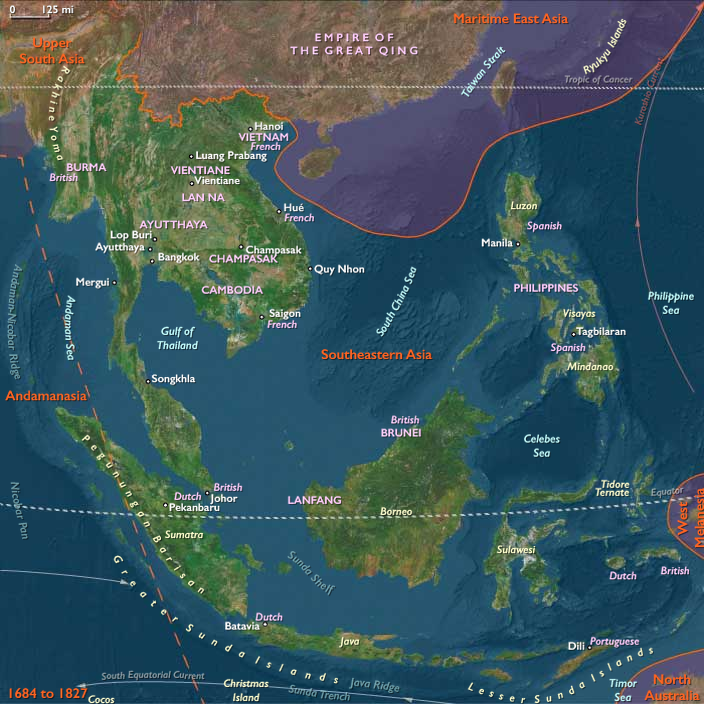
Subregions
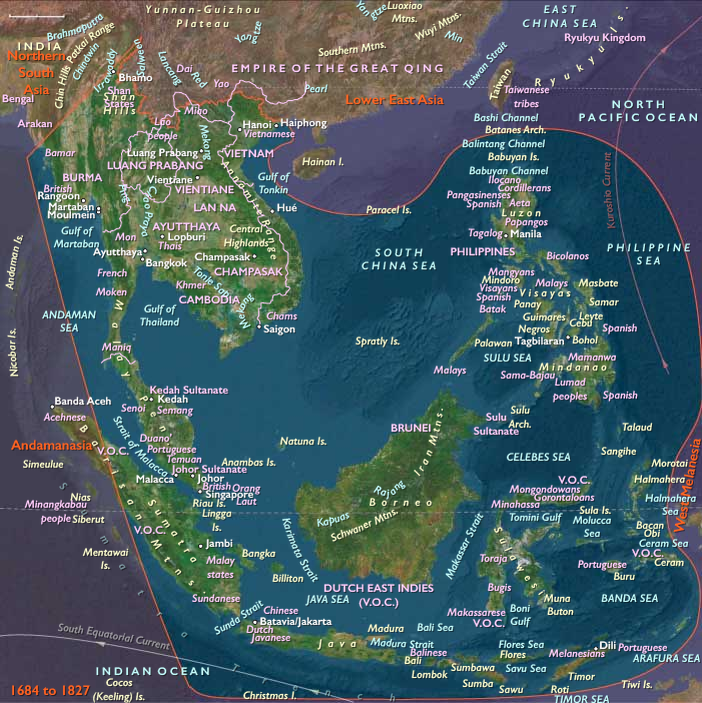
Years: 1782 - 1782
Locations
People
Groups
- Buddhism
- Christians, Roman Catholic
- France, (Bourbon) Kingdom of
- Chinese Empire, Qing (Manchu) Dynasty
- Siam, (Thonburi) Kingdom of
- Siam, (Rattanakosin) Kingdom of
Subjects
Regions
Subregions