
The Spectacled cormorant becomes extinct around this …
Years: 1852 - 1863
The Spectacled cormorant becomes extinct around this date.
The species was first identified by Georg Steller in 1741 on Vitus Bering's disastrous second Kamchatka expedition.
He described the bird as large, clumsy and almost flightless—though it was probably reluctant to fly rather than physically unable—and wrote "they weighed 12–14 pounds, so that one single bird was sufficient for three starving men."
Though cormorants are normally notoriously bad-tasting, Steller says that this bird tasted delicious, particularly when it was cooked in the way of the native Kamtchadals, who encased the whole bird in clay and buried it and baked it in a heated pit.
Apart from the fact that it fed on fish, almost nothing else is known about this bird.
The population declined quickly after further visitors to the area started collecting the birds for food and feathers, and their reports of profitable whaling grounds and large populations of Arctic foxes and other animals with valuable pelts led to a massive influx of whalers and fur traders into the region; the last birds were reported to have lived around 1850 on Ariy Rock islet, off the northwestern tip of Bering Island.
In 1743 Emilian Basov had landed on Bering Island to hunt sea otter, beginning the island's documented human habitation as well as ecological destruction.
Promyshlenniki began to island-hop across the Bering Sea to the Aleutian islands and ultimately Alaska.
In 1825 the Russian-American Company transferred Aleut families from Attu Island to Bering Island to hunt, and another group of Aleut and mixed-race settlers followed the following year, thus establishing the first known permanent human habitation on Bering Island.
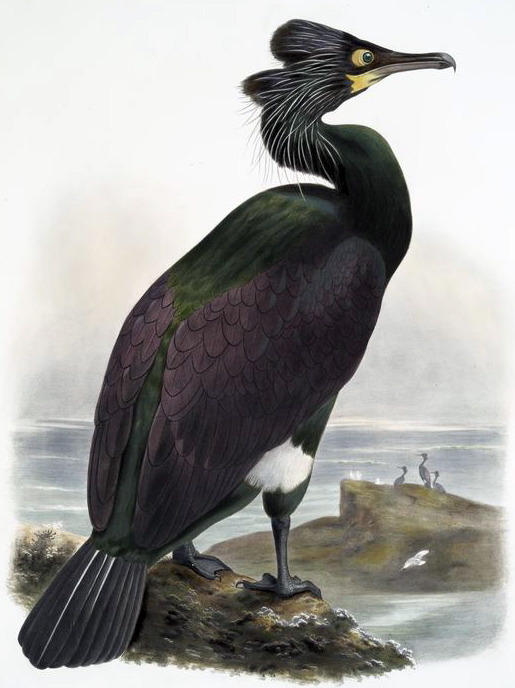
Joseph Wolf: Spectacled Cormorant, Pallas' Cormorant (1869) http://digitalgallery.nypl.org
Locations
Groups
Topics
Commodoties
Subjects
Regions
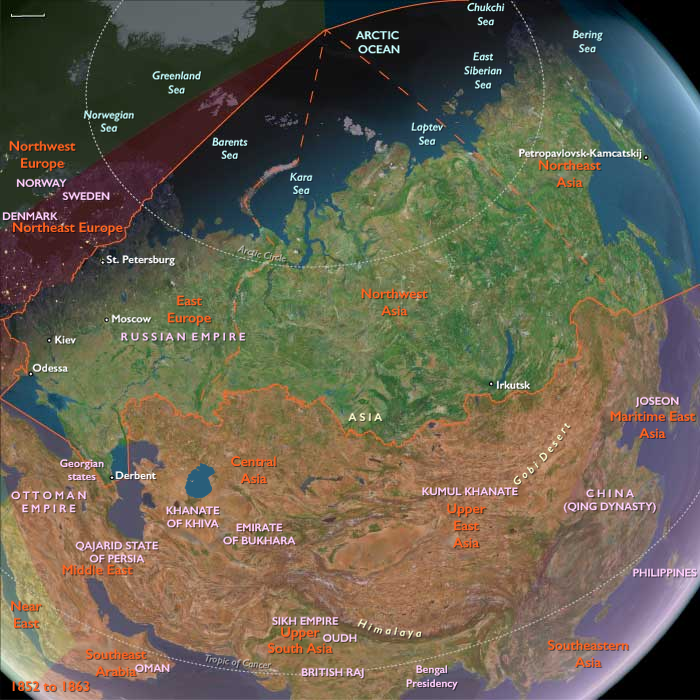
Subregions
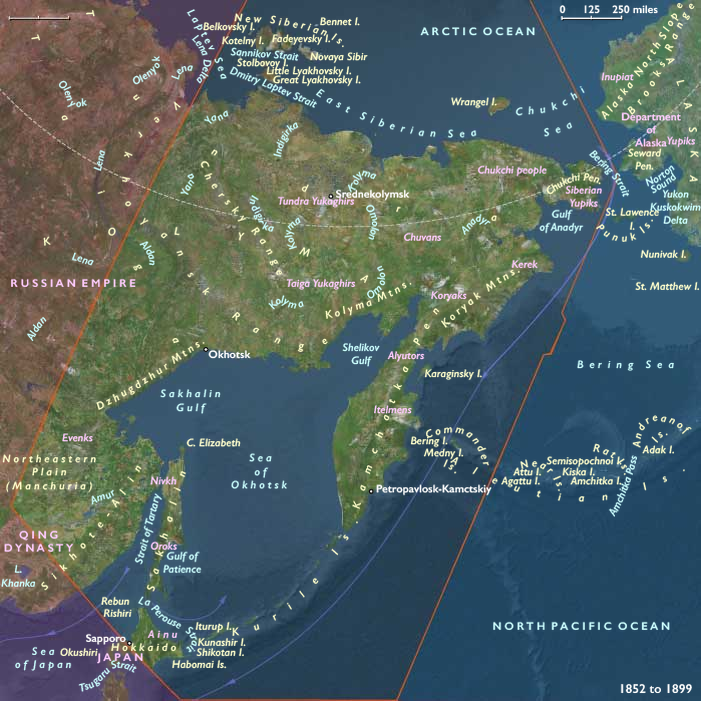
Years: 1852 - 1863
Joseph Wolf: Spectacled Cormorant, Pallas' Cormorant (1869) http://digitalgallery.nypl.org
Locations
Groups
Topics
Commodoties
Subjects
Regions
Subregions