
Settlement in the vicinity of Lubusz, or …
Years: 1252 - 1252
Settlement in the vicinity of Lubusz, or Lebus, has been traced as far back as three thousand years.
The ridges, which provide natural defense, led to fortifications being constructed upon them.
The Germanic Lombards and Semnoni are believed to have lived in the area before the Common Era.
After a settlement gap of approximately one thousand years, the Slavic Leubuzzi tribe settled the area during the eighth and ninth centuries in the Migration Period, and the land on both sides of the Oder became known as Terra Lebusana, or "Land of the Leubuzzi" in Latin.
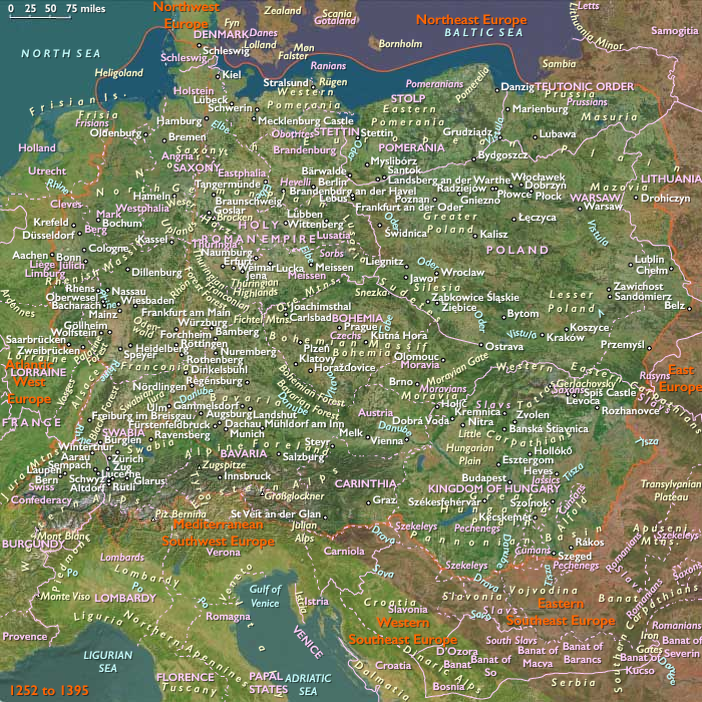
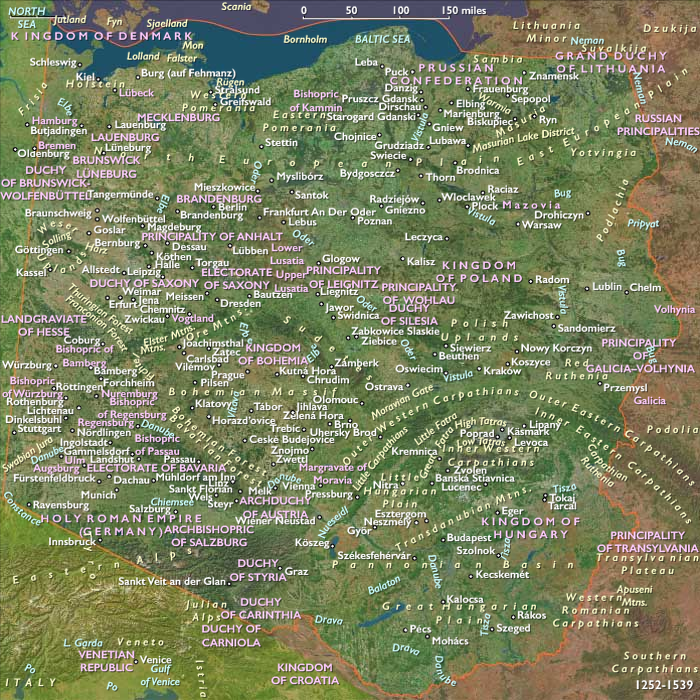
A swampy area east of Brandenburg, west of Greater Poland, south of Pomerania and north of Silesia, Lubusz Land had in 966 been made a part of Poland at the time of Prince Mieszko I, the county’s founder; it had soon been elevated to a bishopric.
In 1124-1125, records note the new Bishop of Lubusz nominated by Boleslaus III Wrymouth under the Archbishopric of Gniezno to counter the power of Emperor Henry V and Magdeburg.
It has served as an important center for Catholic missionaries preaching in and developing the Oder region.
The Archbishopric of Magdeburg, however, has also tried to obtain control of Lebus.
In 1252, the Archbishopric of Magdeburg and Ascanian Margraviate of Brandenburg purchases the bishopric from the petty Polish Prince Bolesław II the Bald.
This marks the start of Brandenburg's expansion into previously Polish areas.
Lubusz Land will eventually be incorporated into Brandenburg—the new Neumark, with its administrative center in Küstrin, will be created on the border between Pomerania and Great Poland and expanded further to the East on the forest areas between Pomerania and Great Poland.
Germanization of the region is to proceed throughout the thirteenth century and and Lubusz will become predominantly known as Lebus.
Locations
Groups
- Germans
- Magdeburg, Archbishopric of
- Christians, Roman Catholic
- Pomerania, Polish Duchy of
- Poland during the period of fragmentation, Kingdom of
- Brandenburg (Ascanian) Margravate of
Topics
Subjects
Regions
Subregions
Years: 1252 - 1252
Locations
Groups
- Germans
- Magdeburg, Archbishopric of
- Christians, Roman Catholic
- Pomerania, Polish Duchy of
- Poland during the period of fragmentation, Kingdom of
- Brandenburg (Ascanian) Margravate of
Topics
Subjects
Regions
Subregions