
Sebastiano Serlio, born in Bologna, had gone …
Years: 1546 - 1546
Sebastiano Serlio, born in Bologna, had gone to Rome in 1514, and worked in the atelier of Baldassare Peruzzi, where he stayed until the Sack of Rome in 1527 put all architectural projects on hold for a time.
Like Peruzzi, he had begun as a painter.
He had lived in Venice from about 1527 to the early 1540s but left little mark on the city.
The first volume of his treatise had appeared in Venice in 1537, titled Regole generali d'architettura ("General Rules of Architecture").
It is also known as Serlio's "Fourth Book" (albeit published first) because it was the fourth in Serlio's original plan of a treatise in seven books.
Serlio never brings this plan to completion.
Serlio's model of church façade was a regularized version, cleaned up and made more classical, of the innovative method of providing a facade to a church with a high vaulted nave flanked by low side aisles, a classical face to a Gothic form, first seen in Alberti's Santa Maria Novella in Florence, constructed in about 1458).
The idea was in the air in the 1530s: several contemporary churches compete for primacy: but Serlio's woodcut put the concept in every architect's hands.
Serlio's "Third Book", on the antiquities of Rome, had followed in 1540, also in Venice.
Serlio's publications, rather than any spectacular executed work, had attracted the attention of Francis I. Serlio's career had taken off when he was invited to France by the King, to advise on the construction and decoration of the Château of Fontainebleau, where a team of Italian designers and craftsmen are assembled.
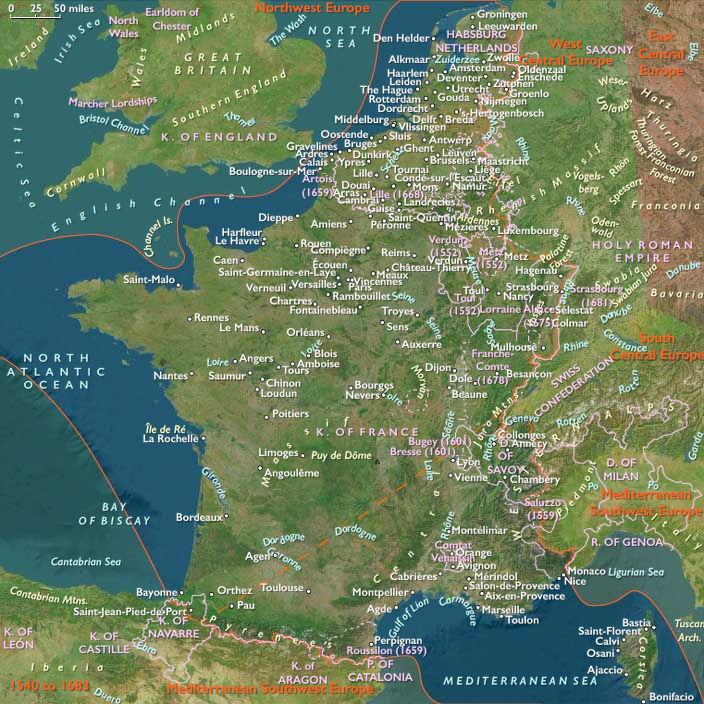
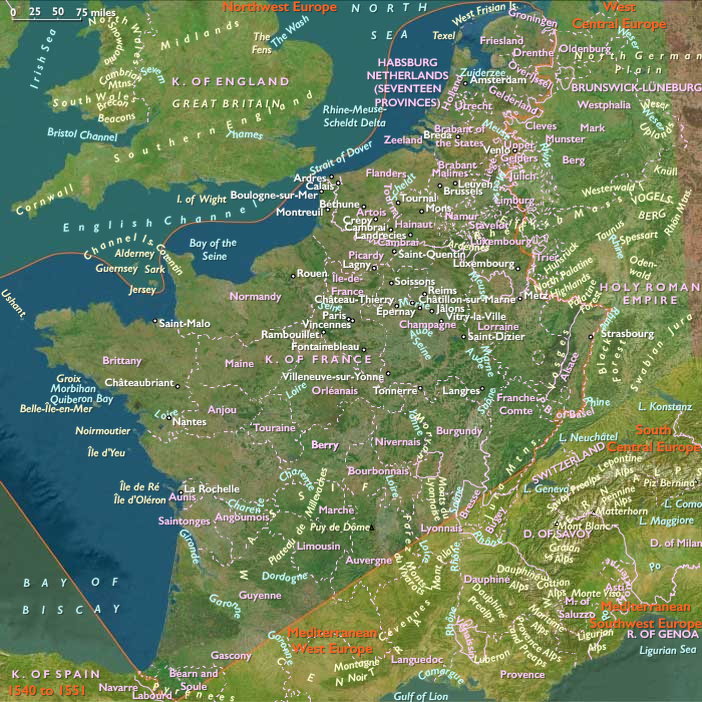
Serlio takes several private commissions, but the only one that has survived in any recognizable way is the Chateau of Ancy-le-Franc, built about 1546 near Tonnerre in Burgundy.
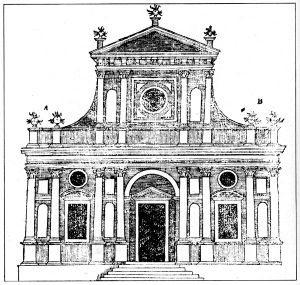
Serlio's model of church façade of 1537 crystallized a format that lasted into the 18th century.
Locations
People
Groups
Topics
Subjects
Regions
Subregions
Years: 1546 - 1546
Serlio's model of church façade of 1537 crystallized a format that lasted into the 18th century.
Locations
People
Groups
Topics
Subjects
Regions
Subregions