
Scandinavian warrior chief Harald Fairhair, the son …
Years: 880 - 891
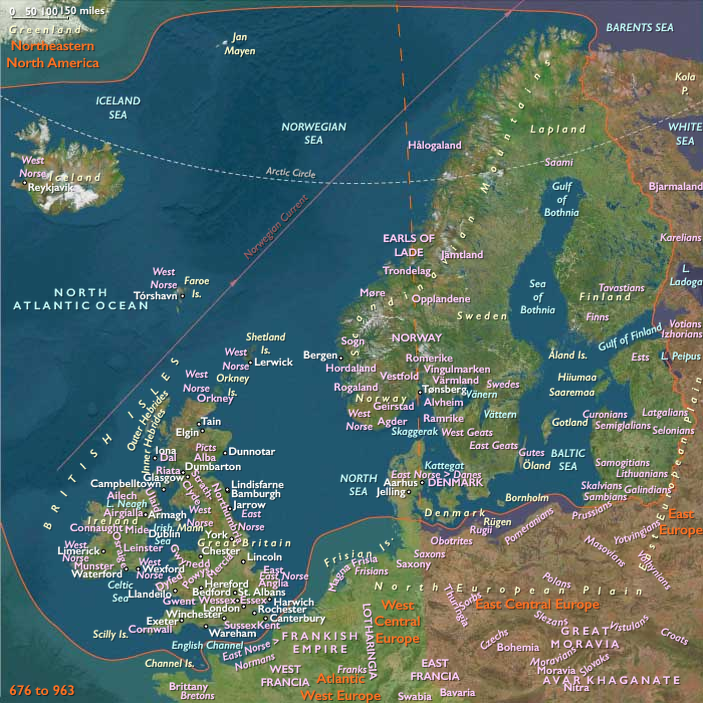
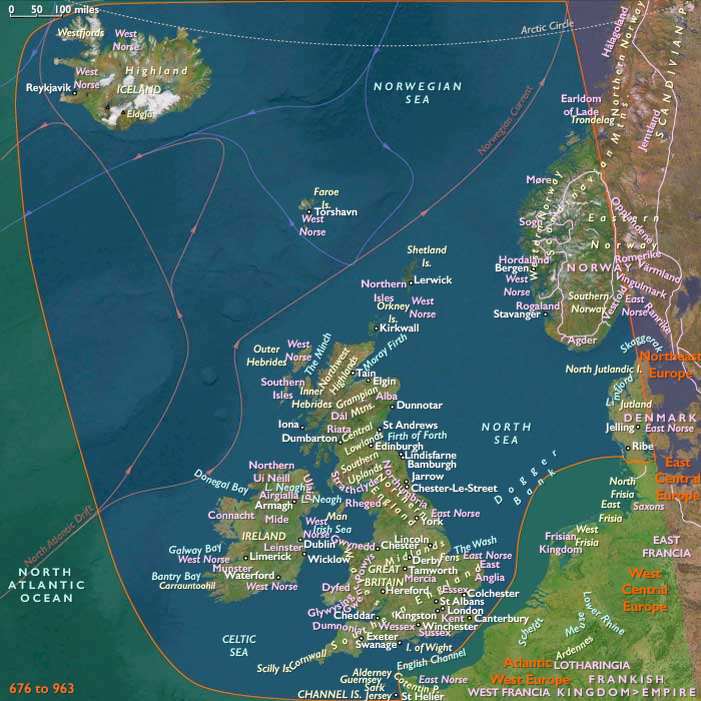
Scandinavian warrior chief Harald Fairhair, the son of Halfdan the Black, ruler of southeastern Norway, wins control of most of Norway by alliances and conquests, culminating in his victory at Hafrsfjord near Stavanger.
It was formerly believed that this battle was the decisive event in the unification of Norway.
Although most scholars currently tend to regard the unification as a process lasting centuries, rather than being the result of a single battle, the Battle of Hafrsfjord ranks high in the popular imagination of Norway.
It is the conclusion of King Harald I of Norway's declaration to become the sole ruler of Norway.
This battle may well have been the largest in Norway up to that time and for a good while after.
According to Snorri's saga, King Harald controlled large parts of Norway's southeast portion before the battle; but other sources claim that the eastern portion of Norway was under the Danish king.
The Battle of Hafrsfjord marks the final crushing of opposition from Norway's southwestern portion (primarily Rogaland, but also chieftains from the Sognefjord area).
This makes it possible for King Harald to subdue the country and collect taxes from a large part of it.
Later historiography regards him as the first legitimate King of Norway.
The Icelandic historian Ólafia Einarsdóttir in the 1970s will concluded that the battle took place some time between 870 and 875.
However still disputed, most scholars will agree that the battle took place during the 880s.
In any case, many of the losers emigrate to Iceland, stopping en route in the Orkney and Shetland Islands to take on island women as partners, willing or unwilling, in the new life they intend for themselves.
Locations
People
Groups
Topics
Commodoties
Subjects
Regions
Subregions
Related Events
Filter results
Showing 8 events out of 8 total
Atlantic Southwest Europe (1192–1203 CE): Consolidation of Portuguese and Castilian Frontiers, Navarre’s Diplomatic Adaptation, and Galician Cultural Vitality
Between 1192 and 1203 CE, Atlantic Southwest Europe—including Galicia, northern and central Portugal, Asturias, Cantabria, and northern Spain south of the Franco-Spanish border (43.05548° N, 1.22924° W)—experienced sustained territorial consolidation, refined regional identities, and vibrant cultural continuity. In Portugal, King Sancho I (1185–1211 CE) decisively strengthened frontier territories, governance stability, and national sovereignty. León and Castile, under Alfonso IX of León (1188–1230 CE) and Alfonso VIII of Castile (1158–1214 CE), solidified internal governance and clearer civic identities, decisively shaping regional political coherence. Navarre, transitioning from Sancho VI "the Wise" (d. 1194 CE) to Sancho VII "the Strong" (1194–1234 CE), carefully navigated complex diplomatic landscapes, preserving regional autonomy and stability amid broader Iberian shifts.
Political and Military Developments
Strengthening Portuguese Frontiers under Sancho I
King Sancho I decisively strengthened Portugal’s territorial governance, particularly focusing on fortifying newly conquered southern territories such as Évora and Beja. He encouraged strategic settlement initiatives ("povoamento"), consolidating Portuguese control and reinforcing frontier security. Sancho’s territorial policies decisively advanced Portuguese sovereignty, civic coherence, and national identity.
León and Castile: Stabilization and Frontier Consolidation
In León, Alfonso IX maintained internal governance stability and cohesive frontier defenses despite occasional diplomatic friction with neighboring Castile and Portugal. His prudent administration significantly reinforced Leonese regional identity and territorial coherence. In Castile, Alfonso VIII decisively secured frontier territories against Almohad incursions, particularly in preparation for later confrontations. His governance policies significantly solidified Castilian civic identity, territorial integrity, and frontier security.
Diplomatic Adaptation and Stability in Navarre
After succeeding his father in 1194, Sancho VII "the Strong" decisively adapted Navarre’s diplomatic strategies, maintaining strategic neutrality amid complex Iberian politics. Sancho VII carefully balanced alliances with Aragón, Castile, and southern Muslim territories, decisively preserving Navarre’s regional autonomy, territorial coherence, and governance stability.
Economic Developments
Continued Agricultural Prosperity
Agriculture sustained robust productivity, decisively supported by Moorish agricultural techniques, including advanced irrigation and diversified crop cultivation (citrus, olives, almonds, vineyards, grain). Thriving livestock husbandry, artisanal industries, and regional mining operations (especially precious metals in Galicia) significantly supported economic resilience, population growth, and regional stability.
Maritime Trade Networks Expansion
Portuguese ports, notably Lisbon, Porto, Braga, and Coimbra, continued to expand maritime commerce significantly with northern Europe, particularly England, Normandy, Brittany, and Flanders. Galicia, particularly through A Coruña, maintained vibrant maritime exchanges, significantly bolstering regional economic autonomy and cultural exchanges.
Pilgrimage-Driven Economic Activity
Santiago de Compostela’s pilgrimage route continued as a dynamic economic and cultural artery, decisively supporting robust commerce, artisanal industries, hospitality infrastructure, and international cultural exchange. Ongoing pilgrimage flows significantly reinforced Galicia’s economic resilience, cultural prominence, and regional identity.
Cultural and Religious Developments
Galician Cultural Vitality and Santiago’s International Prestige
Galicia maintained flourishing cultural vitality, decisively supported by Santiago de Compostela’s pilgrimage prominence. Ecclesiastical patronage, substantial architectural investments, manuscript production, scholarly activities, and educational initiatives significantly reinforced Galicia’s distinctive cultural identity and European-wide prestige.
Monastic Intellectual and Agricultural Innovation
Monastic communities sustained active intellectual pursuits, manuscript preservation, scholarly traditions, and agricultural innovations. Cluniac-inspired reforms decisively shaped ecclesiastical discipline, liturgical uniformity, and stronger alignment with Rome, significantly influencing Iberian religious identity and cultural cohesion.
Continued Cultural Syncretism and Regional Traditions
Orthodox Christianity continued integrating indigenous Iberian and Celtic traditions, notably in rural Galicia and northern Portugal. These enduring syncretic practices decisively fostered regional identity, social cohesion, and cultural resilience amid broader territorial and political changes.
Civic Identity and Governance
Portuguese National Sovereignty and Civic Consolidation
Portugal decisively strengthened national sovereignty under King Sancho I through strategic territorial governance, frontier settlements, administrative reforms, and civic stability. Sancho’s effective leadership significantly solidified Portuguese identity, territorial integrity, and enduring national coherence.
Leónese and Castilian Civic Stability
Under Alfonso IX, León maintained effective governance, civic stability, and regional identity coherence, significantly reinforcing internal administration and territorial integrity. In Castile, Alfonso VIII decisively secured frontier defenses, administrative stability, and robust Castilian civic identity, significantly influencing regional governance and Iberian political coherence.
Navarre’s Diplomatic Stability and Governance Autonomy
Under Sancho VII, Navarre decisively adapted its diplomatic strategies, maintaining regional autonomy, governance stability, and distinct civic identity. His strategic neutrality significantly preserved Navarre’s territorial coherence, internal stability, and diplomatic resilience amid broader Iberian political shifts.
Notable Regional Groups and Settlements
-
Portuguese: Decisively consolidated national sovereignty and civic stability under Sancho I, significantly shaping territorial coherence, frontier governance, and Portuguese identity.
-
Castilians and Leonese: Maintained clearly defined civic identities, significantly reinforced by effective frontier governance and administrative stability under Alfonso IX and Alfonso VIII.
-
Galicians: Continued robust cultural and economic prominence, significantly sustained by pilgrimage traditions, maritime trade, and ecclesiastical patronage.
-
Basques (Navarre): Maintained resilient regional autonomy, diplomatic stability, and governance effectiveness under Sancho VII, significantly influencing northern Iberian political coherence.
Long-Term Significance and Legacy
Between 1192 and 1203 CE, Atlantic Southwest Europe:
-
Decisively strengthened Portuguese territorial sovereignty, national identity, and frontier governance under Sancho I, significantly shaping Portugal’s medieval trajectory and enduring legacy.
-
Experienced continued internal stability and civic coherence in León and Castile, significantly influencing regional governance structures, territorial integrity, and Iberian political dynamics.
-
Successfully navigated diplomatic complexities and preserved Navarre’s regional autonomy, governance stability, and diplomatic resilience under Sancho VII, decisively influencing northern Iberian geopolitics.
-
Sustained robust economic prosperity, pilgrimage-driven commerce, cultural resilience, and effective local governance, significantly influencing Atlantic Southwest Europe’s enduring medieval historical trajectory.
This pivotal era decisively shaped national sovereignty, regional identities, diplomatic alignments, territorial stability, and cultural continuity, profoundly influencing Atlantic Southwest Europe’s historical trajectory and enduring medieval legacy.
Richard I’s War Against Philip II and His Victories in France (1194–1198 CE)
Determined to defend Angevin territories from Philip II’s encroachment, particularly in the Vexin and Berry, Richard I of England devoted his military expertise and vast resources to waging war against the French king. Through a combination of strategic alliances and military victories, Richard turned the tide against Philip, severely weakening the Capetian position in northern France.
Richard’s Anti-Capetian Alliance
To counter Philip’s ambitions, Richard forged a broad coalition of allies:
- Baldwin IX, Count of Flanders – Strengthened Angevin influence in the north.
- Renaud, Count of Boulogne – Provided additional support against Philip’s forces.
- Sancho VI of Navarre (his father-in-law) – Launched raids into southern France, distracting Philip.
- Otto IV of Germany (his nephew) – Richard secured the Welf inheritance in Saxony, ensuring Otto was elected Holy Roman Emperor in 1198, creating an additional threat to Philip’s eastern flank.
By strengthening the Welf faction in the Holy Roman Empire, Richard weakened Philip’s diplomatic influence in Europe, making it harder for him to focus on the Angevin war.
Richard’s Military Victories Over Philip
-
Battle of Fréteval (1194)
- Shortly after Richard’s return from captivity, he rallied forces in Normandy and ambushed Philip at Fréteval.
- Philip fled the battlefield, leaving behind his entire archive of financial audits and documents, a devastating logistical loss.
-
Battle of Gisors / Courcelles (1198)
- Richard won a decisive victory against Philip’s forces.
- It was during this battle that Richard is said to have adopted the motto "Dieu et mon Droit" ("God and my Right"), symbolizing his belief that he owed allegiance only to God, not to Philip or the Emperor.
- This phrase remains the motto of the British monarchy to this day.
Impact of Richard’s Campaigns
- Richard successfully reversed Philip’s early territorial gains, reclaiming much of Normandy and the Vexin.
- His military success left Philip militarily and politically vulnerable, unable to expand as he had hoped.
- By securing Otto IV’s election, Richard turned the Holy Roman Empire into an Angevin ally, further isolating Philip in Europe.
Despite Philip’s earlier advances, by 1198, Richard had gained the upper hand, and the war was tilting in favor of the Angevins. However, his unexpected death in 1199 would dramatically alter the balance of power in the Capetian-Plantagenet struggle.
Atlantic Southwest Europe (1204–1215 CE): Decisive Territorial Advances, Diplomatic Complexity, and Regional Identity Consolidation
Between 1204 and 1215 CE, Atlantic Southwest Europe—including Galicia, northern and central Portugal, Asturias, Cantabria, and northern Spain south of the Franco-Spanish border (43.05548° N, 1.22924° W)—experienced significant territorial expansion, intensified diplomatic complexity, and a heightened sense of regional and national identities. Portugal, under the dynamic leadership of King Sancho I (d. 1211 CE) and subsequently his son, King Afonso II (1211–1223 CE), solidified governance, advanced territorial coherence, and refined civic administration. León and Castile, ruled respectively by Alfonso IX (1188–1230 CE) and Alfonso VIII (1158–1214 CE), decisively navigated frontier challenges, internal stability, and diplomatic alliances against external threats. In Navarre, Sancho VII "the Strong" (1194–1234 CE) carefully preserved regional autonomy and diplomatic stability amid shifting Iberian alliances.
Political and Military Developments
Portuguese Territorial Stability and Administrative Reforms
During his later years, King Sancho I decisively consolidated Portugal’s territorial frontiers and promoted systematic settlement and agricultural initiatives ("povoamento") to secure newly conquered territories. After 1211, his son Afonso II shifted governance priorities toward centralizing administration, reinforcing legal structures, and strengthening royal authority, decisively enhancing Portuguese civic cohesion, territorial coherence, and national stability.
León-Castile’s Decisive Frontier Conflicts and Stability
In Castile, Alfonso VIII led decisive military campaigns against the Almohads, culminating in the landmark Battle of Las Navas de Tolosa (1212 CE), a turning point in Iberian Reconquista history, significantly enhancing Castilian territorial security and prestige. Meanwhile, Alfonso IX of León maintained internal governance stability, contributing decisively to regional identity coherence despite persistent diplomatic complexities. Both kingdoms significantly strengthened internal governance and clearly defined civic identities.
Navarre’s Diplomatic Stability under Sancho VII
Sancho VII continued carefully balancing diplomatic alliances between Castile, Aragón, and southern Muslim territories, decisively preserving Navarre’s regional autonomy, governance stability, and territorial integrity. His strategic diplomacy and administrative reforms significantly reinforced northern Iberian geopolitical stability and regional identity coherence.
Economic Developments
Sustained Agricultural and Economic Prosperity
Agricultural productivity continued robustly, significantly supported by Moorish agricultural techniques, notably advanced irrigation systems and diversified crop cultivation (citrus fruits, olives, almonds, vineyards, grains). Continued mining (especially silver and gold in Galicia) and thriving livestock industries decisively reinforced regional economic resilience, population stability, and territorial governance.
Expanded Maritime and International Commerce
Portuguese coastal ports, particularly Lisbon, Porto, Braga, and Coimbra, decisively expanded vibrant maritime trade networks, increasing commercial exchanges with northern Europe (England, Brittany, Normandy, Flanders). Galicia, particularly A Coruña, sustained active maritime commerce, significantly bolstering regional economic autonomy and prosperity.
Pilgrimage-Driven Economic Activity
Pilgrimage to Santiago de Compostela sustained dynamic regional commerce, significantly supporting hospitality industries, artisanal production, cultural exchanges, and economic resilience. Continuous pilgrimage flows decisively reinforced Galicia’s economic vitality, cultural prominence, and regional autonomy.
Cultural and Religious Developments
Santiago’s Continued Prestige and Galician Cultural Flourishing
Galicia maintained strong cultural vitality, decisively reinforced by Santiago de Compostela’s international pilgrimage prominence. Ecclesiastical investments, architectural advancements, scholarly initiatives, and manuscript production significantly shaped Galician cultural identity and international recognition.
Monastic Intellectual Contributions and Ecclesiastical Reforms
Monastic communities remained vibrant intellectual centers, significantly fostering manuscript preservation, scholarly traditions, educational advancement, and agricultural innovations. Cluniac ideals and ecclesiastical reforms decisively influenced regional religious life, liturgical uniformity, ecclesiastical discipline, and Iberian Christian identity.
Persistent Cultural Syncretism and Regional Traditions
Orthodox Christianity continued integrating indigenous Iberian and Celtic traditions, particularly evident in rural Galicia and northern Portugal. Persistent syncretism significantly reinforced regional identities, social cohesion, and cultural resilience amid broader political and territorial developments.
Civic Identity and Governance
Portuguese Centralization and Civic Stability
Under Afonso II’s centralized administrative reforms, Portuguese governance significantly strengthened, decisively enhancing civic stability, legal coherence, and territorial governance. His effective leadership significantly shaped Portuguese identity, national coherence, and medieval governance structures.
Leónese and Castilian Governance Coherence
León and Castile maintained robust governance stability, decisively reinforced by Alfonso IX and Alfonso VIII through clear administrative structures, frontier security, and clearly defined civic identities. Both kingdoms significantly shaped regional territorial integrity, governance coherence, and Iberian political stability.
Navarre’s Governance Autonomy and Diplomatic Stability
Sancho VII decisively preserved Navarre’s regional autonomy and governance stability through careful diplomatic alliances, administrative reforms, and territorial coherence. His strategic neutrality significantly shaped northern Iberian political stability and diplomatic resilience.
Notable Regional Groups and Settlements
-
Portuguese: Decisively solidified national sovereignty, territorial governance, and administrative cohesion under Sancho I and Afonso II, significantly shaping Portuguese civic identity and enduring medieval stability.
-
Castilians and Leonese: Strengthened governance coherence, territorial integrity, and clearly defined regional identities, significantly reinforced by Alfonso IX and Alfonso VIII through decisive frontier campaigns and diplomatic stability.
-
Galicians: Maintained cultural prominence and economic vitality, significantly reinforced by pilgrimage traditions, maritime commerce, and sustained ecclesiastical patronage.
-
Basques (Navarre): Sustained robust regional autonomy, diplomatic stability, and internal governance coherence under Sancho VII, significantly influencing northern Iberian political dynamics.
Long-Term Significance and Legacy
Between 1204 and 1215 CE, Atlantic Southwest Europe:
-
Decisively secured Portuguese national sovereignty, administrative centralization, and territorial governance under Sancho I and Afonso II, significantly shaping Portugal’s medieval identity and trajectory.
-
Experienced decisive frontier victories, civic coherence, and regional identities clearly solidified within León and Castile, significantly shaping Iberian political stability and territorial governance.
-
Navigated complex diplomatic landscapes and preserved Navarre’s regional autonomy and governance stability under Sancho VII, significantly influencing northern Iberian geopolitical dynamics and diplomatic coherence.
-
Sustained robust economic prosperity, pilgrimage-driven cultural exchange, maritime commerce, and regional governance stability, significantly influencing Atlantic Southwest Europe’s enduring historical trajectory.
This transformative era decisively shaped national identities, diplomatic alignments, regional stability, and cultural continuity, profoundly influencing Atlantic Southwest Europe’s medieval historical trajectory and enduring legacy.
Atlantic Southwest Europe (1216–1227 CE): Portuguese Administrative Reforms, Leonese-Castilian Diplomatic Realignments, and Navarrese Stability
Between 1216 and 1227 CE, Atlantic Southwest Europe—including Galicia, northern and central Portugal, Asturias, Cantabria, and northern Spain south of the Franco-Spanish border (43.05548° N, 1.22924° W)—underwent significant administrative centralization, diplomatic realignments, territorial consolidation, and cultural continuity. Portugal, under King Afonso II (1211–1223 CE) and subsequently King Sancho II (1223–1248 CE), decisively implemented administrative reforms and strengthened royal governance. León and Castile navigated complex diplomatic relationships under Alfonso IX of León (1188–1230 CE) and the young Ferdinand III of Castile (1217–1252 CE), significantly reshaping Iberian geopolitics. Navarre, governed by Sancho VII "the Strong" (1194–1234 CE), preserved diplomatic autonomy, internal governance stability, and territorial integrity amid shifting regional alliances.
Political and Military Developments
Portuguese Administrative Centralization under Afonso II
King Afonso II decisively strengthened royal governance, centralizing administration, codifying legal structures, and promoting efficient management of lands and resources. His reforms significantly reduced the power of feudal nobility, enhancing civic stability, legal coherence, and royal authority. Following his death in 1223, his son, Sancho II, inherited a centralized yet politically challenging kingdom, facing rising aristocratic tensions.
Diplomatic Realignments in León and Castile
León-Castile experienced significant political shifts. Alfonso IX of León and Ferdinand III of Castile (who inherited Castile in 1217) navigated complex diplomatic relations marked by initial rivalry and eventual rapprochement. Ferdinand III decisively strengthened Castilian territorial defenses and governance stability, setting the stage for future reunification with León. Alfonso IX continued effective frontier governance and maintained internal coherence despite diplomatic complexities, significantly reinforcing Leonese identity.
Navarre’s Diplomatic Stability under Sancho VII
Under Sancho VII "the Strong", Navarre maintained careful diplomatic neutrality, effectively balancing alliances with Castile, Aragón, and southern Muslim taifa states. His prudent diplomacy significantly preserved Navarrese regional autonomy, internal stability, and distinct civic identity amid broader Iberian geopolitical transformations.
Economic Developments
Robust Agricultural and Economic Prosperity
Agricultural productivity continued to thrive, decisively supported by advanced irrigation techniques and diverse crop cultivation (citrus, olives, almonds, vineyards, grains). Thriving mining operations (silver and gold from Galicia and Asturias) and livestock husbandry significantly supported economic resilience, population stability, and territorial consolidation.
Maritime Trade and Northern European Commerce
Portuguese ports, especially Lisbon, Porto, and Coimbra, significantly expanded maritime trade networks, reinforcing economic exchanges with northern Europe (England, Flanders, Normandy, Brittany). Galicia, notably through A Coruña, maintained dynamic maritime commerce, significantly bolstering regional economic autonomy and prosperity.
Pilgrimage-Driven Economic Vitality
Pilgrimage to Santiago de Compostela remained economically vibrant, decisively supporting hospitality industries, artisanal commerce, cultural exchanges, and economic resilience. Continued pilgrimage activity significantly reinforced Galicia’s economic prominence, cultural vitality, and regional identity.
Cultural and Religious Developments
Galician Cultural Resilience and Santiago’s Prestige
Galicia’s cultural vitality flourished, decisively reinforced by Santiago de Compostela’s international pilgrimage prominence. Ecclesiastical patronage significantly supported substantial architectural projects, scholarly pursuits, manuscript preservation, and educational initiatives, shaping Galician cultural identity and European-wide prestige.
Monastic Intellectual Activity and Ecclesiastical Influence
Monastic communities sustained active intellectual pursuits, manuscript production, educational initiatives, and agricultural innovations. Cluniac reforms and ecclesiastical discipline significantly shaped Iberian religious identity, liturgical uniformity, and regional cultural cohesion.
Persistent Cultural Syncretism and Local Traditions
Orthodox Christianity continued integrating indigenous Iberian and Celtic traditions, notably in rural Galicia and northern Portugal. Enduring cultural syncretism decisively reinforced distinct regional identities, social cohesion, and cultural resilience amid broader political transformations.
Civic Identity and Governance
Portuguese Centralization and Civic Stability
Under Afonso II and subsequently Sancho II, Portuguese governance significantly centralized, enhancing civic stability, territorial coherence, and legal administration. These administrative reforms significantly strengthened Portuguese national identity, territorial governance, and medieval civic structures.
Leónese and Castilian Civic Identity and Diplomatic Adaptation
Alfonso IX of León and Ferdinand III of Castile navigated diplomatic complexities while decisively reinforcing internal governance stability and distinct regional identities. Clearer definitions of Leonese and Castilian identities significantly reinforced regional governance coherence and Iberian political stability.
Navarre’s Governance Autonomy and Diplomatic Neutrality
Under Sancho VII, Navarre maintained resilient regional autonomy, governance stability, and diplomatic neutrality amid complex Iberian geopolitics. His prudent diplomatic strategies significantly preserved Navarre’s internal coherence, territorial integrity, and governance effectiveness.
Notable Regional Groups and Settlements
-
Portuguese: Decisively solidified national sovereignty, territorial governance, and civic stability under Afonso II and Sancho II, significantly shaping Portuguese identity and enduring medieval coherence.
-
Castilians and Leonese: Maintained clearly defined regional identities and governance stability, decisively reinforced by Alfonso IX and Ferdinand III through diplomatic adaptation and frontier governance.
-
Galicians: Sustained cultural prominence and economic vitality, significantly supported by pilgrimage traditions, maritime commerce, and ecclesiastical patronage.
-
Basques (Navarre): Maintained resilient regional autonomy, diplomatic neutrality, and internal governance stability under Sancho VII, decisively shaping northern Iberian geopolitics and regional stability.
Long-Term Significance and Legacy
Between 1216 and 1227 CE, Atlantic Southwest Europe:
-
Achieved decisive administrative centralization, legal coherence, and national governance stability in Portugal under Afonso II and Sancho II, significantly influencing Portugal’s medieval identity and historical trajectory.
-
Navigated diplomatic realignments, territorial governance stability, and clearly defined regional identities in León and Castile, significantly shaping Iberian political coherence and regional stability.
-
Maintained careful diplomatic neutrality, governance autonomy, and regional identity coherence within Navarre under Sancho VII, decisively shaping northern Iberian geopolitical stability.
-
Sustained economic prosperity, pilgrimage-driven cultural exchange, maritime commerce, and regional governance stability, significantly influencing Atlantic Southwest Europe’s enduring medieval historical trajectory.
This era decisively shaped administrative coherence, diplomatic alignments, territorial stability, and cultural resilience, profoundly influencing Atlantic Southwest Europe’s enduring medieval legacy.
Atlantic Southwest Europe (1228–1239 CE): Portuguese Governance Challenges, Leonese-Castilian Unification, and Navarrese Autonomy
Between 1228 and 1239 CE, Atlantic Southwest Europe—including Galicia, northern and central Portugal, Asturias, Cantabria, and northern Spain south of the Franco-Spanish border (43.05548° N, 1.22924° W)—experienced significant political transformations, territorial realignments, and cultural continuity. Portugal, under King Sancho II (1223–1248 CE), faced internal governance challenges amid aristocratic opposition, testing centralized royal authority. León and Castile decisively reunited under Ferdinand III (King of Castile from 1217; León from 1230–1252 CE), reshaping Iberian geopolitics and regional identities. Navarre, under Sancho VII "the Strong" (1194–1234 CE) and subsequently Theobald I (1234–1253 CE), carefully maintained regional autonomy, diplomatic stability, and governance coherence amid broader Iberian shifts.
Political and Military Developments
Portuguese Aristocratic Tensions under Sancho II
In Portugal, King Sancho II encountered rising opposition from influential aristocratic factions and ecclesiastical authorities challenging his centralized governance. These tensions resulted in administrative instability and weakened frontier security, notably in the southern territories. Despite these internal challenges, Portuguese national identity and territorial coherence persisted, underpinned by earlier governance reforms and territorial settlements.
Reunification of León and Castile under Ferdinand III
A critical geopolitical shift occurred in 1230 with the death of Alfonso IX of León, after which his son, Ferdinand III, decisively unified León and Castile. Ferdinand III’s effective governance significantly strengthened frontier defenses, territorial governance, and regional identity coherence, initiating a new era of Leonese-Castilian political stability, territorial integrity, and Iberian influence.
Navarre’s Diplomatic Autonomy and Governance Stability
In Navarre, the passing of Sancho VII "the Strong" in 1234 marked a dynastic shift. His successor, Theobald I (1234–1253 CE), from the French House of Champagne, decisively maintained Navarrese regional autonomy and diplomatic neutrality amid complex Iberian political dynamics. Theobald’s administration effectively preserved internal governance stability and regional coherence.
Economic Developments
Sustained Agricultural Prosperity
Agriculture continued to flourish, decisively supported by advanced irrigation systems and diverse crop cultivation (citrus, olives, almonds, vineyards, grains). Continued livestock husbandry, artisanal crafts, and robust mining operations (particularly gold and silver in Galicia and Asturias) significantly reinforced regional economic resilience, population stability, and territorial governance.
Maritime Trade Networks Expansion
Portuguese coastal ports—particularly Lisbon, Porto, and Coimbra—continued significantly expanding maritime commerce, reinforcing trade relationships with northern European markets (England, Normandy, Brittany, Flanders). Galicia, particularly through A Coruña, maintained dynamic maritime trade, significantly bolstering regional economic autonomy and prosperity.
Pilgrimage-Driven Economic Vitality
Pilgrimage to Santiago de Compostela continued thriving, significantly supporting hospitality industries, artisanal production, and international cultural exchanges. Sustained pilgrimage flows decisively reinforced Galicia’s economic vitality, cultural prominence, and regional identity.
Cultural and Religious Developments
Galician Cultural Vitality and Santiago’s International Prominence
Galicia maintained robust cultural resilience, decisively sustained by Santiago de Compostela’s international pilgrimage significance. Ecclesiastical investments, scholarly activities, manuscript preservation, and substantial architectural projects significantly reinforced Galician cultural identity, religious influence, and European-wide prestige.
Monastic Intellectual Activity and Ecclesiastical Influence
Monastic communities sustained vibrant scholarly traditions, manuscript production, agricultural innovations, and educational activities. Continued ecclesiastical reforms significantly reinforced liturgical uniformity, ecclesiastical discipline, and religious identity, decisively shaping Iberian regional cultural coherence.
Persistent Cultural Syncretism and Local Traditions
Orthodox Christianity continued integrating indigenous Iberian and Celtic traditions, notably in rural Galicia and northern Portugal. Persistent cultural syncretism significantly fostered distinct regional identities, social cohesion, and cultural resilience amid broader political and territorial transformations.
Civic Identity and Governance
Portuguese Civic Challenges and Territorial Coherence
Despite administrative tensions under Sancho II, Portugal maintained territorial coherence, civic identity, and governance foundations established by earlier royal policies. However, internal governance instability significantly challenged centralized administration, prompting future reforms to reassert royal authority.
Leonese-Castilian Civic Stability and Territorial Unification
Under Ferdinand III, León and Castile decisively unified, significantly reinforcing internal governance stability, territorial integrity, and clearly defined regional identities. This reunification decisively shaped Iberian political coherence, frontier security, and regional governance stability.
Navarrese Regional Autonomy and Governance Stability
Navarre, transitioning to Theobald I’s leadership, carefully preserved regional autonomy, diplomatic neutrality, and internal stability. Theobald’s governance decisively reinforced Navarre’s territorial integrity, governance coherence, and regional identity within broader Iberian dynamics.
Notable Regional Groups and Settlements
-
Portuguese: Faced governance challenges but maintained national sovereignty, territorial coherence, and civic identity under Sancho II, significantly shaping Portugal’s medieval historical trajectory.
-
Leonese and Castilians: Achieved decisive territorial reunification, governance stability, and clear civic identities under Ferdinand III, significantly influencing Iberian geopolitical coherence.
-
Galicians: Sustained cultural prominence and economic resilience, significantly reinforced by pilgrimage traditions, maritime commerce, and ecclesiastical patronage.
-
Basques (Navarre): Maintained resilient regional autonomy, diplomatic neutrality, and internal governance stability under Sancho VII and Theobald I, decisively shaping northern Iberian political dynamics.
Long-Term Significance and Legacy
Between 1228 and 1239 CE, Atlantic Southwest Europe:
-
Navigated significant governance challenges in Portugal, decisively shaping future royal policies and territorial coherence.
-
Achieved critical territorial reunification and civic stability within León-Castile under Ferdinand III, significantly influencing Iberian political coherence and regional identity.
-
Preserved Navarre’s regional autonomy, diplomatic neutrality, and governance stability under Theobald I, significantly influencing northern Iberian geopolitics and regional coherence.
-
Sustained economic prosperity, pilgrimage-driven cultural exchanges, maritime commerce, and regional governance stability, significantly shaping Atlantic Southwest Europe’s enduring medieval historical trajectory.
This era decisively influenced regional identities, territorial stability, diplomatic alignments, and cultural resilience, profoundly shaping Atlantic Southwest Europe’s medieval historical legacy.
Theobald IV, Count of Champagne, succeeds his uncle Sancho VII of Navarre as King of Navarre in 1234.
In Pamplona at the time of Sancho's death, the new monarch, as Theobald I, immediately affirms the fueros of the realm.
This greatly increases his resources (not to mention his prestige), and the remaining years of his rule will be peaceful and prosperous.
Atlantic Southwest Europe (1252–1263 CE): Portuguese Territorial Expansion, Castilian Consolidation, and Navarrese Diplomatic Realignments
Between 1252 and 1263 CE, Atlantic Southwest Europe—including Galicia, northern and central Portugal, Asturias, Cantabria, and northern Spain south of the Franco-Spanish border (43.05548° N, 1.22924° W)—experienced a dynamic period characterized by Portuguese territorial advances, Castilian political consolidation, and careful Navarrese diplomacy. Under King Afonso III (1248–1279 CE), Portugal decisively secured its southern frontiers, stabilizing governance structures and reinforcing national sovereignty. In Castile, King Alfonso X "the Wise" (1252–1284 CE)ascended the throne, decisively consolidating internal administration and strengthening regional identity. Navarre, under Theobald I (1234–1253 CE) and subsequently Theobald II (1253–1270 CE), carefully preserved diplomatic autonomy, regional stability, and governance effectiveness amid shifting Iberian alliances.
Political and Military Developments
Decisive Portuguese Territorial Expansion under Afonso III
Under King Afonso III, Portugal decisively advanced its southern frontier, notably capturing Faro and the Algarve (1249–1250). Afonso III effectively stabilized these newly acquired territories through strategic administrative reforms and settlements, decisively solidifying Portuguese territorial governance, civic identity, and national coherence. His administrative policies laid critical foundations for enduring territorial integration and governance stability.
Castilian Administrative Consolidation under Alfonso X
In Castile, the accession of King Alfonso X "the Wise" marked a significant shift towards intellectual patronage, administrative reform, and territorial governance stability. Alfonso decisively centralized Castilian administration, reinforced frontier defenses, and established clearer legal structures through influential legal codes, notably the Siete Partidas. His governance significantly strengthened Castilian territorial integrity, regional identity coherence, and Iberian geopolitical influence.
Navarre’s Continued Diplomatic Stability
Navarre experienced stable internal governance and diplomatic continuity following the transition from Theobald I to his son, Theobald II, in 1253. Theobald II decisively preserved Navarrese regional autonomy, carefully balancing diplomatic relations with neighboring Aragón, Castile, and southern territories. His prudent governance significantly sustained Navarre’s territorial coherence, diplomatic resilience, and governance effectiveness.
Economic Developments
Continued Agricultural Prosperity
The region sustained robust agricultural productivity, decisively supported by sophisticated irrigation systems and diverse cultivation practices (grains, olives, vineyards, citrus fruits, almonds). Thriving livestock husbandry, artisanal crafts, and significant mining operations (gold and silver, particularly from Galicia and Asturias) decisively reinforced regional economic resilience and population stability.
Maritime Commerce and Northern Trade Networks
Portuguese coastal ports, especially Lisbon, Porto, Braga, and Coimbra, decisively expanded maritime commerce, significantly enhancing trade links with northern European markets (England, Flanders, Normandy, Brittany). Galicia, particularly through A Coruña, maintained active maritime trade, decisively reinforcing regional economic autonomy, prosperity, and cultural exchanges.
Pilgrimage-Driven Economic Vitality
Pilgrimage to Santiago de Compostela continued thriving, significantly supporting regional commerce, hospitality industries, artisanal production, and international cultural exchanges. Sustained pilgrimage flows decisively reinforced Galicia’s economic resilience, cultural prominence, and regional identity.
Cultural and Religious Developments
Galician Cultural Flourishing and Santiago’s Prominence
Galicia maintained vibrant cultural vitality, decisively supported by Santiago de Compostela’s international pilgrimage prestige. Ecclesiastical patronage decisively supported scholarly initiatives, substantial architectural investments, manuscript production, and educational institutions, significantly reinforcing Galician cultural identity and European-wide recognition.
Monastic Intellectual Contributions and Ecclesiastical Influence
Monastic communities remained vibrant intellectual centers, decisively contributing to scholarly activities, manuscript preservation, agricultural innovations, and educational reforms. Continued ecclesiastical reforms significantly reinforced Iberian religious identity, liturgical uniformity, ecclesiastical discipline, and regional cultural coherence.
Persistent Cultural Syncretism and Regional Traditions
Orthodox Christianity continued integrating indigenous Iberian and Celtic traditions, notably in rural Galicia and northern Portugal. Persistent cultural syncretism significantly fostered distinct regional identities, social cohesion, and cultural resilience amid broader political transformations.
Civic Identity and Governance
Portuguese Territorial Governance and Civic Identity
Under Afonso III, Portugal decisively secured territorial governance stability, administrative coherence, and national sovereignty. His effective leadership significantly solidified Portuguese identity, frontier governance, and civic coherence, establishing enduring foundations for Portugal’s medieval historical trajectory.
Castilian Governance Stability and Regional Coherence
Alfonso X decisively strengthened Castilian administrative structures, territorial governance stability, and regional identity coherence. His intellectual and legal reforms significantly shaped Castilian civic identity, territorial integrity, and Iberian geopolitical stability, laying enduring foundations for future governance developments.
Navarrese Autonomy and Diplomatic Continuity
Navarre maintained resilient regional autonomy, diplomatic neutrality, and internal governance stability under Theobald II, significantly preserving territorial integrity, regional coherence, and northern Iberian political stability.
Notable Regional Groups and Settlements
-
Portuguese: Achieved decisive territorial expansion, governance stability, and civic coherence under Afonso III, significantly shaping Portuguese national identity and enduring medieval trajectory.
-
Castilians: Decisively consolidated administrative structures, territorial governance, and regional identity under Alfonso X, significantly influencing Iberian geopolitical coherence.
-
Galicians: Sustained cultural prominence and economic resilience, significantly reinforced by pilgrimage traditions, maritime trade, and ecclesiastical patronage.
-
Basques (Navarre): Maintained resilient regional autonomy, diplomatic stability, and internal governance coherence under Theobald II, decisively shaping northern Iberian political stability.
Long-Term Significance and Legacy
Between 1252 and 1263 CE, Atlantic Southwest Europe:
-
Secured decisive Portuguese territorial expansion, governance stability, and administrative coherence under Afonso III, significantly shaping Portugal’s medieval identity and enduring historical trajectory.
-
Experienced significant Castilian administrative consolidation, territorial integrity, and clearly defined regional identity under Alfonso X, decisively influencing Iberian political stability and regional coherence.
-
Maintained Navarre’s regional autonomy, diplomatic neutrality, and governance stability under Theobald II, significantly shaping northern Iberian geopolitical dynamics.
-
Sustained economic prosperity, pilgrimage-driven cultural prominence, maritime commerce, and robust local governance, decisively influencing Atlantic Southwest Europe’s enduring medieval legacy.
This transformative era decisively influenced regional identities, territorial stability, diplomatic alignments, and cultural resilience, profoundly shaping Atlantic Southwest Europe’s medieval historical trajectory.
Atlantic Southwest Europe (1264–1275 CE): Strengthened Portuguese Administration, Castilian Cultural Flourishing, and Navarre’s Diplomatic Stability
Between 1264 and 1275 CE, Atlantic Southwest Europe—including Galicia, northern and central Portugal, Asturias, Cantabria, and northern Spain south of the Franco-Spanish border (43.05548° N, 1.22924° W)—experienced a period of political stability, cultural flourishing, and territorial consolidation. In Portugal, under King Afonso III (1248–1279 CE), administrative reforms decisively secured southern territories and strengthened national governance. Castile, led by King Alfonso X "the Wise" (1252–1284 CE), witnessed an intellectual and cultural renaissance, significantly influencing regional identity. Navarre, ruled by Theobald II (1253–1270 CE) and subsequently by Henry I (1270–1274 CE) and Joan I (1274–1305 CE), carefully preserved diplomatic neutrality, regional autonomy, and governance coherence amid shifting Iberian alliances.
Political and Military Developments
Portuguese Territorial Governance and Administrative Stability
Under King Afonso III, Portugal decisively solidified its hold on the Algarve and adjacent southern territories, integrating these areas firmly into royal administration. Afonso's significant governance reforms, territorial settlements, and legal codifications enhanced civic stability, territorial coherence, and Portuguese national identity, reinforcing the foundation for future governance and national consolidation.
Castilian Cultural and Administrative Consolidation under Alfonso X
In Castile, Alfonso X "the Wise" decisively advanced administrative centralization, legal reforms, and frontier stability, notably reinforcing Castilian territorial governance and regional coherence. Alfonso’s intellectual patronage facilitated a cultural renaissance, significantly influencing literature, historiography, legal codes (Siete Partidas), and scholarly pursuits, enhancing Castilian identity and Iberian geopolitical influence.
Navarre’s Diplomatic Stability and Succession Continuity
Navarre navigated complex dynastic transitions following the death of Theobald II (1270 CE). His brother Henry I(1270–1274 CE) maintained careful diplomatic neutrality, followed by his daughter Joan I (1274–1305 CE), who decisively preserved internal governance stability, territorial coherence, and diplomatic resilience amid shifting Iberian alliances. Navarre’s governance continuity significantly supported regional autonomy and stability.
Economic Developments
Sustained Agricultural Prosperity and Productivity
Agriculture remained robust, decisively supported by advanced irrigation methods and diversified cultivation (grains, olives, vineyards, citrus fruits, almonds). Continued livestock husbandry, artisanal crafts, and mining activities (gold and silver, particularly from Galicia and Asturias) significantly reinforced regional economic resilience and population stability.
Maritime Trade Networks and Commercial Expansion
Portuguese coastal ports, notably Lisbon, Porto, and Coimbra, significantly expanded maritime trade, enhancing economic connections with northern Europe (England, Flanders, Normandy, Brittany). Galicia, particularly through A Coruña, maintained dynamic maritime commerce, decisively reinforcing regional economic autonomy and prosperity.
Pilgrimage-Driven Economic Continuity
Pilgrimage to Santiago de Compostela sustained regional economic vitality, significantly supporting hospitality industries, artisanal production, international cultural exchanges, and infrastructure investments. Continued pilgrimage flows decisively reinforced Galicia’s economic prominence, cultural vitality, and regional identity.
Cultural and Religious Developments
Castilian Intellectual and Cultural Renaissance
Castile experienced a significant cultural flourishing under Alfonso X, whose patronage decisively advanced scholarly traditions, manuscript production, historiography, legal codifications, and cultural institutions. Castilian intellectual activity significantly enhanced regional identity coherence, cultural prestige, and European-wide recognition.
Galician Cultural Continuity and Santiago’s International Prominence
Galicia maintained vibrant cultural resilience, decisively supported by Santiago de Compostela’s pilgrimage prestige. Ecclesiastical patronage supported scholarly pursuits, architectural advancements, manuscript production, and educational institutions, significantly reinforcing Galician cultural identity and international recognition.
Monastic Intellectual Activity and Ecclesiastical Influence
Monastic communities remained vibrant centers of scholarly activity, manuscript preservation, agricultural innovations, and educational reforms. Continued ecclesiastical influence significantly shaped Iberian religious identity, liturgical uniformity, ecclesiastical discipline, and regional cultural coherence.
Persistent Cultural Syncretism and Regional Traditions
Orthodox Christianity continued integrating indigenous Iberian and Celtic traditions, notably in rural Galicia and northern Portugal. Persistent cultural syncretism significantly fostered distinct regional identities, social cohesion, and cultural resilience amid broader political and territorial transformations.
Civic Identity and Governance
Portuguese Territorial Consolidation and Civic Stability
Under Afonso III, Portugal decisively strengthened territorial governance, administrative coherence, and civic stability. His effective leadership significantly solidified Portuguese national identity, territorial integrity, and governance stability, establishing enduring foundations for Portugal’s medieval trajectory.
Castilian Administrative Stability and Cultural Identity
Under Alfonso X, Castile decisively strengthened internal governance stability, territorial coherence, and clearly defined regional identity through significant cultural and administrative advancements. Alfonso’s reign significantly shaped Castilian civic identity, territorial integrity, and Iberian geopolitical stability.
Navarrese Regional Autonomy and Diplomatic Stability
Navarre maintained resilient regional autonomy, diplomatic neutrality, and governance coherence through careful leadership transitions from Theobald II to Henry I and subsequently Joan I. This prudent governance significantly preserved territorial integrity, internal stability, and northern Iberian geopolitical coherence.
Notable Regional Groups and Settlements
-
Portuguese: Decisively solidified territorial governance, administrative stability, and civic coherence under Afonso III, significantly shaping Portuguese national identity and enduring medieval trajectory.
-
Castilians: Experienced significant cultural flourishing, administrative consolidation, and regional identity coherence under Alfonso X, significantly influencing Iberian geopolitical stability.
-
Galicians: Sustained vibrant cultural prominence and economic resilience, significantly reinforced by pilgrimage traditions, maritime trade, and ecclesiastical patronage.
-
Basques (Navarre): Maintained resilient regional autonomy, diplomatic neutrality, and governance stability through careful dynastic transitions, significantly shaping northern Iberian political coherence.
Long-Term Significance and Legacy
Between 1264 and 1275 CE, Atlantic Southwest Europe:
-
Achieved decisive Portuguese territorial consolidation, governance stability, and administrative coherence under Afonso III, significantly shaping Portugal’s medieval identity and historical trajectory.
-
Experienced Castilian cultural flourishing, administrative stability, and clearly defined regional identity under Alfonso X, significantly influencing Iberian geopolitical stability.
-
Maintained Navarre’s regional autonomy, diplomatic neutrality, and governance stability through careful dynastic transitions, significantly shaping northern Iberian geopolitical dynamics.
-
Sustained economic prosperity, pilgrimage-driven cultural prominence, maritime commerce, and robust local governance, decisively influencing Atlantic Southwest Europe’s enduring medieval historical legacy.
This era decisively influenced regional identities, territorial stability, diplomatic alignments, and cultural resilience, profoundly shaping Atlantic Southwest Europe’s medieval historical trajectory.
Years: 880 - 891
Locations
People
Groups
Topics
Commodoties
Subjects
Regions
Subregions