
Scandinavia has been characterized by a warm …
Years: 1341BCE - 1198BCE
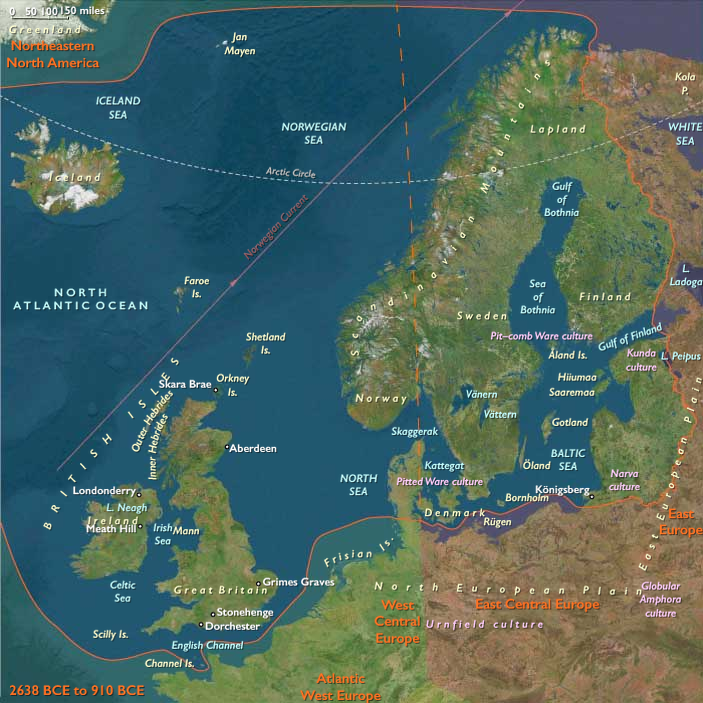
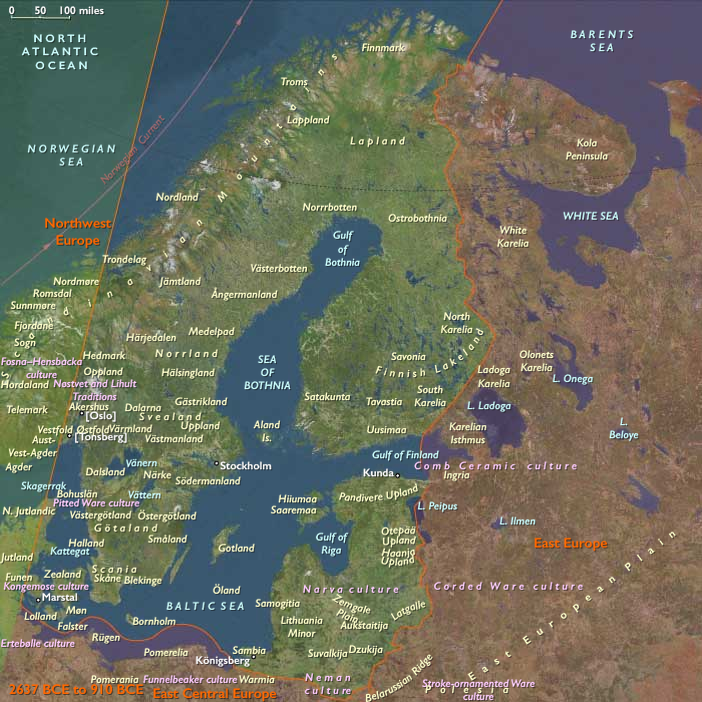
Scandinavia has been characterized by a warm climate comparable to that of present-day Mediterranean since the climate change that had occurred around 2700 BCE, permitting a relatively dense population and good farming; for example, grapes are grown in Scandinavia at this time.
The Nordic Bronze Age (also Northern Bronze Age) is the name given by Oscar Montelius to a period and a Bronze Age culture in Scandinavian prehistory, around 1800 BCE to 500 BCE, with sites that reach as far east as Estonia.
Succeeding the Corded Ware culture in Denmark, Sweden, and parts of Norway, it is generally considered the direct predecessor and origin of the Proto-Germanic culture of the Pre-Roman Iron Age.
This civilization is presumably founded in amber trade, through contacts with Central European and Mediterranean cultures.
Powerful centers emerge around 1800 in such key areas of Scandinavia as the shores of the Limfjord, a shallow sound in Denmark that separates the island of Vendsyssel-Thy from the rest of Jutland Peninsula.
The Nordic Bronze Age period in Denmark would be marked by a culture that buries its dead, with their possessions, beneath burial mounds.
Many dolmens and rock tombs (especially "passage graves") date from this period, from which the many bronze finds include beautiful religious artifacts and musical instruments, and the earliest evidence of social classes and stratification.
Locations
Groups
Topics
Commodoties
Subjects
Regions
Subregions
Years: 1341BCE - 1198BCE
Locations
Groups
Topics
Commodoties
Subjects
Regions
Subregions