
Saxon occupation of land that is to …
Years: 527 - 527
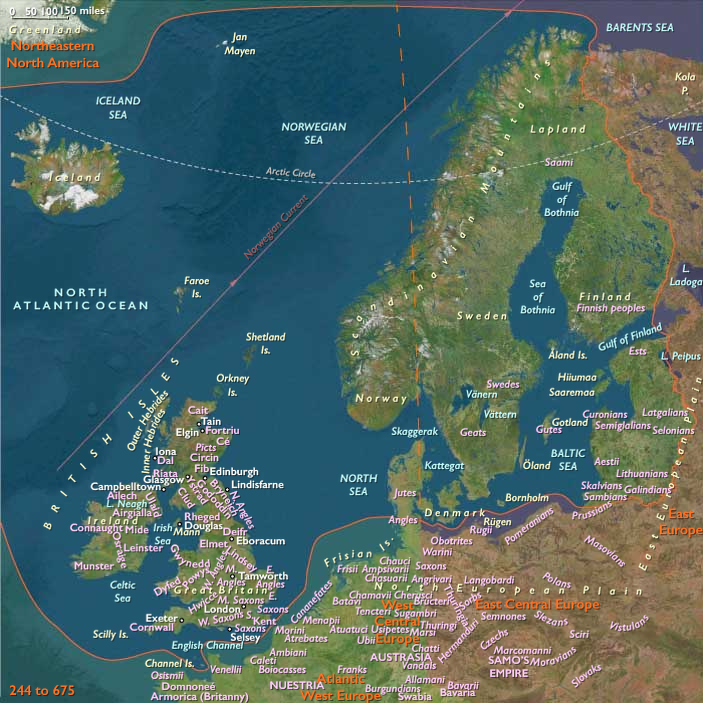
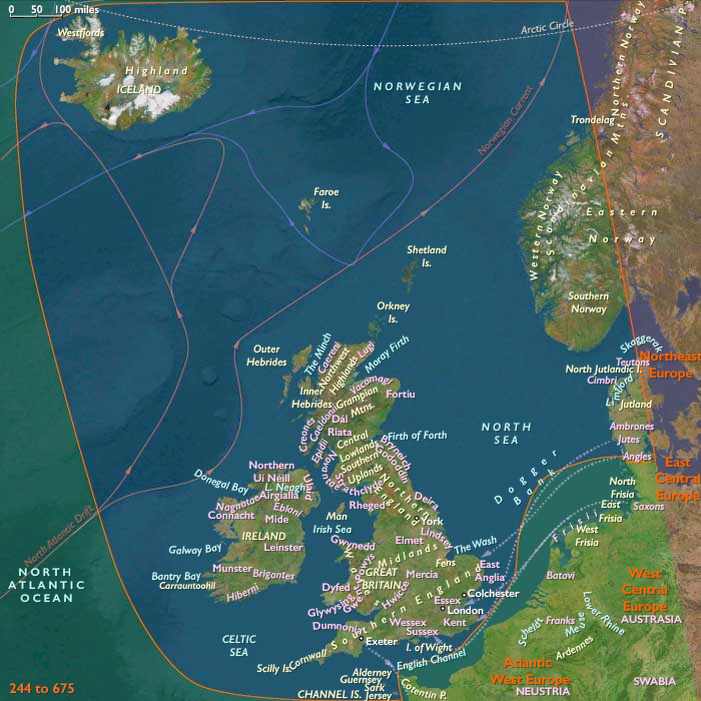
Saxon occupation of land that is to form the kingdom of Essex had begun by the early fifth century at Mucking and other locations.
A large proportion of these original settlers came from Old Saxony.
The territory known later as Essex was according to British legend ceded by the Britons to the Saxons following the infamous Brad y Cyllyll Hirion event, which occurred about 460 during the reign of High-King Vortigern.
Della Hooke relates the territory ruled by the kings of Essex to the pre-Roman territory of the Trinovantium.
The kingdom of Essex grew by the absorption of smaller sub-kingdoms or Saxon tribal groups.
There are a number of suggestions for the location of these sub-kingdoms including: the Rodings—the people of Hrotha, the Haemele, (Hemel Hempstead) Vange—marsh district (possibly stretching to the Mardyke) Denge Ginges Berecingas—Barking, in the south west of the kingdom Haeferingas in Havering Uppingas—Epping.
Essex, founded by the Saxons who have landed north of the Thames, emerges during the sixth century as a single kingdom.
They take control of the land between what is now London and St Albans.
The dates, names and achievements of the Essex kings, like those of most early rulers in the Heptarchy, remain conjectural.
The historical identification of the kings of Essex, including the evidence and a reconstructed genealogy are discussed extensively by Yorke.
The dynasty claimed descent from Woden via Seaxnēat.
A genealogy of the Essex royal house was prepared in the ninth century in Wessex.
The surviving copy unfortunately is somewhat mutilated.
Several sub-kings within Essex at times during the history of the kingdom appear to have been able to rule simultaneously.
They may have exercised authority over different parts of the kingdom.
The first recorded king, according to the East Saxon King List, was Æscwine to which a date of 527 is given for the start of his reign, although there are some difficulties with the date of his reign, and Sledda is listed as the founder of the Essex royal house by other sources.
Locations
Groups
Topics
Commodoties
Subjects
Regions
Subregions
Related Events
Showing 10 events out of 58122 total
Years: 527 - 527
Locations
Groups
Topics
Commodoties
Subjects
Regions
Subregions