
Sassanid monarch Shapur promotes the growth of …
Years: 256 - 256
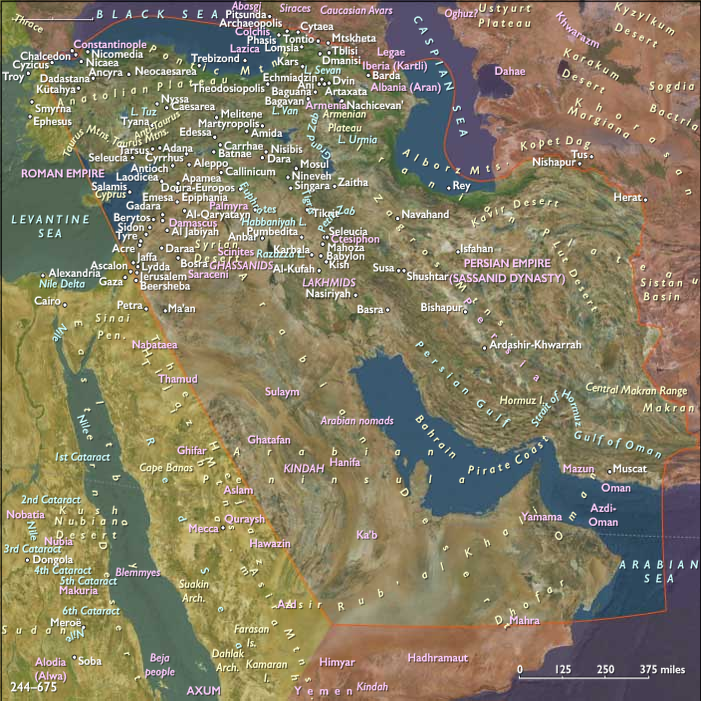
Sassanid monarch Shapur promotes the growth of Zoroastrianism in the Persian Empire, eventually making it the official state religion.
Inscriptions show that he also founded Zoroastrian fire temples and sought to broaden the base of the newly revived Zoroastrian religion by the addition of material derived from both Greek and Indian sources.
He appears also to have tried to find a religion suitable for all of the empire, showing marked favor to Mani, the founder of Manichaeism, permitting Mani to establish his philosophy at the royal court, a move that displeases the court’s Zoroastrian priests.
Manichaeism, as it develops, denies the reality of Christ's body and rejects the notion of free will.
The religion adapts from Christianity baptism, the Eucharist, and a third sacrament of remission of sins at the time of death.
The essence of Manichaeism remains the principle of absolute dualism: the primal conflict between God, represented by light and spirit, and Satan, represented by darkness and the material world.
Humans, being creatures of God, possess divine spirits but carry within their material bodies seeds of darkness, sown by Satan.
In regarding evil as a physical rather than a moral entity, Manichaeism apparently considers women to be forces of darkness that bind men to the flesh.
Locations
People
Groups
Topics
Commodoties
Subjects
Regions

Subregions
Related Events
Showing 10 events out of 60348 total
Years: 256 - 256
Locations
People
Groups
Topics
Commodoties
Subjects
Regions
Subregions