
Samuel Hahnemann, the originator of homeopathy, publishes …
Years: 1810 - 1810
Samuel Hahnemann, the originator of homeopathy, publishes "Organon of the Rational Art of Healing", the first systematic treatise, containing all his detailed instructions on the subject, in 1810.
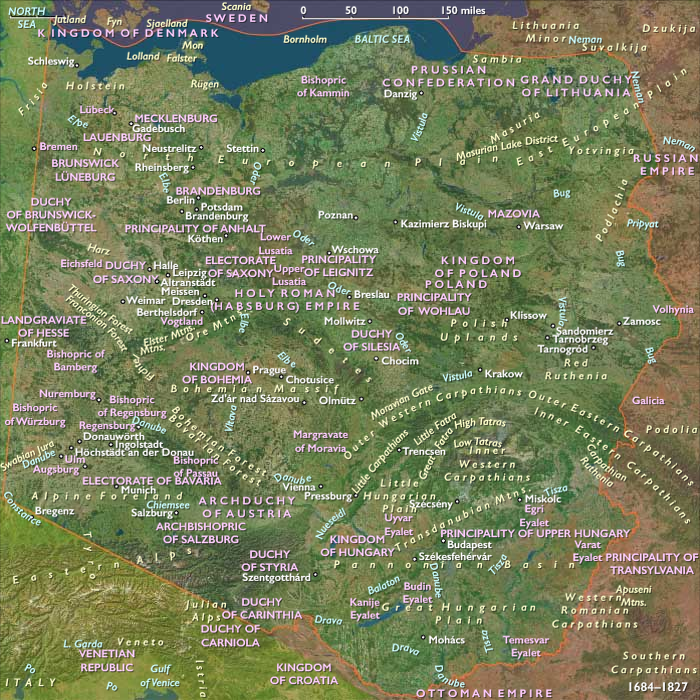
Born in Meissen, Saxony near Dresden, his father, along with many other family members, had been a painter and designer of porcelain, for which the town of Meissen is famous.
As a young man, Hahnemann had become proficient in a number of languages, including English, French, Italian, Greek and Latin, and eventually made a living as a translator and teacher of languages, gaining further proficiency in Arabic, Syriac, Chaldaic and Hebrew.
After studying medicine for two years at Leipzig, Hahnemann had moved to Vienna, citing Leipzig's lack of clinical facilities.
Studying there for ten months, he concluded a term of further study at the University of Erlangen, graduating as an MD with honors on August 10, 1779.
His poverty may have forced him to choose Erlangen, as the school's fees were lower.
Hahnemann's thesis was titled Conspectus adfectuum spasmodicorum aetiologicus et therapeuticus (A Dissertation on the Causes and Treatment of Cramps).
In 1781, Hahnemann had taken a village doctor's position in the copper-mining area of Mansfeld, Saxony, and soon married Johanna Henriette Kuchler, with whom he will eventually have eleven children.
After abandoning medical practice, and while working as a translator of scientific and medical textbooks, Hahnemann travels around Saxony for many years, staying in many different towns and villages for varying lengths of time, never living far from the River Elbe.
Hahnemann claims that the medicine of his time did as much harm as good.
After giving up his practice around 1784, he has made his living chiefly as a writer and translator, while resolving also to investigate the causes of medicine's alleged errors.
While translating William Cullen's A Treatise on the Materia Medica, Hahnemann had encountered the claim that cinchona, the bark of a Peruvian tree, was effective in treating malaria because of its astringency.
Believing that other astringent substances are not effective against malaria, Hahnemann had begun to research cinchona's effect on the human body by self-application.
Noting that the drug induced malaria-like symptoms in himself, he concluded that it would do so in any healthy individual.
This led him to postulate a healing principle: "that which can produce a set of symptoms in a healthy individual, can treat a sick individual who is manifesting a similar set of symptoms."
This principle, like cures like, becomes the basis for an approach to medicine which he gives the name homeopathy, a term first used in his essay "Indications of the Homeopathic Employment of Medicines in Ordinary Practice", published in Hufeland's Journal in 1807. (Martin Gumpert, Hahnemann: The Adventurous Career of a Medical Rebel, New York: Fischer, 1945, p. 130)
Hahnemann tests substances for the effect they produce on a healthy individual and tries to deduce from this the ills they will heal.
From his research, he initially concluded that ingesting substances to produce noticeable changes in the body resulted in toxic effects.
He then attempted to mitigate this problem through exploring dilutions of the compounds he was testing.
He claimed that these dilutions, when prepared according to his technique of succussion (systematic mixing through vigorous shaking) and potentization, remain effective in alleviating the same symptoms in the sick.
Having begun practicing this new technique around 1792, Hahnemann had first published an article about the homeopathic approach in a German language medical journal in 1796, followed by a series of further essays.
Locations
People
Groups
Subjects
Regions

Subregions
Years: 1810 - 1810
Locations
People
Groups
Subjects
Regions
Subregions