
Albert Fuller Ellis identifies phosphate deposits on …
Years: 1900 - 1911
Albert Fuller Ellis identifies phosphate deposits on the Pacific Islands of Nauru and Banaba Island (Ocean Island), and manages their development.
The Pacific Phosphate Company begins to exploit the reserves in 1906 under an arrangement with the German administrators of the island, exporting its first shipment in 1907.
Ellis was born in Roma, Queensland; his family moved to Waikato in New Zealand, where he attended the Cambridge District High School.
At the age of eighteen, Ellis joined his brothers James and George in working for John T. Arundel and Co.; their father George C. Ellis, a chemist, and later a farmer in New Zealand, was a director of the company.
John T. Arundel and Co. was engaged in Pacific trading of phosphates, copra, and pearl shell.
While working in the company's Sydney office in 1899 Ellis determined that a large rock from Nauru being used as a doorstop was rich in phosphate.
Following the discovery Ellis traveled to Ocean Island and Nauru and confirmed the discovery.
Operations on Ocean Island commenced three months after the discovery.
Locations
Groups
- Samoan, or Navigators Islands
- United States of America (US, USA) (Washington DC)
- Britain (United Kingdom of Great Britain and Ireland)
- German Empire (“Second Reich”)
- German Pacific Possessions
- Solomon Islands (British protectorate)
- American Samoa (United States insular area of)
- German Samoa
Topics
Commodoties
Subjects
Regions
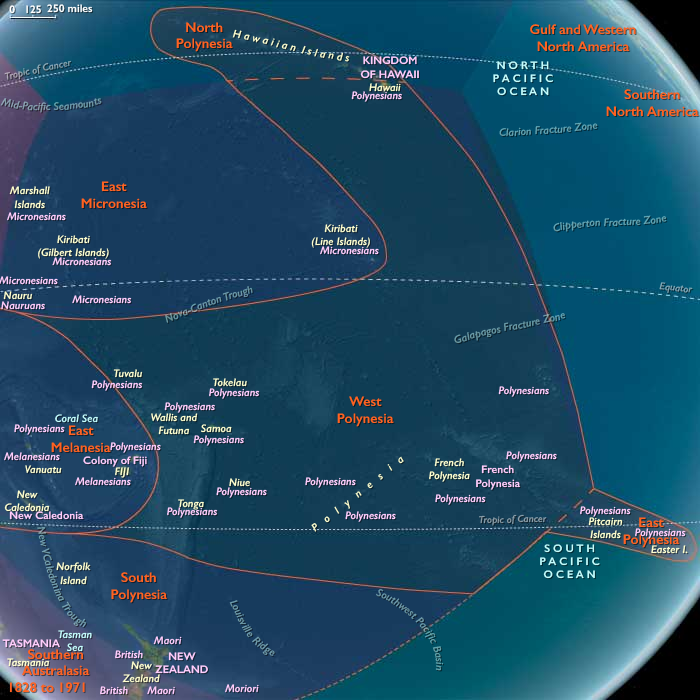
Subregions
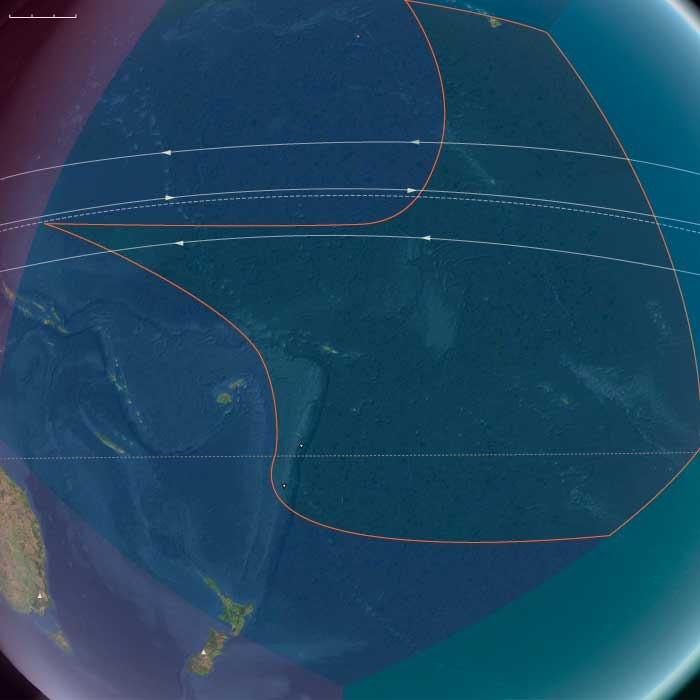
Years: 1900 - 1911
Locations
Groups
- Samoan, or Navigators Islands
- United States of America (US, USA) (Washington DC)
- Britain (United Kingdom of Great Britain and Ireland)
- German Empire (“Second Reich”)
- German Pacific Possessions
- Solomon Islands (British protectorate)
- American Samoa (United States insular area of)
- German Samoa
Topics
Commodoties
Subjects
Regions
Subregions