
Samaria’s post-conquest inhabitants are allegedly colonists who …
Years: 717BCE - 706BCE
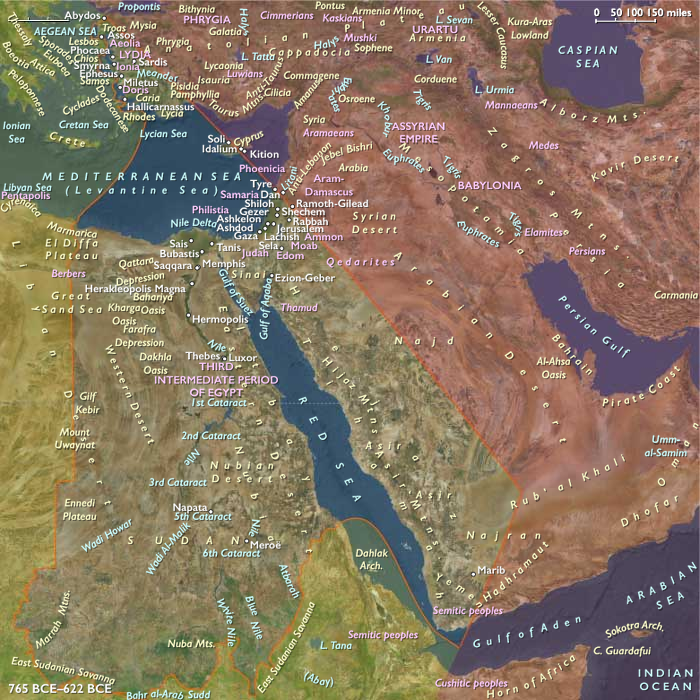
Samaria’s post-conquest inhabitants are allegedly colonists who adopt what later Jewish tradition will characterize as a distorted form of Judaism.
The new inhabitants had originally worshipped their own gods, but when the then-sparsely populated areas became infested with dangerous wild beasts, they appealed to the king of Assyria for Israelite priests to instruct them on how to worship the "god of that country."
The result is a syncretistic religion, in which national groups worship the Lord, but they also serve their own gods in accordance with the customs of the nations from which they had been brought.
Some Samaritans claim to be descendants of Israelites from the Northern Kingdom who had escaped deportation and exile.
Today’s Samaritans, who hold to the Pentateuch as their Scripture and honor Moses as the only prophet, claim descent from the tribes of Ephraim and Manasseh and maintain that they have preserved the way and will of Yahweh, though they accept little of later Jewish theology.
Their temple, which is at Mount Gerizim, not Jerusalem, will by destroyed by the Macabbean king John Hyrcanus late in the second century BCE, although their descendants still worship among its ruins.
A genetic study in the beginning of the twenty-first century concluded from Y-chromosome analysis that Samaritans descend from the Israelites (including Cohen, or priests), and mitochondrial DNA analysis shows descent from Assyrians and other foreign women, effectively validating both local and foreign origins for the Samaritans. (Shen et al, 2004)
Locations
People
Groups
- Polytheism (“paganism”)
- Hebrews
- Judah, Kingdom of
- Assyria, (New) Kingdom of (Neo-Assyrian Empire)
- Samaritans
Topics
- Younger Subboreal Period
- Iron Age, Near and Middle East
- Iron Age Cold Epoch
- Classical antiquity
- Assyrian Wars of c. 745-609 BCE
Commodoties
Subjects
Regions
Subregions
Years: 717BCE - 706BCE
Locations
People
Groups
- Polytheism (“paganism”)
- Hebrews
- Judah, Kingdom of
- Assyria, (New) Kingdom of (Neo-Assyrian Empire)
- Samaritans
Topics
- Younger Subboreal Period
- Iron Age, Near and Middle East
- Iron Age Cold Epoch
- Classical antiquity
- Assyrian Wars of c. 745-609 BCE
Commodoties
Subjects
Regions
Subregions