
Saladin had named Al-Muzaffar Taqi al-Din Umar …
Years: 1183 - 1183
Saladin had named Al-Muzaffar Taqi al-Din Umar the sovereign of Ayyubid-ruled Mesopotamia after the conquest of Syria and northern Iraq.
Taqi al-Din had built a madrasa in the city of Edessa, located in the Mesopotamian territory, and had particularly shown favor for those who worked in religious law and the Sufis.
He had been handed the principality of Hama four years after helping Saladin conquer it in 1175.
His ascendancy has ushered in an era of prosperity for Hama that will last until the end of Ayyubid rule in 1341.
During al-Muzaffar Umar's reign, the city is walled and palaces, markets, madrasas, and mosques are built.
While in Manbij, in 1181, Taqi al-Din had attempted to block the Zengid forces of Izz ad-Din Mas'ud from reaching Aleppo, but had failed and had been forced to retreat to Hama.
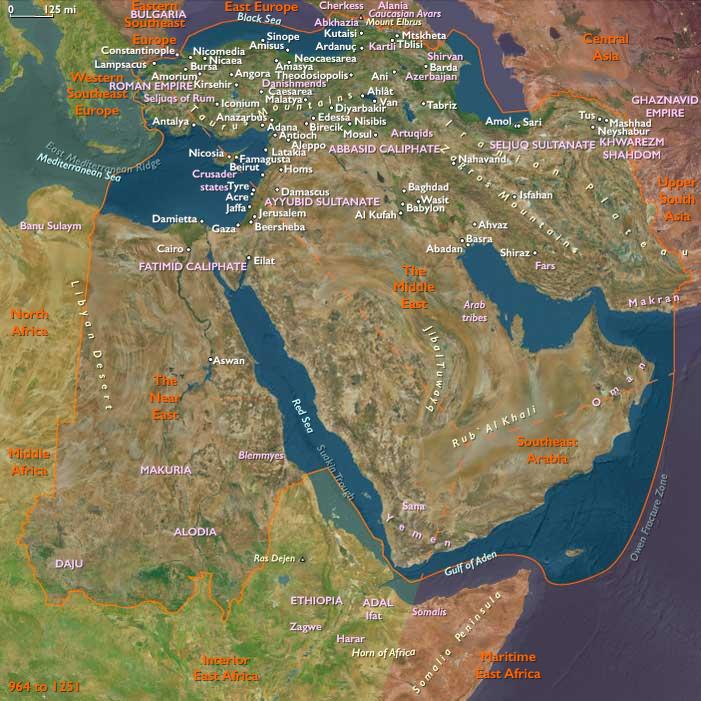
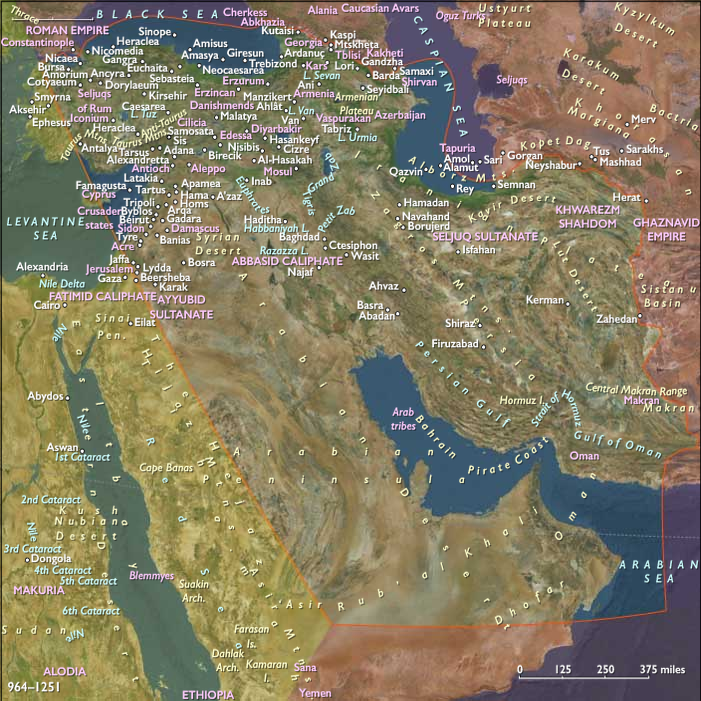
Two years later, Saladin's brother and his deputy ruler in Egypt, al-Adil, have been sent to besiege Kerak in southern Transjordan, which is in Crusader hands.
Saladin now sends al-Muzaffar Yaqi al-Din Umar as al-Adil's replacement.
Locations
People
Groups
- Kurdish people
- Islam
- Muslims, Sunni
- Muslims, Shi'a
- Syrian people
- Sufism
- Abbasid Caliphate (Baghdad)
- Turkmen people
- French people (Latins)
- Christians, Roman Catholic
- Aleppo, Seljuq Emirate of
- Antioch, Principality of
- Jerusalem, Latin Kingdom of
- Italians (Latins)
- Tripoli, County of
- Mosul, Zengi's Emirate of
- Zengid dynasty of Syria
- Jaffa and Ascalon, County of
- Damascus, Ayyubid Dynasty of
- Egypt, Ayyubid Sultanate of
Topics
Commodoties
Subjects
Regions
Subregions
Related Events
Showing 10 events out of 48118 total
Years: 1183 - 1183
Locations
People
Groups
- Kurdish people
- Islam
- Muslims, Sunni
- Muslims, Shi'a
- Syrian people
- Sufism
- Abbasid Caliphate (Baghdad)
- Turkmen people
- French people (Latins)
- Christians, Roman Catholic
- Aleppo, Seljuq Emirate of
- Antioch, Principality of
- Jerusalem, Latin Kingdom of
- Italians (Latins)
- Tripoli, County of
- Mosul, Zengi's Emirate of
- Zengid dynasty of Syria
- Jaffa and Ascalon, County of
- Damascus, Ayyubid Dynasty of
- Egypt, Ayyubid Sultanate of
Topics
Commodoties
Subjects
Regions
Subregions