
Şahkulu is thought by his partisans to …
Years: 1511 - 1511
Şahkulu is thought by his partisans to be invincible after he raids a royal caravan and kills a high-ranking Ottoman statesman.
A second army is sent after him, commanded by Şehzade Ahmet, one of the claimants to throne, and the grand vizier Hadım Ali Pasha.
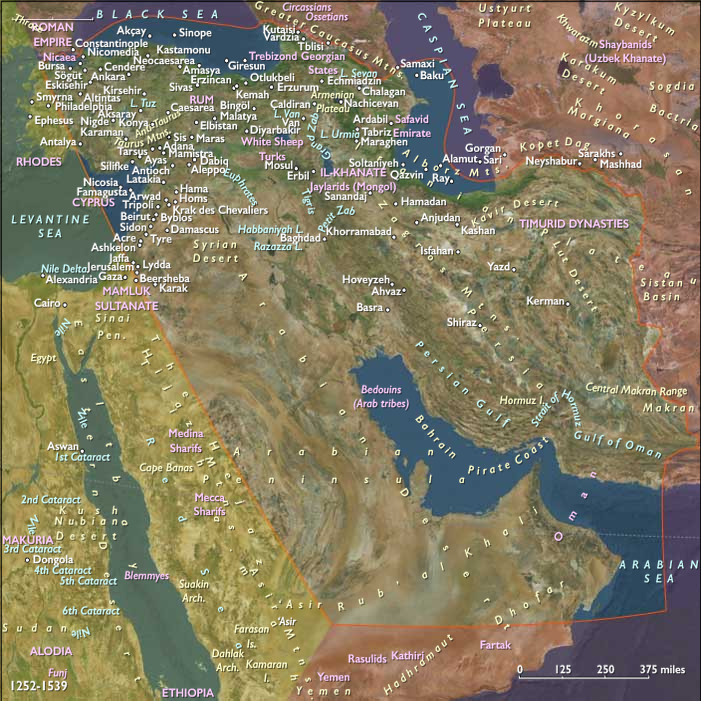
They are able to corner Şahkulu near Altıntaş (in modern Kütahya Province), but instead of fighting, Ahmet tried to win over the Janissaries to his cause.
Failing to achieve this, he leaves the battlefield.
Şahkulu sees his chance and escapes.
Ali Pasha, with a smaller force, chases him and clashes with him at Çubukova between Kayseri and Sivas.
The battle, which takes place in July 1511, is a draw, but both Ali Pasha and Şahkulu are killed (July 1511).
However, the conditions that have caused the uprising will remain a major problem for Bayezid's successor.
Şahkulu's partisans are not defeated, but they have lost their leader.
Many scatter, but after a third army is sent by the Ottoman Porte, the most devoted escape to Persia.
During their escape they raid a caravan, and accidentally kill a well-known Persian scholar.
Consequently, instead of showing them hospitality, Ismail executes them.
Meanwhile, in Ottoman lands, Prince Ahmet's behavior in the battle caused reaction among the soldiers.
Moreover the death of Hadım Ali, the chief partisan of Ahmet, provides an advantage to the youngest claimants to throne: the succession will ultimately fall to Selim I, under whose reign the Ottoman state will see spectacular victories and double in area.
Locations
People
Groups
- Oghuz Turks
- Muslims, Sunni
- Muslims, Shi'a
- Turkmen people
- Ottoman Empire
- Qizilbash or Kizilbash, (Ottoman Turkish for "Crimson/Red Heads")
- Persia, Safavid Kingdom of
Topics
Commodoties
Subjects
Regions

Subregions
Related Events
Showing 10 events out of 39308 total
Years: 1511 - 1511
Locations
People
Groups
- Oghuz Turks
- Muslims, Sunni
- Muslims, Shi'a
- Turkmen people
- Ottoman Empire
- Qizilbash or Kizilbash, (Ottoman Turkish for "Crimson/Red Heads")
- Persia, Safavid Kingdom of
Topics
Commodoties
Subjects
Regions
Subregions