
Filters:
Russia's domestic backwardness and vulnerability in foreign …
Years: 1888 - 1899
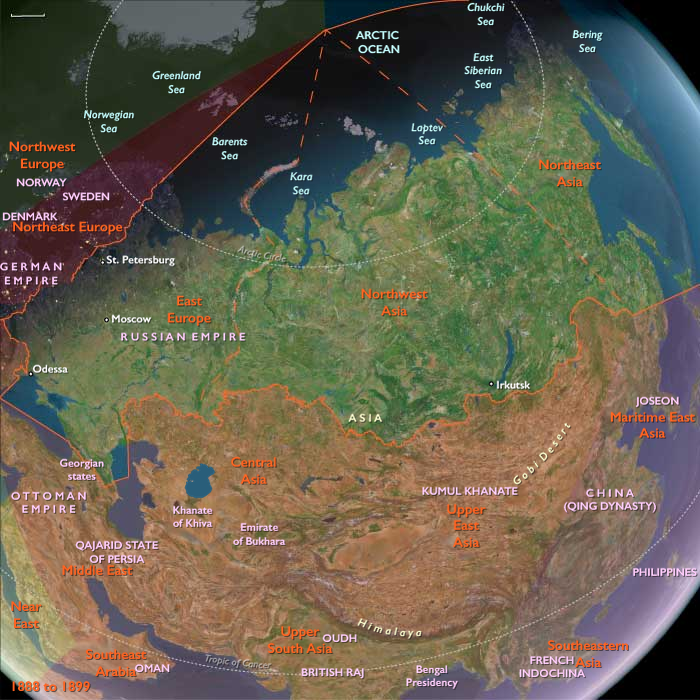
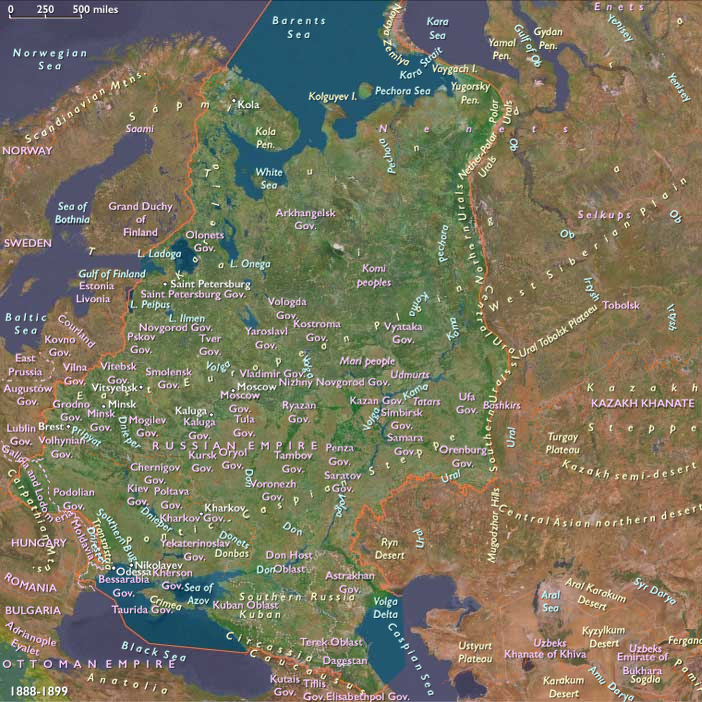
Russia's domestic backwardness and vulnerability in foreign affairs reaches crisis proportions in the late 1800s.
A famine claiming a half-million lives in 1891 exemplifies the domestic crisis, and activities by Japan and China near Russia's borders are perceived as threats from abroad.
In reaction, the regime is forced to adopt the ambitious but costly economic programs of Sergei Witte, the country's strong-willed minister of finance.
Witte champions a combination of foreign loans, conversion to the gold standard, heavy taxation of the peasantry, accelerated development of heavy industry, and a trans-Siberian railroad.
These policies are designed to modernize the country, secure the Russian Far East, and give Russia a commanding position with which to exploit the resources of China's northern territories, Korea, and Siberia.
This expansionist foreign policy is Russia's version of the imperialism so characteristic of the relations of advanced capitalist countries with weak and backward areas during the nineteenth century.
The accession of the pliable Nicholas II in 1894 results in the domination of the government by Witte and other powerful ministers.
A famine claiming a half-million lives in 1891 exemplifies the domestic crisis, and activities by Japan and China near Russia's borders are perceived as threats from abroad.
In reaction, the regime is forced to adopt the ambitious but costly economic programs of Sergei Witte, the country's strong-willed minister of finance.
Witte champions a combination of foreign loans, conversion to the gold standard, heavy taxation of the peasantry, accelerated development of heavy industry, and a trans-Siberian railroad.
These policies are designed to modernize the country, secure the Russian Far East, and give Russia a commanding position with which to exploit the resources of China's northern territories, Korea, and Siberia.
This expansionist foreign policy is Russia's version of the imperialism so characteristic of the relations of advanced capitalist countries with weak and backward areas during the nineteenth century.
The accession of the pliable Nicholas II in 1894 results in the domination of the government by Witte and other powerful ministers.
People
Groups
- Joseon (Yi) kingdom of
- Chinese Empire, Qing (Manchu) Dynasty
- Russian Empire
- Japan, Empire of (Meiji Period)
Topics
Subjects
Regions
Subregions
Years: 1888 - 1899
People
Groups
- Joseon (Yi) kingdom of
- Chinese Empire, Qing (Manchu) Dynasty
- Russian Empire
- Japan, Empire of (Meiji Period)
Topics
Subjects
Regions
Subregions