
Filters:
Rudolph of Burgundy’s Campaign Against Henry I …
Years: 923 - 923
Rudolph of Burgundy’s Campaign Against Henry I of Germany and the Struggle for Lotharingia (923–924)
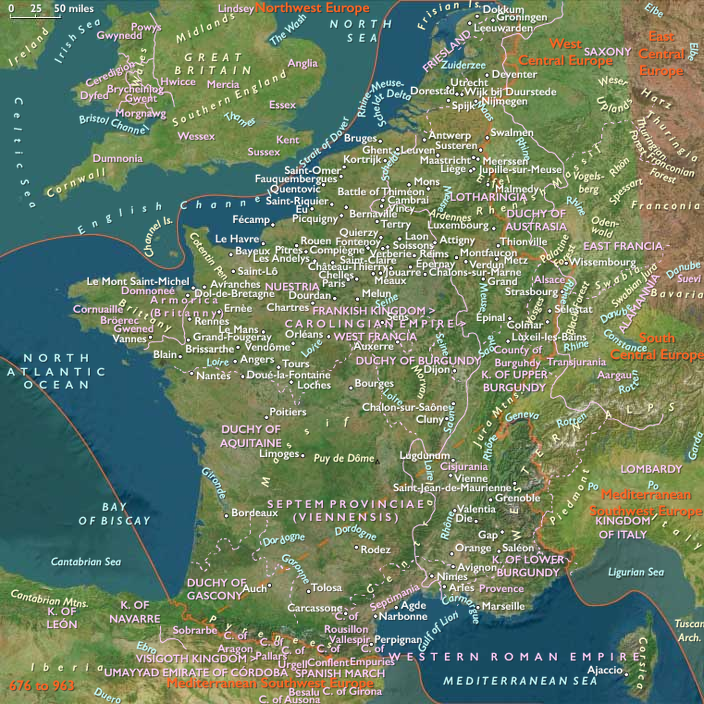
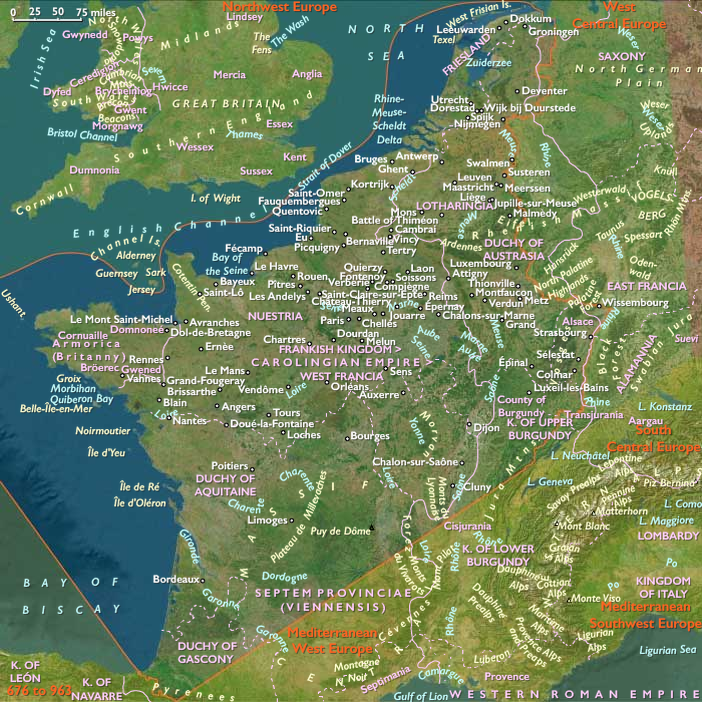
Upon his election as King of West Francia in 923, Rudolph of Burgundy’s first major act is to confront Henry I of Germany, the newly crowned King of East Francia, over the disputed region of Lotharingia (Lorraine). This reflects the continued struggle between East and West Francia over control of the former Middle Kingdom of Lothair II.
Background: Henry I’s Claim to Lotharingia
- Lotharingia had historically been a contested region, shifting between East and West Francia since the Treaty of Meerssen (870) and the Treaty of Ribemont (880).
- Before the death of Robert I, Henry I had made a compact with King Robert at Jülich in early 923, possibly negotiating peace over Lorraine.
- However, Rudolph, as the new king, does not honor this agreement and instead seeks to reassert West Frankish control over the region.
Rudolph’s Campaign and the Confrontation with Henry I (923–924)
- Rudolph marches into Lotharingia with a sizable army, seeking to annex the duchy into West Francia.
- Henry I, unwilling to let Lotharingia fall into West Frankish hands, gathers his forces to meet Rudolph in battle.
- Both armies face off in what seems to be a significant military engagement, but rather than escalating into war, the two kings negotiate peace again.
Outcome: A Renewed Peace Between West and East Francia
- Rudolph and Henry I reach a diplomatic settlement, though the terms remain unclear.
- Henry maintains control over Lotharingia, preventing its annexation into West Francia.
- The balance of power between the two kingdoms remains tense, as neither king is willing to allow full control of Lotharingia to the other.
Significance of Rudolph’s Failed Attempt to Annex Lorraine
- Continues the long-standing Carolingian-era struggle over Lotharingia, which remains a contested regionfor centuries.
- Prevents an outright war between West and East Francia, preserving a fragile peace in the early years of both kings’ reigns.
- Establishes Henry I as the stronger monarch, as his ability to defend Lotharingia reinforces East Francia’s dominance over the region.
Conclusion: A Diplomatic Defeat for Rudolph
While Rudolph’s attempt to take Lotharingia fails, his early military actions set the tone for his reign—one marked by struggles to consolidate power against both external threats like East Francia and internal challenges from feudal lords and Vikings. Meanwhile, Henry I strengthens East Francia’s position, setting the stage for its evolution into the Holy Roman Empire under his successors.
Locations
People
- Charles the Simple
- Edward the Elder
- Gilbert
- Henry the Fowler
- Herbert II
- Hugh the Black
- Louis IV, King of Western Francia
- Robert I of France
- Rollo of Normandy
- Rudolph of France
Groups
- Wessex, English Kingdom of
- Francia Occidentalis (West Francia, or France), Kingdom of
- Francia Orientalis (East Francia), Kingdom of
- Lotharingia, Duchy of
Commodoties
Subjects
Regions
Subregions
Related Events
Showing 4 events out of 4 total
Years: 923 - 923
Locations
People
- Charles the Simple
- Edward the Elder
- Gilbert
- Henry the Fowler
- Herbert II
- Hugh the Black
- Louis IV, King of Western Francia
- Robert I of France
- Rollo of Normandy
- Rudolph of France
Groups
- Wessex, English Kingdom of
- Francia Occidentalis (West Francia, or France), Kingdom of
- Francia Orientalis (East Francia), Kingdom of
- Lotharingia, Duchy of
Commodoties
Subjects
Regions
Subregions