
Roman magistrate Gaius Verres had initially supported …
Years: 71BCE - 71BCE
Roman magistrate Gaius Verres had initially supported Gaius Marius and the Populares, but soon went over to the Optimates.
Sulla had made him a present of land at Beneventum, and secured him against punishment for embezzlement.
In 80 BCE, Verres was quaestor in Asia on the staff of Gnaeus Cornelius Dolabella, governor of Cilicia.
The governor and his subordinate plundered in concert until 78 BCE, when Dolabella had to stand trial at Rome.
He was convicted, mainly on the evidence of Verres, who thus secured a pardon for himself.
In 74, by lavish use of bribes, Verres secured the city praetorship, and abused his authority to further the political ends of his party.
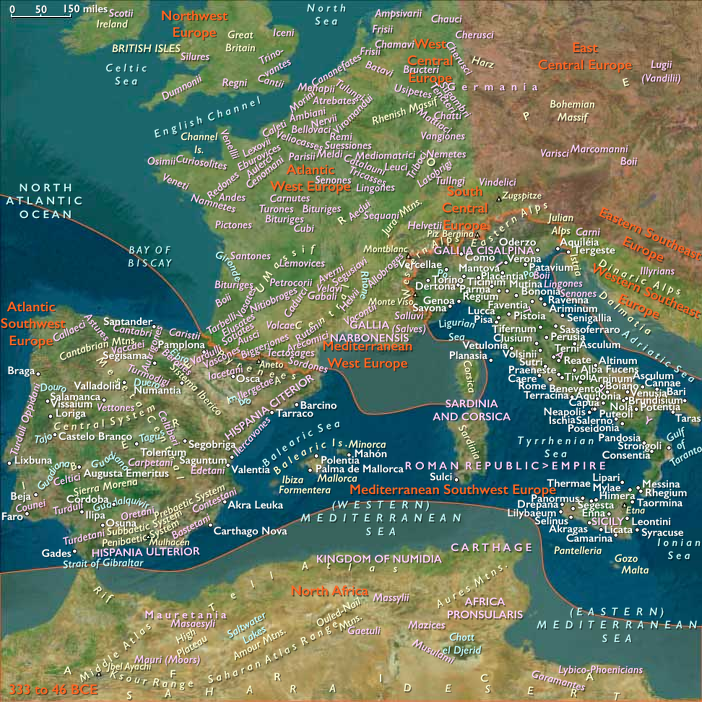
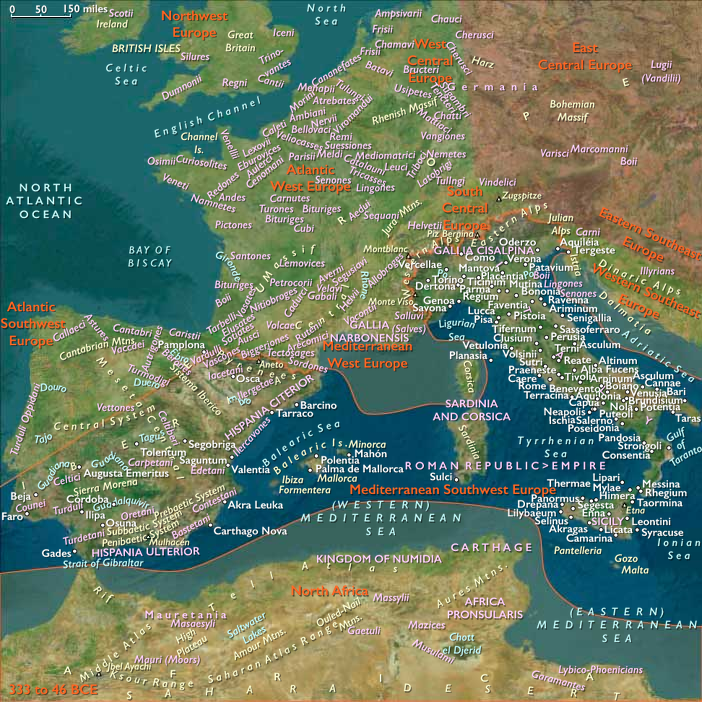
As a reward, he was then sent as governor to Sicily, the breadbasket of the Roman Republic and a particularly rich province thanks to its central position in the Mediterranean making it a commercial crossroads.
The people are for the most part prosperous and contented, but under Verres, the island experiences more misery and desolation than during the time of the First Punic or the recent servile wars.
The wheat-growers and the revenue collectors are ruined by exorbitant imposts or by the iniquitous canceling of contracts.
Temples and private houses are robbed of their works of art and the rights of Roman citizens are disregarded.
Another major charge leveled against Verres during his Sicilian tenure is that, during the time of the Third Servile War against Spartacus, he had used the emergency to raise cash.
He would, allegedly, pick key slaves of wealthy landowners and charge them with plotting to join Spartacus' revolt or otherwise causing sedition in the province.
Having done so, he would sentence the slave to death by crucifixion, and then lay a broad hint that a sizable bribe from the slave's owner could expunge the charge and sentence.
Other times he would name nonexistent slaves, charging that the landowner held a slave that was suspected of plotting rebellion and that the owner was actively hiding him.
When the owner, quite understandably, could not produce the slave (which he didn't own), Verres would throw him in prison until a bribe could be paid for the landowner's release.
Locations
People
Topics
- Classical antiquity
- Roman Age Optimum
- Roman Republic, Crisis of the
- Servile War, Third (Gladiators' War or Spartacus, Revolt of)
Commodoties
Subjects
Regions
Subregions
Related Events
Showing 10 events out of 62673 total
Years: 71BCE - 71BCE
Locations
People
Topics
- Classical antiquity
- Roman Age Optimum
- Roman Republic, Crisis of the
- Servile War, Third (Gladiators' War or Spartacus, Revolt of)
Commodoties
Subjects
Regions
Subregions