
Roman elegiac poet Sextus Propertius, in his …
Years: 16BCE - 16BCE
Roman elegiac poet Sextus Propertius, in his passionate poems concerning love’s vicissitudes, confesses to being, in emulation of Catullus, a slave to love.
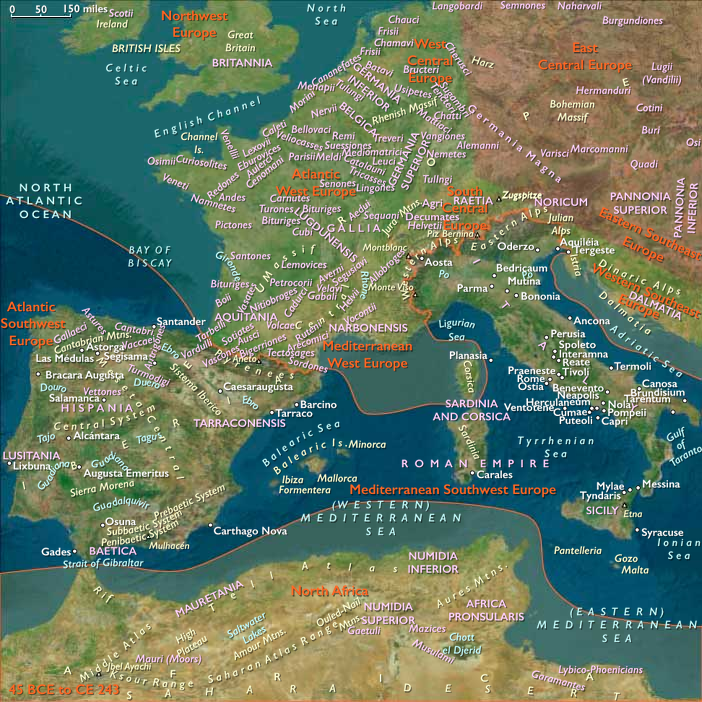
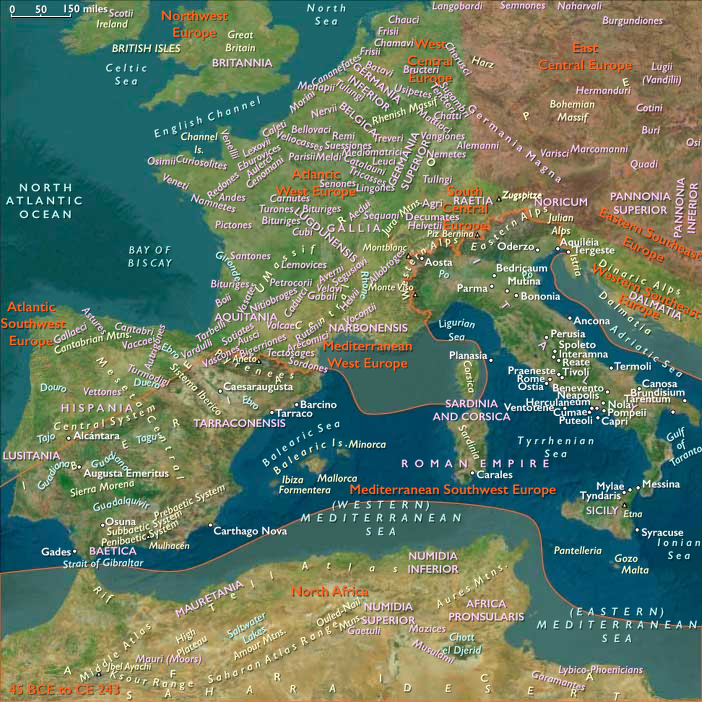
From numerous references in his poetry it is clear he was born and raised in Umbria; modern Assisi claims for itself the honor of his birthplace.
As a boy his father died and the family lost land as part of a confiscation, probably the same one that reduced Virgil's estates when Octavian allotted lands to his veterans in 41 BCE.
Combining this with cryptic references in Ovid implying he was younger than his contemporary Tibullus, a birthdate in the early forties seems appropriate.
After his father's death, Propertius' mother had set him on course for a public career—indicating his family still had some wealth—while the abundance of obscure mythology present in his poetry indicates he received a good education.
Frequent mention of friends like Tullus—the nephew of Lucius Volcatius Tullus, consul in 33 BCE—plus the fact that he lived on Rome's Esquiline hill indicate he moved among the children of the rich and politically connected during the early part of the twenties decade.
It is during this time that he meets Cynthia, the older woman who inspires him to express his poetic genius.
Propertius publishes a first book of love elegies in 25 BCE, with Cynthia herself as the main theme; the book's complete devotion gave it the natural title Cynthia Monobiblos.
The Monobiblos must have attracted the attention of Maecenas, a patron of the arts.
who takes Propertius into his circle of court poets, which includes Horace, Virgil and Ovid.
A second, larger book of elegies is published perhaps a year later, one that includes poems addressed directly to his patron and (as expected) praises for Augustus.
The publication of a third book comes sometime after 23 BCE.
Its content shows the poet beginning to move beyond simple love themes, as some poems (e.g.
III.5) use Amor merely as a starting point for other topics.
The book also shows the poet growing tired of the demanding yet fickle Cynthia, and implies a bitter end to their torrid love affair.
Book IV, published sometime after 16 BCE, displays more of the poet's ambitious agenda, and includes several aetiological poems explaining the origin of various Roman rites and landmarks.
He spends most of his life in Rome.
Locations
People
Groups
Topics
Commodoties
Subjects
- Commerce
- Writing
- Environment
- Labor and Service
- Conflict
- Mayhem
- Faith
- Government
- Technology
- Mythology
Regions
Subregions
Years: 16BCE - 16BCE
Locations
People
Groups
Topics
Commodoties
Subjects
- Commerce
- Writing
- Environment
- Labor and Service
- Conflict
- Mayhem
- Faith
- Government
- Technology
- Mythology
Regions
Subregions