
Mark Antony’s Role in the Gallic Wars …
Years: 52BCE - 52BCE
February
Mark Antony’s Role in the Gallic Wars and the Carnutes’ Revolt (54–52 BCE)
By 54 BCE, Mark Antony had become a staff officer in Caesar’s armies, assisting in military campaigns in Gaul and Germany. His close friendship and family ties with Caesar ensured that he remained a key supporter, making himself constantly available for Caesar’s military efforts.
Antony, though an able commander, had a disruptive personality, which would later create political tensions in Rome. However, in the Gallic Wars, he proved his military competence, playing a vital role in Caesar’s campaigns against the Gallic revolts, particularly the Great Revolt of 52 BCE, led by Vercingetorix.
The Rise of Vercingetorix and the Pan-Gallic Revolt (52 BCE)
- Previous Gallic revolts, such as the Eburones uprising under Ambiorix in 54 BCE, had failed to secure widespread tribal support.
- In early 52 BCE, while Caesar was in Cisalpine Gaul raising troops, Vercingetorix, a chieftain of the Arverni, managed to unite the Gallic tribes against Rome.
- His father, Celtillus, had been executed for attempting to rule all of Gaul, but Vercingetorix succeeded in achieving this goal, adopting modern warfare strategies to counter the Romans.
The Carnutes: The Sacred Center of Gaul and the Catalyst for Rebellion
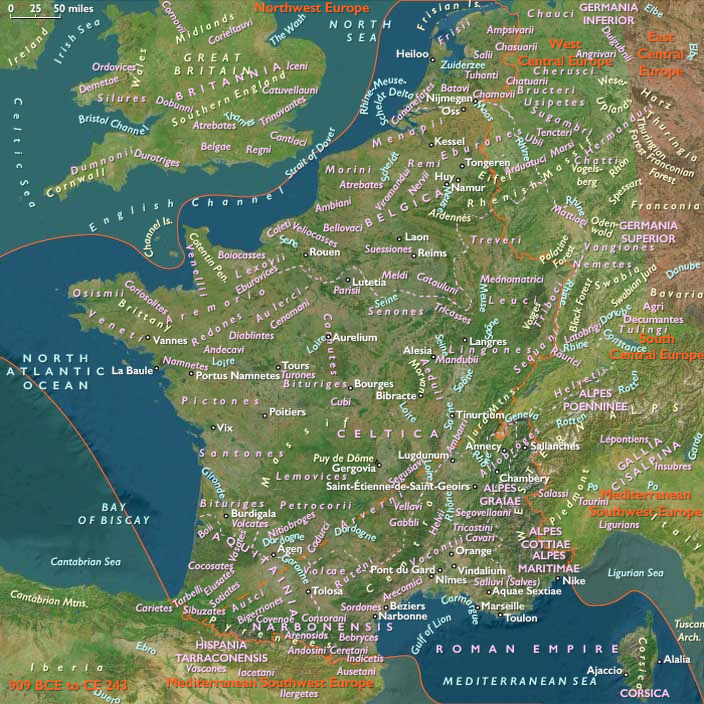
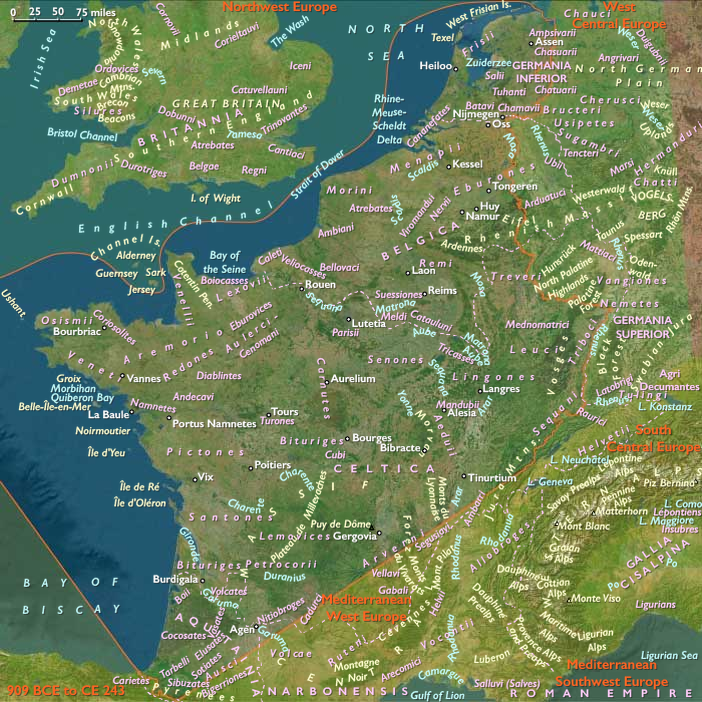
- The Carnutes, a powerful Gallic tribe, inhabited the region corresponding to modern Eure-et-Loir, Loiret, and Loir-et-Cher.
- Their territory was considered the sacred center of Gaul, where Druids held their annual pan-Gallic synod.
Political Organization:
- Like several other large Gallic polities, the Carnutes had previously been ruled by kings but later adopted an oligarchic or proto-republican system.
- Rome preferred to deal with client states through kings rather than fractious councils or senates, making it easier to control them through centralized power.
Caesar’s Imposed Rule Over the Carnutes
- After his campaign against the Belgae in 57 BCE, Caesar set up a protectorate over the Carnutes and installed Tasgetius as king, choosing him from the ruling clan as a reward for loyalty.
- Tasgetius’ rule was presented as a restoration, as his ancestors had once held supreme power.
However, in 54 BCE, Tasgetius was assassinated, which Caesar blamed on an anti-Roman faction among the Carnutes.
- Some historians argue that this was a result of normal internal Gallic politics, but Caesar used the assassination as a propaganda tool to justify further conquest.
- Following Tasgetius’ death, the Carnutes were placed under the control of the Remi, Rome’s most loyal Belgic ally.
The Carnutes Revolt and the Beginning of the Great Gallic Rebellion
- In early 52 BCE, the Carnutes, led by Cotuatus and Conetodunus, initiated the revolt, believing that Caesar was distracted by the political turmoil in Rome following the murder of Publius Clodius Pulcher.
- On February 13, 52 BCE, in the oppidum of Cenabum, the Carnutes massacred all the Roman merchants and killed one of Caesar’s commissariat officers.
This act served as a rallying cry for rebellion, and the uprising spread rapidly throughout Gaul, culminating in the formation of a united Gallic resistance under Vercingetorix.
Caesar’s Ruthless Response: The Destruction of Cenabum
- In retaliation, Caesar marched on Cenabum, the prosperous capital of the Carnutes.
- He burned the city, slaughtering the men and selling women and children into slavery.
- The booty from the sacking of Cenabum was distributed among his soldiers, providing a financial incentive to continue the conquest.
Significance of the Carnutes’ Revolt
- The massacre at Cenabum was the spark that led to the largest and most organized Gallic rebellion against Rome.
- The Carnutes’ rebellion demonstrated that anti-Roman sentiment had spread beyond individual tribes, unifying large sections of Gaul.
- Caesar’s brutal suppression of the revolt sent a clear message to other rebellious tribes about the consequences of defying Roman rule.
Despite the initial success of Vercingetorix, the rebellion would ultimately fail at the Siege of Alesia, solidifying Rome’s conquest of Gaul. However, the Carnutes’ role in initiating the Pan-Gallic uprising ensured their place in Roman and Gallic history as a symbol of defiance against Rome.
Locations
People
Groups
Topics
- Classical antiquity
- Pre-Roman Iron Age of Northern Europe
- Roman Age Optimum
- Roman Republic, Crisis of the
- Gallic Wars
Commodoties
Subjects
Regions
Subregions
Related Events
Showing 10 events out of 62515 total
Years: 52BCE - 52BCE
February
Locations
People
Groups
Topics
- Classical antiquity
- Pre-Roman Iron Age of Northern Europe
- Roman Age Optimum
- Roman Republic, Crisis of the
- Gallic Wars
Commodoties
Subjects
Regions
Subregions