
Roman Britain had seen increasing attacks in …
Years: 389 - 389
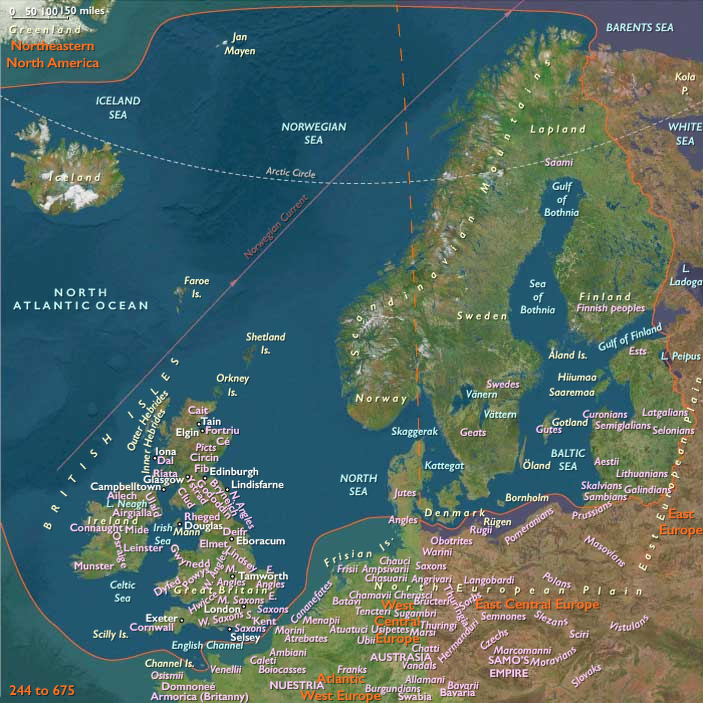
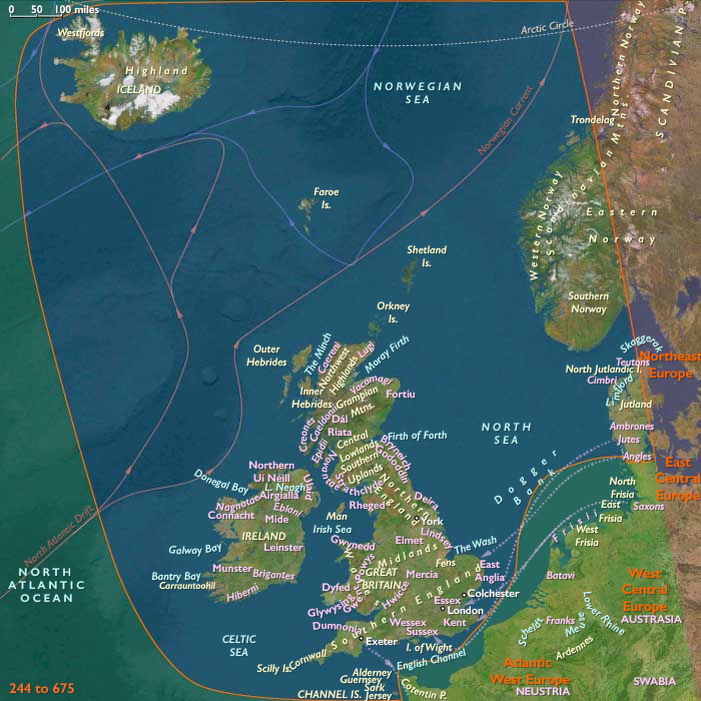
Roman Britain had seen increasing attacks in the fourth century from the Saxons in the east and the Irish in the west.
A series of forts had been built, starting around 280, to defend the coasts, but these preparations were not enough when a general assault of Saxons, Irish and ‘Attacotti', combined with apparent dissension in the garrison on Hadrian's Wall, had left Roman Britain prostrate in 367.
This crisis, sometimes called the Great Conspiracy, had been settled by Count Theodosius with a string of military and civil reforms.
Maximus, after raising the standard of revolt in Segontium in 383 and crossing the Channel, had held much of the western empire, and fought a successful campaign against the Picts and Scots around 384.
His continental exploits required troops from Britain, and it appears that forts at Chester and elsewhere had been abandoned at this period, triggering raids and settlement in north Wales by the Irish.
The appearance of hostile ‘Attacotti’ in Roman sources in the 360s corresponds chronologically with various tribal and dynastic migrations from southern Ireland and subsequent Irish settlement in Western Britain in the fourth century, in some instances possibly with Roman sanction.
Later Irish and Welsh traditions concerning these population movements preserved the names of certain tributary Irish groups, which seem to have been displaced by the expansion of the Eóganachta, the group of septs which have come to dominate Munster in the later fourth century.
Prosperity continues in Roman Britain, but the withdrawals of troops by Maximus has weakened security.
Locations
Groups
- Britons (historical)
- Saxons
- Picts
- Scoti
- Irish people
- Britain, Roman
- Attacotti
- Roman Empire: Valentinian dynasty (Rome)
- Roman Empire: Theodosian dynasty (Constantinople)
Topics
Commodoties
Subjects
- Commerce
- Engineering
- Environment
- Labor and Service
- Conflict
- Faith
- Government
- Custom and Law
- Technology
- Movements
Regions
Subregions
Years: 389 - 389
Locations
Groups
- Britons (historical)
- Saxons
- Picts
- Scoti
- Irish people
- Britain, Roman
- Attacotti
- Roman Empire: Valentinian dynasty (Rome)
- Roman Empire: Theodosian dynasty (Constantinople)
Topics
Commodoties
Subjects
- Commerce
- Engineering
- Environment
- Labor and Service
- Conflict
- Faith
- Government
- Custom and Law
- Technology
- Movements
Regions
Subregions