
Filters:
Rollo’s Conversion and the Establishment of the …
Years: 912 - 912
Rollo’s Conversion and the Establishment of the Duchy of Normandy (912)
Following the Treaty of Saint-Clair-sur-Epte (911), Rollo and his Viking followers accept baptism and convert to Christianity in 912. This marks the beginning of Normandy as a Christian, yet still militaristic, Norse-Frankish state.
Rollo’s Baptism and the Title of Duke
- Rollo is baptized as Robert, taking a Christian name as part of his agreement with King Charles the Simple.
- He becomes the first Duke of Normandy, although contemporary sources often describe him as a Count rather than a Duke.
- Despite conversion, Rollo and his followers retain their Viking identity, maintaining their warrior traditions and expansionist mindset.
Norman Raiding Continues
- Even after their formal settlement in Normandy, Rollo’s forces continue Viking raids into neighboring Flanders.
- These raids reflect the Normans’ desire for expansion and wealth, rather than mere plunder, as they seek to consolidate their new territory.
- Northern France remains vulnerable, as Viking raiding culture persists alongside their gradual integration into Frankish society.
The Significance of Rollo’s Conversion
- Strengthens ties with the Frankish elite, as Christian rulers are more willing to recognize Rollo as a legitimate vassal.
- Encourages assimilation, as Norse settlers begin to adopt the French language, customs, and feudal governance.
- Establishes Normandy as a powerful feudal duchy, which will later play a crucial role in French and English history, particularly with the Norman Conquest of England in 1066.
Conclusion: The Birth of Christian Normandy
Though baptized and integrated into the Carolingian feudal system, Rollo and his followers remain true to their Viking origins, using their military prowess to expand Norman influence. The Duchy of Normandy thus begins as a hybrid Norse-Frankish state, blending Scandinavian warrior traditions with Christian feudal governance, shaping medieval European history for centuries.
Locations
People
Groups
- Christianity, Chalcedonian
- Vikings
- Francia Occidentalis (West Francia, or France), Kingdom of
- Flanders, County of
- Normandy, Duchy of
Topics
Commodoties
Subjects
Regions
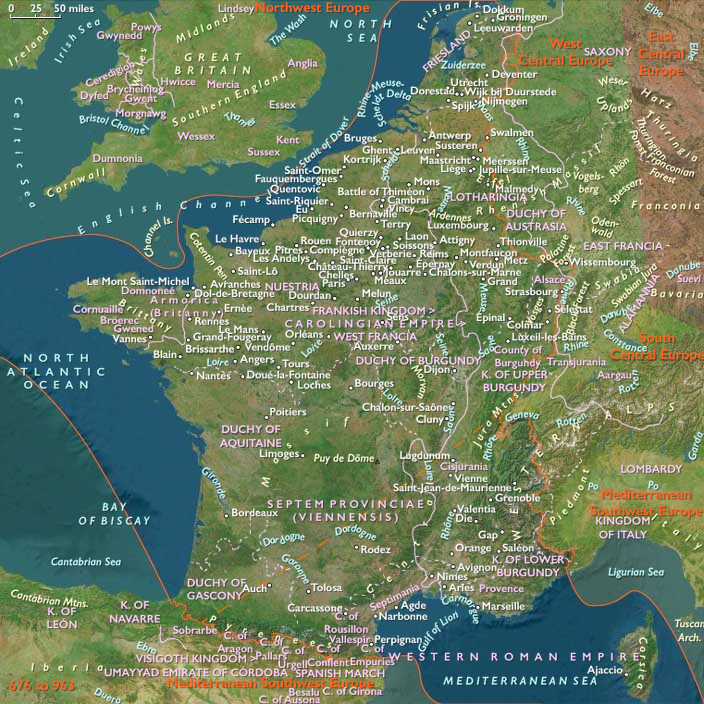
Subregions
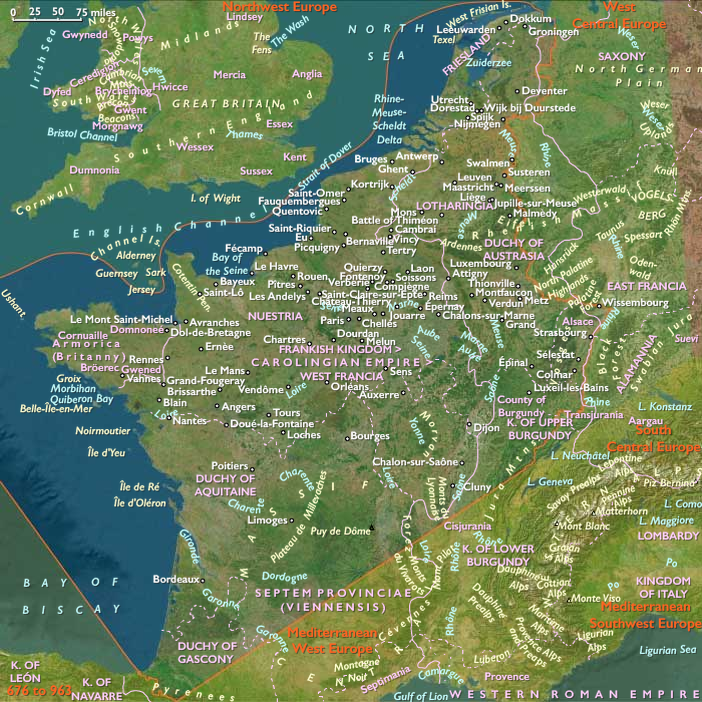
Years: 912 - 912
Locations
People
Groups
- Christianity, Chalcedonian
- Vikings
- Francia Occidentalis (West Francia, or France), Kingdom of
- Flanders, County of
- Normandy, Duchy of
Topics
Commodoties
Subjects
Regions
Subregions